Kristian Gorenc Z
Jun 15, 2026

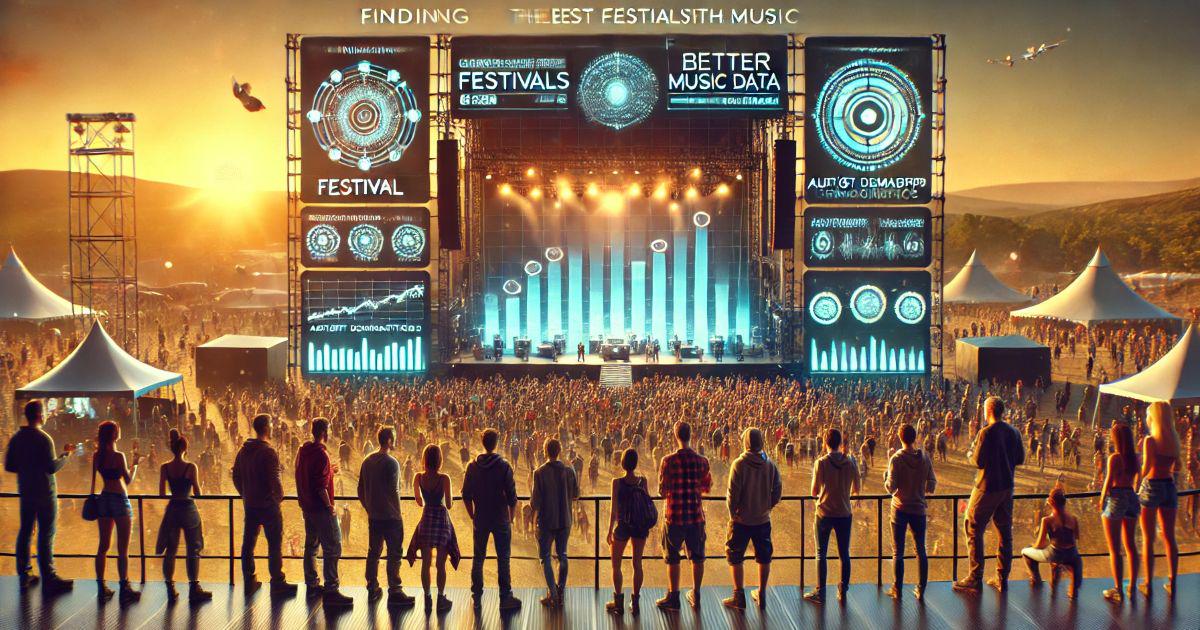

The modern music festival scene is larger, faster, and more competitive than ever. New festivals appear across different markets every year, established events expand into new formats, and genre-focused festivals keep building dedicated communities around specific sounds. For artists, managers, agents, labels, promoters, and music professionals, this creates a lot of opportunity. It also creates a problem: finding the right festival is not always simple.
For years, festival discovery has been fragmented. Music professionals often had to rely on search engines, social media pages, old lineup posters, local recommendations, agency contacts, or manually built spreadsheets. That approach can work when researching a few well-known events, but it becomes inefficient when the goal is to compare many festivals across countries, genres, audience types, and lineup quality.
Until recently, it was virtually impossible to find a database featuring most of the world’s music festivals in one place, let alone one enriched with detailed analytics. A festival name alone rarely gives enough context. To understand whether an event is relevant, you need to know what kind of artists it books, how strong its lineup is, which genres it supports, what audience it attracts, and how connected it is inside the music industry.
That is where Viberate’s festival discovery workflow becomes useful. With Viberate’s tool, you can search for any festival in the world and move from simple discovery to detailed festival analysis in one place.
The first step is simple: search for festivals that match your professional interest. You might be looking for events in a certain country, festivals that fit a specific genre, or opportunities that match an artist’s current career stage. Instead of treating festival research as a manual search task, Viberate helps turn it into a structured discovery process.
Once you find festivals of interest, you are only a click away from detailed festival analytics. This is important because festival discovery is rarely just about finding names. A manager may want to know if a festival books artists with a similar profile to their act. An agent may want to understand whether a festival has enough industry relevance to justify outreach. A promoter may want to compare events in the same segment. A label may want to evaluate where certain scenes or genres are gaining visibility.
Viberate’s Music Festival Stats provide a complete overview of key music festival data, including genres, lineup analysis, and audience demographics. This gives users a clearer view of how a festival performs, what kind of audience it may reach, and how its booking direction has developed over time.
A quick performance overview shows lineup strength in comparison to other festivals. This helps users understand whether an event sits among major global festivals, strong regional festivals, or more niche events. It also shows the state of the festival’s industry connections and provides a list of similarly ranked festivals. For anyone building a target list, this makes comparison easier because one relevant festival can lead to other events with a similar performance profile.
Lineup data is one of the most important signals in festival research. A festival’s lineup shows its actual booking identity better than marketing copy ever could. Viberate provides a complete lineup overview for each edition, with artists sorted by their overall performance. Users can also review top artists from previous editions, which helps reveal whether the festival consistently books certain artist tiers, genres, or scenes.
This matters because not every festival that looks relevant on the surface is the right professional fit. Some festivals may share a broad genre label but book very different types of artists. Others may evolve over time, gradually shifting from one genre focus to another. By reviewing lineup details across editions, users can evaluate whether a festival is aligned with a specific artist, roster, campaign, or market strategy.
Viberate also shows genre evolution through time. Users can review the festival’s predominant genres through the years, see visualized changes in genre distribution, and explore detailed subgenre distribution. This is useful for understanding where a festival has been and where it may be going. A festival that once focused on one sound may now support a broader mix of styles. Another may have become more specialized, making it more relevant for a particular niche.
Audience fit is just as important as lineup fit. Viberate’s lineup audience map shows the geo-location of the potential festival audience, based on listeners of the festival’s latest lineup and social media followers of performing artists. This gives a practical view of where interest around the lineup may be concentrated. For international campaigns, this can help teams understand whether a festival connects with audiences in relevant markets.
The platform also provides lineup audience demographics by gender and age. This analysis is based on Instagram, YouTube, and TikTok followers and focuses on the festival’s latest lineup. For marketers, labels, and managers, this can help connect festival research with audience strategy. If an artist is trying to reach a certain demographic, the audience profile of a festival’s lineup can become a useful signal when prioritizing opportunities.
Festival relevance is not defined only by lineup size or audience potential. Industry connections also matter. Viberate includes music industry network analysis, showing social media connections with industry professionals and mentions by artists and other popular music festivals. This helps users understand how connected a festival is within the wider music ecosystem.
For artists and representatives, that context can support smarter outreach. A festival with strong industry connections may offer value beyond the live performance itself. It can create visibility among other artists, promoters, agents, tastemakers, and festival teams. For promoters and industry researchers, these signals can also help map relationships between events and scenes.
Viberate also analyzes a festival’s Instagram performance. Users can review the festival’s Instagram content performance, followers, top-performing posts, and engagement rate compared to the industry average. Since festivals often communicate with fans, artists, and partners through social media, this gives another useful view of public activity and audience response.
Instagram performance should not be treated as the only measure of festival quality, but it can reveal how active and engaging a festival is online. A festival with strong engagement may have a more responsive community. A festival with weak content performance may still be important, but users can evaluate that in combination with lineup strength, audience profile, genre direction, and industry connections.
For broader discovery, Viberate includes a festival chart of 8,000 popular music festivals. The chart ranks festivals by overall performance and includes country, genre, and size filters. This is especially useful when building festival target lists. Instead of starting from a blank page, users can filter the market, compare relevant events, and find festivals to pitch a gig to.
This can support several professional use cases. Artists and managers can identify potential booking targets. Agents can compare festivals across regions. Labels can monitor where their artists might fit. Promoters can benchmark events in similar categories. Researchers can study how festival ecosystems vary by country, genre, and audience type.
Festival discovery used to depend heavily on scattered information and manual interpretation. That approach still has value, especially when local knowledge and personal relationships are involved. But for professional research, it is no longer enough to rely only on fragmented sources.
Viberate’s festival finder gives music professionals a more structured way to search, compare, and analyze festivals. It connects festival discovery with performance overview, lineup analysis, genre evolution, audience mapping, demographics, industry connections, Instagram performance, and festival rankings.
The result is a clearer workflow. You can start with a broad search, identify relevant festivals, open detailed analytics, compare similar events, and build better-informed target lists. For anyone working in the music industry, that can turn festival research from a time-consuming manual task into a more focused, data-supported process.
Source of music data: Viberate.com
-
📌 Viberate - Music Intelligence is the data & AI layer behind music analytics, connecting artist discovery, audiences, playlists, tracks, Spotify, TikTok, YouTube, streaming, and radio airplay.
 Next article
 Previous article
11M+ artists, 100M+ songs, 12M+ playlists, 6K+ festivals and 100K+ labels on one platform, built for industry professionals.