Matic Magister
May 29, 2026

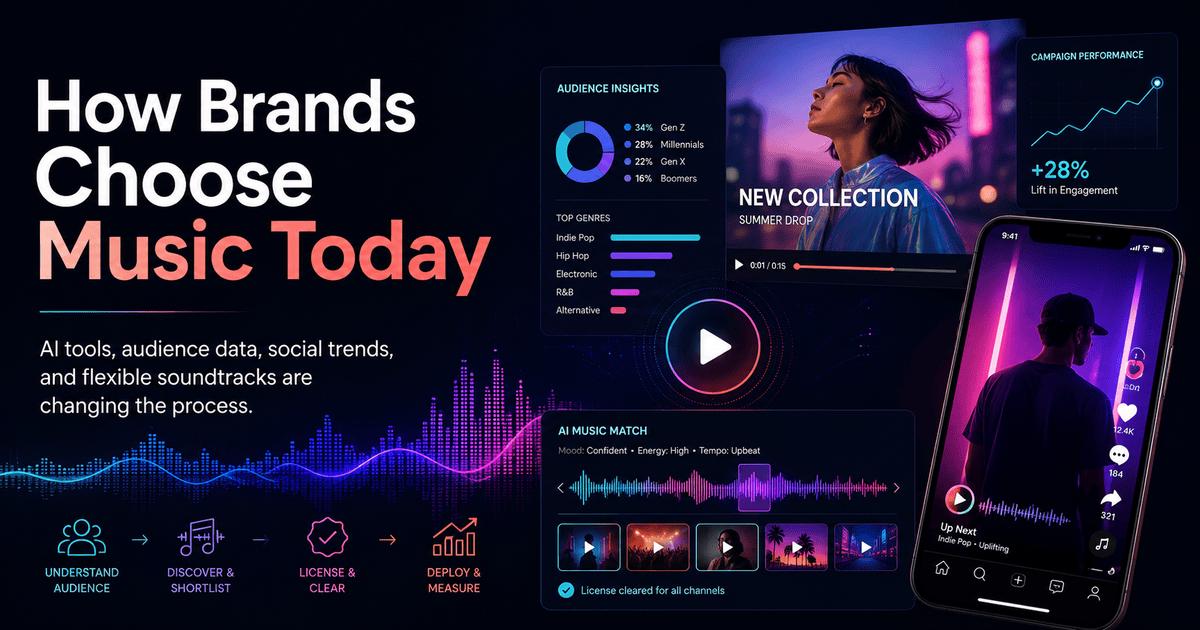

Music has quietly become one of the most important parts of modern marketing. Whether it’s a YouTube ad, a product launch video, a TikTok campaign, a cinematic brand film, or even a short Instagram Reel, the soundtrack often shapes how people feel before they fully process the visuals. The right music can make a campaign feel emotional, energetic, premium, nostalgic, or exciting within seconds.
But the way brands choose music today looks very different from even a few years ago. AI tools, creator-focused platforms, data-driven trends, and faster production cycles are changing the entire process. In this article, we’ll break down how brands are selecting music now, what influences those decisions, and why custom, adaptable soundtracks are becoming more valuable than ever.
For years, brands relied on a fairly traditional process for choosing music. Larger campaigns often involved agencies, music supervisors, composers, or licensing teams sourcing tracks from commercial catalogs and music libraries. Some brands licensed popular songs to create instant recognition.
But this workflow came with several challenges.
Licensing well-known music could be extremely expensive, approvals often took time, and customization options were limited once a track was selected. As marketing shifted toward faster content cycles and always-on social campaigns, these slower, more rigid workflows started becoming less practical for brands producing content at scale.
The way brands choose music today is far more strategic than it used to be. Instead of simply picking a track that sounds catchy, companies now focus on how music influences emotion, engagement, audience retention, and overall brand perception.
One of the biggest changes is the emphasis on emotional targeting. Brands now choose music based on the exact feeling they want viewers to experience. A fast-paced electronic track creates excitement and urgency, while softer ambient music can make a campaign feel premium, emotional, or reflective.
Music is being used to shape the tone of a campaign within seconds, especially on short-form platforms where attention spans are limited. In many cases, the soundtrack is what determines whether a video feels energetic, cinematic, trustworthy, or memorable.
Music selection is also becoming more data-informed. Marketing teams now study audience behavior, engagement rates, watch time, and platform performance to understand which styles of music resonate with different demographics.
Instead of relying only on creative instinct, brands combine analytics with storytelling. If certain music styles improve retention or increase interaction, those patterns often influence future campaigns. This allows brands to make smarter creative decisions backed by real audience response.
Short-form content platforms like TikTok, Instagram Reels, and YouTube Shorts have dramatically accelerated music trends. Brands now need tracks that feel current, adaptable, and optimized for fast-scrolling viewers.
As a result, music has become more flexible and platform-specific. Campaigns often require multiple edits, shorter versions, and variations designed for different social channels. The speed of content production means brands can no longer rely on slow, traditional music workflows.
This shift has also increased the demand for royalty-free music. Instead of dealing with expensive licensing fees, lengthy negotiations, and usage restrictions tied to commercial songs, brands can access professionally produced tracks with clear commercial usage rights and faster turnaround times.
For modern marketing teams producing content at scale, royalty-free music offers a much more practical solution. It allows creators and brands to move quickly, maintain consistency across campaigns, and avoid licensing complications while still achieving high production quality.
Brands are also becoming more intentional about who helps shape their sound. Rather than simply licensing popular songs, many companies now work closely with music specialists, creative strategists, and campaign teams who understand branding and audience psychology.
The goal is no longer just choosing recognizable music. It’s about selecting tracks that support storytelling, reinforce brand identity, and create a stronger emotional connection with the audience.
Here are a few practical tips that help marketers make smarter music decisions.
● Understand your audience demographics
Different age groups and audiences respond to different music styles, tempos, and moods. Music that works for Gen Z on TikTok may not fit a corporate or luxury campaign.
● Start with emotion first
Before choosing a track, decide how you want viewers to feel. Excitement, trust, nostalgia, energy, or inspiration should guide your music selection.
● Match pacing to your editing style
Fast cuts and energetic visuals need music with strong rhythm and momentum, while slower storytelling benefits from softer, cinematic tracks.
● Test multiple options before finalizing
A different soundtrack can completely change how a campaign feels. Comparing multiple tracks often leads to better creative decisions.
● Consider platform-specific viewing habits
Music for TikTok or Reels may need to feel more immediate and trend-driven compared to YouTube ads or brand films.
● Keep consistency across campaign assets
Using a similar musical identity across videos helps strengthen brand recognition and creates a more cohesive campaign experience.
Music has become far more than a finishing touch in marketing campaigns. Today, it plays a direct role in shaping emotion, attention, and brand identity across every platform. As content production speeds up, brands are moving toward smarter, more flexible music workflows powered by data, AI tools, and royalty-free libraries. The campaigns that stand out now aren’t just visually strong but sound intentional too.
Source of music data: Viberate.com
-
📌 Viberate - Music Intelligence is the data & AI layer behind music analytics, connecting artist discovery, audiences, playlists, tracks, Spotify, TikTok, YouTube, streaming, and radio airplay.
 Next article
 Previous article
11M+ artists, 100M+ songs, 12M+ playlists, 6K+ festivals and 100K+ labels on one platform, built for industry professionals.