Miha Prebil
Jul 6, 2026

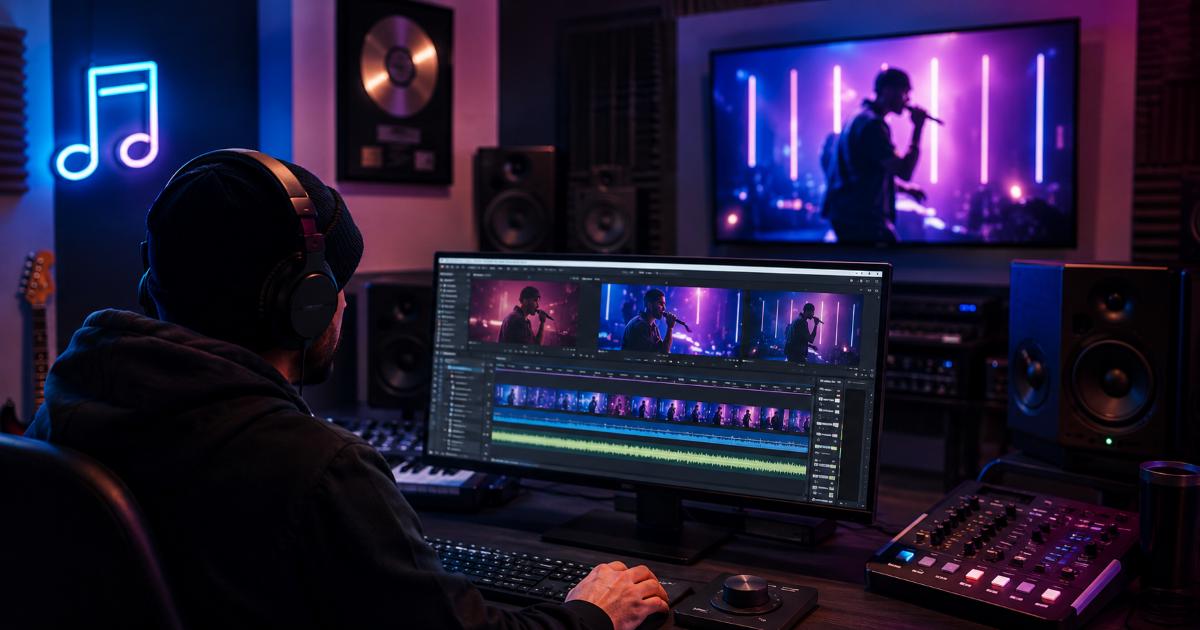

There is a specific point in the assembly of an AI-generated music video where character consistency stops being a technical detail and becomes a workflow problem. A team generates the verse footage, the chorus footage, and the bridge sections across multiple sessions. When they lay it all out, the performer in shot three looks like a different person from the performer in shot one. The hair is subtly different. The face reads as the same type but not the same individual. The lighting picks up the facial structure differently enough that cutting between shots breaks the visual logic of the whole piece.
That problem is now common enough to have shaped how music professionals evaluate music video generator tools. The question is no longer only which platform produces the best-looking isolated clip. The question is which platform can maintain a consistent performer identity across a full song — across the intro, the verse, the chorus, the bridge, and the outro — without requiring the team to regenerate and manually select from dozens of outputs to find the ones that happen to look like the same person.
This comparison tests eight tools against that specific challenge. The test case was a 2.5-minute R&B vocal track with a clear intro, two verse sections with different energy levels, a fuller chorus, and a short bridge before the final hook. Each tool was evaluated on how well it maintained performer identity through those sections, not just within a single generated clip. Grand View Research estimates the AI video generator market at $788.5 million in 2025 on its way to $3.44 billion by 2033 — and Wyzowl's 2026 data reports that 63% of video marketers have already used AI tools to create or edit marketing videos. The tools being evaluated here represent where that market currently stands for musicians who need more than a demo.
Freebeat
Performer identity across sections: 9.3/10
Visual styling retention: 9.2/10
Section-to-section continuity: 9.4/10
Full song production suitability: 9.5/10
Release campaign readiness: 9.2/10
Overall score: 9.3/10
Runway
Performer identity across sections: 6.8/10
Visual styling retention: 6.5/10
Section-to-section continuity: 6.1/10
Full song production suitability: 5.3/10
Release campaign readiness: 6.0/10
Overall score: 6.1/10
Luma Dream Machine
Performer identity across sections: 4.0/10
Visual styling retention: 3.8/10
Section-to-section continuity: 3.6/10
Full song production suitability: 3.1/10
Release campaign readiness: 3.5/10
Overall score: 3.6/10
Pika
Performer identity across sections: 5.0/10
Visual styling retention: 4.7/10
Section-to-section continuity: 4.5/10
Full song production suitability: 3.9/10
Release campaign readiness: 4.6/10
Overall score: 4.5/10
Kaiber
Performer identity across sections: 4.3/10
Visual styling retention: 4.6/10
Section-to-section continuity: 3.9/10
Full song production suitability: 4.3/10
Release campaign readiness: 4.8/10
Overall score: 4.4/10
Veo
Performer identity across sections: 6.5/10
Visual styling retention: 6.0/10
Section-to-section continuity: 5.8/10
Full song production suitability: 4.3/10
Release campaign readiness: 5.5/10
Overall score: 5.6/10
Kling
Performer identity across sections: 6.2/10
Visual styling retention: 5.7/10
Section-to-section continuity: 5.9/10
Full song production suitability: 4.7/10
Release campaign readiness: 5.8/10
Overall score: 5.7/10
Synthesia
Performer identity across sections: 9.5/10
Visual styling retention: 9.4/10
Section-to-section continuity: 9.6/10
Full song production suitability: 1.1/10
Release campaign readiness: 2.0/10
Overall score: 7.5/10*
* Synthesia’s overall score is weighted significantly by its near-zero scores for full-song suitability and release-campaign readiness. Its character scores are technically strong, but they reflect a corporate talking-head context with no application to music video production. It is included only as a technical benchmark.
Scores are editorial test ratings from the 2.5-minute R&B vocal test track described above. They are not official benchmarks from any platform listed.
Freebeat is the only platform in this comparison where character consistency across a full song is a designed output rather than a hoped-for result of careful prompting. The platform analyzes the complete track before generating any footage — mapping the intro, verse, chorus, bridge, and outro as distinct visual sections — and generates all scenes with the same performer reference anchored across every section.
That architecture produces something practically useful: a music video where the performer in the intro is recognizably the same person who appears in the chorus close-up, without the team having to select and discard dozens of generations to find matching outputs. The Singing MV mode specifically handles stable AI character generation with synchronized lip movement, face-focused performance cinematography, and consistent visual styling across the duration of the track. On the R&B test track, the character held across all five structural sections at a level that required no corrective regeneration to maintain visual continuity.
For Viberate's audience of A&Rs, managers, and label teams, the practical implication is clear. A music video that can be clipped into multiple short-form assets — each showing the same performer — without expensive post-production correction is a production efficiency argument as much as it is a quality argument. Freebeat has served more than 1,000,000 creators across 150+ countries, and the platform's lip-sync accuracy holds at approximately 90% across 100+ languages, which covers the multilingual release campaigns that increasingly define how music travels globally. Using it as the best ai music video generator for character-dependent content means the first usable output is also the one the team can actually use.
● The same facial structure, hair, and visual styling appeared consistently from the intro through the final hook without drift
● Close-up and wide shots of the same performer remained visually matched at a level suitable for cross-cutting
● The chorus section — where visual energy shifts most dramatically — maintained character identity while adjusting pacing and movement
● No session-to-session facial variation of the kind that requires manual selection across multiple generations
● Outfit and color palette remained consistent across the track's five sections
● Lighting treatment adapted to section energy without introducing character variation as a side effect
● Style attributes applied at the project level persisted through scene transitions rather than resetting per generation
● Beat-synchronized visual pacing ensured that the character's movement and framing changed appropriately between sections without breaking identity
● Verse and chorus cinematography differed in energy while maintaining the same performer
● The bridge section — the most structurally distinct — produced the correct visual de-escalation with the same character on screen
● Supports up to 6-minute music videos (Pro plan and above)
● One-click generation produces a complete draft in approximately 5 minutes; storyboard-level editing available for shot-by-shot refinement
● Six creation modes available: Singing MV, Storytelling Mode, Abstract Video, Music Cover Video, Video to Music, Viral Shots and Onbeat Effects
● Export formats in 16:9, 9:16, 4:3, 3:4, and 1:1 — covers YouTube, TikTok, Instagram Reels, Spotify Canvas, and Apple Music from a single session
● Full music video, short-form clips, and lyric video can all be generated from the same track in one workflow
● Commercial-use license included — creators own the copyright to generated content and can publish and monetize without additional clearance
● Platform-ready export formats reduce post-production steps between generation and publishing
Verdict: The most complete music video generator in this comparison for teams that need a consistent performer across a full-length track, from first generation to finished campaign asset.
Runway's position in the AI video generation market is well established, and its visual quality per clip stands as one of the higher bars in this test. The problem for character consistency is structural rather than technical: Runway generates each scene from a prompt and reference, and when multiple scenes are generated across different structural sections of a song, the character's appearance accumulates variation between sessions.
In the R&B test, the performer established in the verse section showed visible drift by the bridge — facial structure, skin tone, and hair detail all shifted enough that cross-cutting between sections would require correction. This is not an unusual outcome for a platform designed as a general AI video tool. Runway was built for directors and creative teams who plan shot-by-shot and assemble externally. For character-dependent music video generation across a full track, those requirements represent a meaningful overhead.
● Individual clips produced strong facial definition and visual quality
● Repeated generation across different song sections accumulated character variation
● Verse-to-chorus character matching required manual selection across multiple outputs
● Outfit and visual styling held reasonably well within a single session
● Cross-session styling consistency required careful prompt management and reference image discipline
● No song structure awareness in the generation architecture — sections are independent prompts
● Assembling a continuity-consistent cut required selecting from a large generation pool
● Teams with post-production capacity can manage this workflow; those without will find it costly
● Strong for individual high-quality cinematic clips and supporting footage
● Full music video production requires external editing, audio syncing, and manual assembly
● No beat synchronization or section-mapping in the core workflow
● High-quality outputs serve well as supplementary visual assets in a larger campaign
● Less efficient as the primary music video generator for character-dependent content
● Better suited to production teams that already have editorial infrastructure
Verdict: Excellent visual quality at the clip level. Character consistency across a full song requires manual management that most music teams cannot absorb efficiently without dedicated post-production support.
Veo produces footage with a level of cinematic realism that reflects the scale of resources behind its development. Individual scene character generation is above average in this comparison — facial definition is strong and motion quality is convincing. The character consistency limitation is the same architectural issue as Runway: Veo generates per-scene from prompts, with no song-structure awareness that would anchor the performer across sections.
On the R&B test track, Veo produced its most consistent character output on the verse sections, where the prompt environment was most controlled. At the chorus and bridge — where the creative prompt necessarily changes to reflect different energy and visual direction — facial and styling variation became visible. Cross-cutting between sections required corrective selection rather than being workable from first-generation outputs.
● Strong per-scene facial generation with above-average individual clip quality
● Character drift accumulated across different section prompts
● Chorus and bridge sections showed the most variation from the baseline verse character
● Within a single prompt session, styling held reasonably well
● Across structural section changes, outfit and color consistency required prompt management overhead
● No music-specific generation architecture — sections are independent
● Continuity across a full song requires editorial assembly with careful clip selection
● Currently accessible primarily through Google Labs and enterprise API access — not uniformly available to independent musicians
● Best suited to production companies and label teams with both the access and the editorial capacity to assemble full videos externally
● High-fidelity footage serves well as premium supplementary visual material
● Requires significant post-production to become a complete character-consistent music video
Verdict: High individual clip fidelity with above-average character generation per scene. Full-song character consistency is not a designed feature, and the access model limits its practical reach for most independent release campaigns.
Kling has built a genuine reputation for human motion quality — the physical plausibility of generated figures in movement sits above the category average. For music video content where body movement, choreography, and gesture are the primary visual element, that motion quality is a meaningful differentiator.
Character identity stability across scenes is more variable. At medium camera distances on the test track, the performer held recognizably across adjacent sections. In close-up shots at section transitions — particularly the verse-to-chorus shift, which required different camera framing and energy — facial features drifted enough to be visible at normal viewing speed. The cumulative effect across a 2.5-minute track was a performer who looked like the same type of person rather than the same individual.
● Character held reasonably well at mid-distance framing between adjacent sections
● Close-up cross-cutting between verse and chorus revealed visible facial variation
● Cumulative drift across a full track more pronounced than within short clip sequences
● Styling consistency was mid-field — better than Luma and Pika, below Freebeat and Runway
● Outfit and color consistency showed section-to-section variation in the test
● Motion quality adds genuine value for choreography-focused sections
● Character continuity across the full structural arc requires selection across multiple generations
● Useful for movement-heavy sections where motion fidelity matters more than facial close-up precision
● Full song assembly requires external editing and audio work
● Good fit for campaigns where body movement is the visual priority and camera stays at consistent mid-distance
● Less suitable as the primary generate music video tool when close-up performer identity is the core visual strategy
Verdict: Above-average motion quality with mid-field character stability. Most suitable for movement-focused music video content at consistent camera distances rather than close-up character-dependent production.
Pika's defining characteristic is speed of access and ease of use. For musicians generating short-form visual content quickly, without requiring specialist prompting skills or significant time investment, the platform delivers shareable outputs faster than any other tool in this comparison.
Character consistency across a structured 2.5-minute track is where Pika's current output falls below professional release standard. Generated scenes using the same reference showed visible facial variation between sections — manageable at short clip durations, accumulating noticeably across a full music video. At normal viewing speed, the performer did not read as the same individual from the intro to the final hook.
● Plausible character generation within individual clips
● Visible facial variation accumulated across the test track's five sections
● Not suitable for close-up cross-cutting between section-specific generations
● Outfit and styling inconsistency more pronounced than in mid-field competitors
● Best managed by keeping camera distance consistent across the full video
● No song-structure awareness — sections are independent clip generations
● Full-song assembly requires external editing and clip selection
● Strongest for short-form social clips at 15-30 seconds where character consistency is less exposed
● Full music video production requires too much corrective selection for efficient use
● Practical for quick social teasers and campaign content experiments
● Not the right primary music video tool for artist-centered character-dependent releases
Verdict: Fast and accessible for short-form content experimentation. Character stability across a full song does not meet the standard required for release-quality artist-centered music video production
Kaiber's output has a distinctive aesthetic quality that sets it apart from the more realism-oriented tools in this comparison. For artists working in genres where stylized, expressive, or abstract visual identity serves the music better than representational realism, Kaiber's aesthetic range is a genuine creative asset.
The character consistency question is complicated by the platform's visual approach. Kaiber's stylization process creates a consistent aesthetic treatment across clips, but that treatment does not anchor the same underlying character from scene to scene. Two chorus clips may share a visual style without sharing a recognizable face. For artists whose release requires a specific performer to appear as themselves throughout the music video, this is a structural limitation rather than a quality one.
● Visual aesthetic consistency is stronger than character identity consistency
● The underlying performer is not reliably the same individual across different section generations
● Works better for stylized concept videos where character abstraction is intentional
● Strong visual style consistency — the aesthetic treatment holds more reliably than the character
● Useful when the visual identity of the track matters more than the specific identity of the performer
● Medium song structure awareness compared with general clip generators
● Better suited to shorter sequences and social clips than full-length character-consistent production
● Best for concept videos and style-driven content where character continuity is not the priority
● Less practical for campaigns that require the same artist's face across a full 2.5-minute video
● Strong for stylized short-form social content and campaign teasers
● Not the right ai music to video app when the release strategy depends on consistent artist representation
Verdict: Genuine creative value for stylized and experimental music video content. Not suited as the primary music video tool when character consistency across a full song is the central production requirement.
Luma Dream Machine generates footage with atmospheric and environmental quality that consistently impresses in isolated scene tests. Lighting fidelity, depth of field behavior, and scene composition are strong across a wide range of visual styles. For music campaigns that need premium supporting footage without a central performer, Luma produces reliable material.
As a character-consistent music video generator for a vocalist-centered production, the test results were the weakest in this comparison. Facial structure varied substantially between the test track's sections, and styling consistency across sessions required repeated correction. This is not a design failure — Luma was built to generate cinematic footage from prompts, with performer anchoring as a secondary concern at most.
● Largest facial variation across sections among tools in the test
● Not designed for persistent performer identity across multiple generation sessions
● Suitable for atmospheric content where a specific performer identity is not the visual anchor
● Atmospheric and environmental styling is strong and consistent
● Character-level styling inconsistency is the trade-off for the platform's environmental quality
● Individual scenes can be visually beautiful but do not form a character-continuous arc
● Best used as supplementary footage within a larger production
● No music-specific generation workflow — strong for B-roll and mood footage
● Full song production requires external editing, audio alignment, and clip selection
● Strong contribution to campaigns as atmospheric visual material
● Not suitable as the primary music video maker for character-dependent vocalist content
Verdict: The strongest atmospheric footage generator in this comparison. The weakest fit for character-consistent performer generation across a full song.
Synthesia's performance on character consistency metrics is technically the strongest in this comparison. The platform's avatar generation maintains recognizable facial identity, consistent styling, and visual stability across extended video with a precision that no other tool tested here matches at the character level.
The scores carry an important qualification. Synthesia was built for corporate communication: training videos, product explainers, HR content, and institutional messaging. Its visual output reflects that design with neutral backgrounds, presenter-style framing, and the aesthetic grammar of business video production. There is no song structure awareness, no beat-synchronized generation, no visual language that connects to any music genre or release format.
● Technically the most stable character generation in this test
● Consistency is a feature of the avatar system, not a response to music structure
● The context in which that consistency appears has no application to music video production
● Avatar styling is precisely controlled and consistent across extended video
● The styling range is limited to business-presenter aesthetics
● Strong continuity within its own content category
● No concept of song sections, verse, chorus, or structural music video architecture
● Score of 1.1/10 reflects that the platform was not designed for this use case and cannot perform it
● Included here as a technical reference point rather than a genuine music video tool recommendation
● Useful for artist announcement clips, promotional explainers, and business-adjacent communications
● Not a music video generator in any meaningful sense for release campaign production
Verdict: Highest technical character consistency scores in this comparison. Zero practical application as a music video maker for music releases. Scores included as a benchmark, not as a recommendation.
The pattern across this comparison is consistent enough to draw a clear conclusion. Seven of the eight platforms tested produce character variation across a 2.5-minute structured track when used as their architecture intends. The variation is not always severe — Runway, Veo, and Kling all produce character quality that experienced editors can work with — but it is consistent enough to require corrective intervention that costs time and production overhead.
The practical guide for teams making this decision:
● For full-length character-consistent music video production where the same performer needs to appear recognizably across intro, verse, chorus, bridge, and outro without manual corrective selection, Freebeat is the only tool in this comparison that addresses that requirement through its core architecture
● For cinematic individual clip generation that will be assembled by a team with editorial capacity, Runway and Veo produce the strongest per-clip output quality
● For movement-heavy content where choreography and body performance matter more than close-up facial identity, Kling's motion quality is the differentiator
● For abstract, stylized, or experimental visual content where character identity is intentionally secondary to aesthetic, Kaiber serves well
● For short-form social content and rapid experimentation without full-song character requirements, Pika offers the fastest path
● For atmospheric B-roll and supporting campaign footage, Luma generates reliable material at consistent quality
The broader market shift is relevant context for these decisions. AI video tools are growing at a compound annual growth rate of approximately 20% through 2033 according to Grand View Research — and that growth is being driven not by consumer novelty but by professional adoption. Teams that evaluate tools by their character consistency performance across full productions rather than by the quality of isolated demo clips will make more durable tool choices as the category continues to develop.
For music video generator decisions specifically, the question that narrows the field fastest is the one this comparison was designed to answer: not which tool makes the best-looking clip, but which tool produces the same performer in every clip across the full song.
Source of music data: Viberate.com
-
📌 Viberate - Music Intelligence is the data & AI layer behind music analytics, connecting artist discovery, audiences, playlists, tracks, Spotify, TikTok, YouTube, streaming, and radio airplay.
 Next article
 Previous article
11M+ artists, 100M+ songs, 12M+ playlists, 6K+ festivals and 100K+ labels on one platform, built for industry professionals.