Matic Magister
Apr 30, 2026

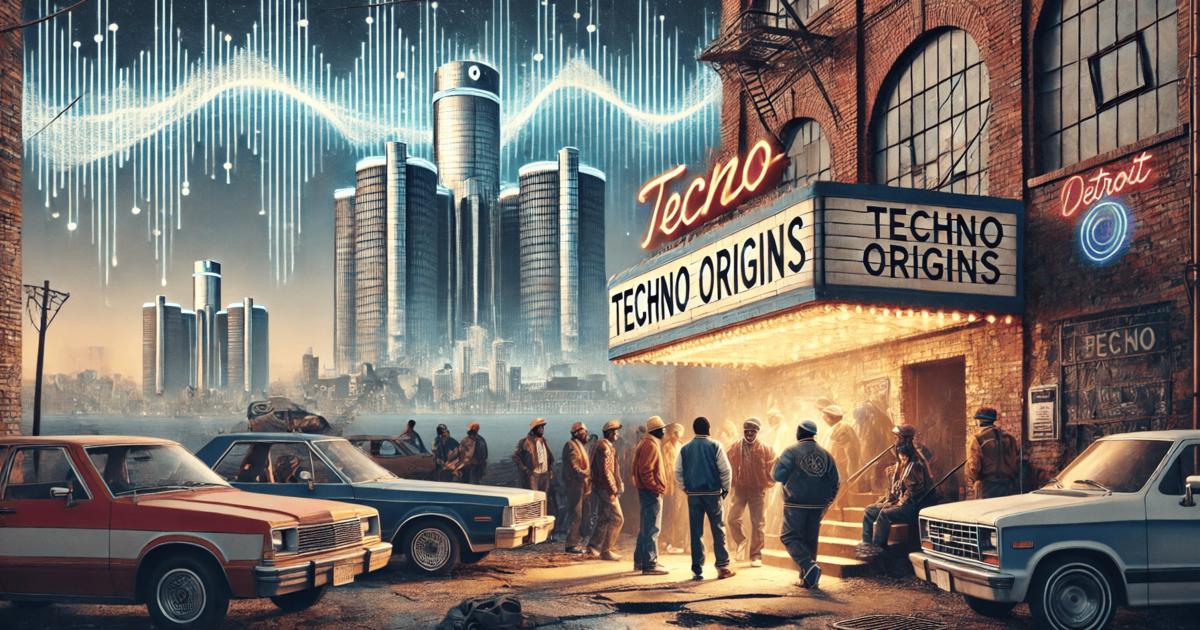

Techno is one of the most influential and enduring electronic music genres, shaping not only club culture but also the entire music industry. Today, techno is a global movement, with festivals, clubs, and producers pushing its sound into new directions. But to understand its impact, we need to go back to the roots and look at where it came from, how it evolved, and why its birthplace still matters today.
Techno music originated in Detroit, Michigan, during the early to mid-1980s. The city, often associated with the rise and fall of the automobile industry, provided a unique environment that influenced both the sound and the spirit of the genre. Detroit’s industrial character, filled with factories and machinery, became the perfect backdrop for a music style defined by repetitive, mechanical rhythms and futuristic tones.
The core pioneers of techno, known as The Belleville Three — Juan Atkins, Derrick May, and Kevin Saunderson — were three young African American producers who grew up in Belleville, a suburb of Detroit. They are often credited with shaping the genre from the ground up. Their vision was to create music that felt futuristic, mechanical, and innovative, reflecting the realities of their surroundings while looking ahead to what music could become.
The Belleville Three didn’t develop techno in isolation. Their influences came from a wide range of sources, particularly European electronic acts. Kraftwerk, the German pioneers of machine-driven music, provided a blueprint for repetitive electronic soundscapes. Giorgio Moroder, known for his groundbreaking disco productions, also played a key role in demonstrating how synthesizers and drum machines could redefine modern music. At the same time, Detroit’s rich heritage in funk, soul, and house added warmth and groove, creating a distinctive blend of mechanical repetition and human rhythm.
This unique mixture of influences resulted in music that sounded unlike anything else at the time. It was futuristic but grounded, abstract yet deeply tied to the cultural and social fabric of Detroit.

Juan Atkins is often considered the originator of techno’s sound. Working under the alias Model 500, he released “No UFO’s” in 1985, a track widely regarded as the first true Detroit techno record. With its robotic groove, minimalist melodies, and relentless rhythm, the track marked a turning point. It was more than just electronic dance music — it was a new form of artistic expression that would soon spread beyond Detroit.
Atkins, along with May and Saunderson, continued to refine and popularize the genre, establishing Detroit as the epicenter of a movement that was about to cross the Atlantic and capture the imagination of a new generation.
By the late 1980s, techno had spread beyond Detroit and taken root in Europe, where it would evolve rapidly. Germany became one of the most important hubs, especially Berlin and Frankfurt. Berlin, in particular, provided fertile ground after the fall of the Berlin Wall in 1989. The city’s abandoned warehouses and underground clubs became central to the rise of harder and faster strains of techno. Frankfurt, too, played a role with its clubs and record labels pushing the boundaries of the genre.
At the same time, the UK embraced techno as part of its broader rave and electronic music culture. Producers and DJs fused it with house, acid, and breakbeat, creating new subgenres and sparking the growth of massive underground scenes.
Even as techno spread globally and evolved into countless subgenres, Detroit’s influence has never been forgotten. The sound pioneered by The Belleville Three remains a reference point for producers worldwide. Modern techno continues to draw from the principles they established: repetition, rhythm, and a futuristic vision that feels both mechanical and deeply human.
Festivals, documentaries, and academic studies continue to explore Detroit techno’s legacy. The city itself still celebrates its contributions, with events like the Movement Electronic Music Festival attracting fans and artists from across the globe. Detroit’s story proves that music born from local environments can grow into global movements, reshaping culture far beyond its starting point.

So, where did techno music originated? The answer lies in Detroit, Michigan, during the 1980s. Shaped by the city’s industrial environment, influenced by European electronic acts and African American musical traditions, and defined by the creativity of Juan Atkins, Derrick May, and Kevin Saunderson, techno became more than just music. It became a cultural force that spread worldwide, continuously evolving while staying true to its roots.
Today, when you hear techno pumping in a club in Berlin, London, Tokyo, or anywhere else, you are still hearing echoes of Detroit — the birthplace of one of the most innovative genres in modern music history.
Source of music data: Viberate.com
-
📌 Viberate - Music Intelligence is the data & AI layer behind music analytics, connecting artist discovery, audiences, playlists, tracks, Spotify, TikTok, YouTube, streaming, and radio airplay.
 Next article
 Previous article
11M+ artists, 100M+ songs, 12M+ playlists, 6K+ festivals and 100K+ labels on one platform, built for industry professionals.