Kristian Gorenc Z
Feb 14, 2026

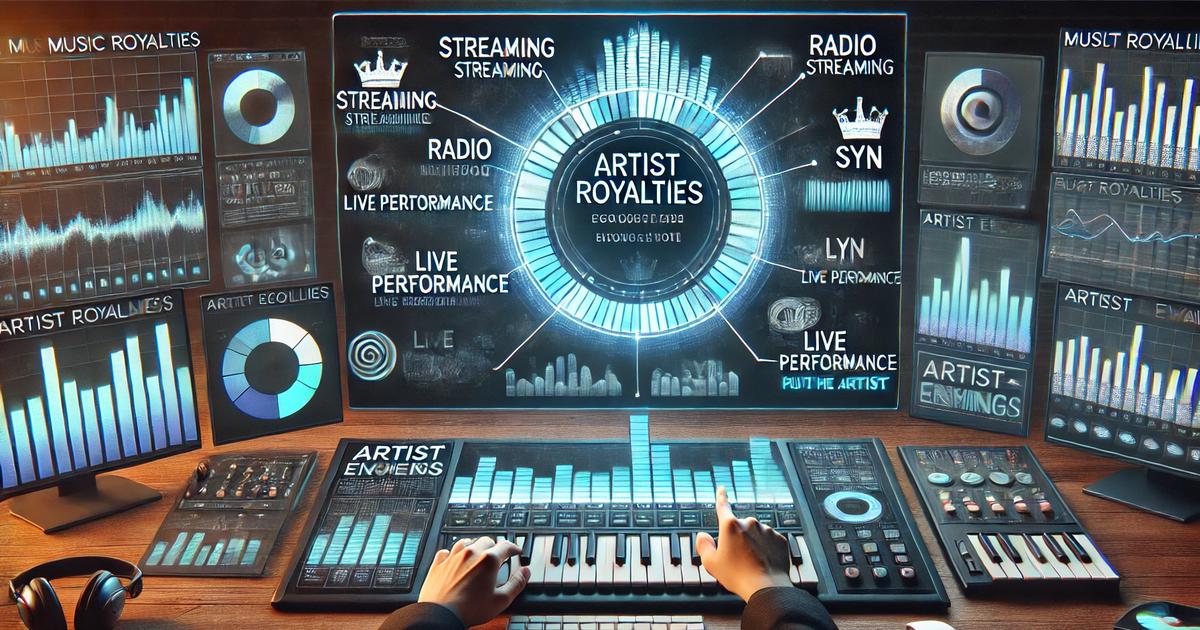

Understanding how music royalties work is one of the most practical skills an artist, songwriter, or manager can develop. Royalties are the backbone of long-term income in the music business, yet they are often misunderstood, mismanaged, or ignored until money starts going missing. This guide explains what royalties are, why they exist, how they are generated, and who gets paid, using clear language and real industry logic.
📌 Viberate Analytics: Professional music analytics suite at an unbeatable price: $19.90/mo. Charts, talent discovery tools, plus Spotify, TikTok, and other channel-specific analytics of every artist out there.
Music royalties are payments made to the people who own or control rights in a song whenever that song is used. Every play, stream, sale, broadcast, or licensed use generates revenue for someone. In most cases, that someone is a songwriter, publisher, label, or artist.
Royalties exist because music is intellectual property. When a platform, broadcaster, or business uses music, it is using someone else’s property. The law requires that value generated from that use is shared with the rights holders. This applies whether the music is played on the radio, streamed on a digital platform, used in a TV commercial, or synced to a video online.
For anyone asking what is royalties in music, the short answer is simple. Royalties are how creators and rights holders get paid when their music creates value for others.
Every commercially released song contains two separate copyrights. Each copyright creates its own set of royalties, and confusing the two is one of the most common mistakes in the industry.
The first copyright is the composition, often referred to as publishing. This covers the melody, lyrics, and written music. The owners of the composition are the songwriters and, if involved, their publishers. From this side of the rights, performance royalties, mechanical royalties, and sync royalties are generated.
The second copyright is the master recording. This covers the actual audio recording of the song. The owner is usually a record label, an independent artist, or whoever financed the recording. This side generates streaming royalties, sales royalties, neighboring rights, and master fees in sync deals.
Understanding this split removes confusion about who gets paid and why. A single stream on Spotify, for example, triggers money for the master owner and a separate payment process for the composition.
Royalties exist to compensate creators and rights holders whenever someone else earns value from their work. Platforms such as Spotify and YouTube build businesses around music. Broadcasters use music to attract listeners and viewers. Bars, gyms, and stores use music to create atmosphere. Film studios and advertisers use music to support storytelling and branding.
Without a royalty system, music would be used freely, and creators would earn nothing from ongoing usage. Royalties ensure that music can be a sustainable profession rather than a one-time sale.
Music royalties are not a single payment. They come from different uses and are collected by different organizations, depending on the type.
Performance royalties are generated whenever music is performed publicly. This includes radio airplay, streaming, live shows, bars and clubs, restaurants, and TV broadcasts. These royalties are collected by performance rights organizations and paid to songwriters and publishers.
Mechanical royalties are generated when a song is reproduced. This applies to digital downloads, physical formats like CDs and vinyl, and interactive streams on platforms such as Spotify and Apple Music. Mechanical royalties are paid to songwriters and publishers, not to master owners.
Streaming royalties from the master recording side are paid to whoever owns the recording when music is streamed. This is usually a label or an independent artist. Streaming platforms pay master royalties to rights holders, not directly to songwriters.
Neighboring rights are generated when recordings are used on radio, TV, or in public venues. These royalties are paid to performers and master owners. Songwriters do not earn neighboring rights unless they are also performers on the recording.
Sync royalties are paid when music is synchronized with visual content such as films, TV shows, advertisements, games, or online videos. A sync placement creates two separate fees. One fee is for the composition and is paid to the songwriter and publisher. The other is for the master recording and is paid to the label or artist. After the content airs or is broadcast, performance royalties may also be generated.
YouTube royalties are a specific case, often managed through Content ID systems. When a track is used in a video, advertising revenue is generated. That revenue is split between the composition owners and the master owners. For catalog music, this can become a significant long-term income source.

The royalty process follows three core steps, regardless of the platform or country.
First, usage is tracked. This happens through logs, audio fingerprinting, cue sheets, and detailed platform reports. Each system records when and where music is used.
Second, money is collected. Licensing fees are paid by platforms, broadcasters, and businesses to collecting organizations and rights holders.
Third, royalties are paid out. The collected funds are divided between the relevant rights holders based on ownership shares. Split sheets and proper registrations ensure that the money reaches the correct people.
Most artists lose income at this stage. Missing registrations, incorrect metadata, or unclaimed publishing shares often result in royalties being held or never paid at all.
Different roles in the music industry earn different types of royalties. Songwriters earn performance royalties, mechanical royalties, and composition-related sync fees. Publishers earn the same types of royalties, based on their contractual share of the composition.
Performers earn neighboring rights when recordings are broadcast or played publicly. Labels earn streaming royalties, sales royalties, and master sync fees. Independent artists who own their masters and control their publishing can earn all of these royalty types themselves.
The system feels complex because each royalty type follows different rules, collection paths, and timelines.
A common misconception is that a music distributor handles all royalties. This is incorrect. Distributors collect and pay income related to master recordings, such as streaming and download revenue.
Publishing services and performance rights organizations handle royalties related to compositions. If an artist sets up distribution but ignores publishing, half of the potential income is lost. Both systems are required to collect all royalties generated by a song.
Royalties are not a single income stream. They form a network of payments connected to rights ownership, accurate registrations, clean metadata, and global collection systems. When these elements are aligned, artists get paid consistently. When they are not, money disappears into unclaimed pools.
For anyone working with artists, understanding what is royalties in music is not optional. It is the difference between building sustainable careers and leaving revenue behind.
The earlier royalties are understood and set up correctly, the longer and more reliable an artist’s income becomes.
Source of music data: Viberate.com
 Next article
 Previous article
11M+ artists, 100M+ songs, 19M+ playlists, 6K+ festivals and 100K+ labels on one platform, built for industry professionals.