Kristian Gorenc Z
Apr 8, 2026



If you’ve ever wondered what does a music manager do, the short answer is this: they run the business so the artist can focus on the art.
Behind every successful artist is someone handling contracts, schedules, budgets, partnerships, and long-term planning. A music manager—also called an artist manager or band manager—is the person who connects creative talent with structured execution. They oversee strategy, daily operations, and industry relationships, ensuring that opportunities translate into measurable growth.
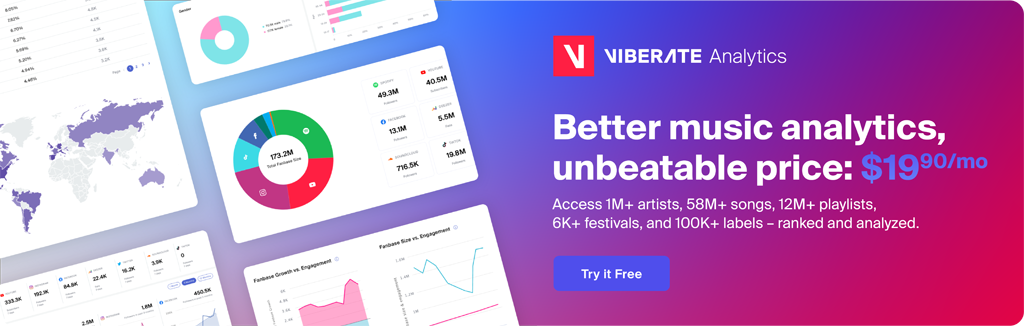
📌 Viberate Analytics: Professional music analytics suite at an unbeatable price: $19.90/mo. Charts, talent discovery tools, plus Spotify, TikTok, and other channel-specific analytics of every artist out there.
In today’s data-driven music industry, that role is more strategic than ever.
At its core, a music manager is responsible for guiding an artist’s career direction while managing the practical details that keep everything running smoothly. They act as advisor, negotiator, organizer, and representative.
Understanding what does a music manager do means looking at both the long-term vision and the daily responsibilities that make that vision achievable.
A manager helps define short- and long-term goals. This includes planning releases, shaping the artist’s image, identifying growth opportunities, and evaluating potential collaborations.
They advise on creative and business decisions, balancing artistic identity with market realities. Whether the focus is expanding into new territories, refining branding, or preparing for a major release, the manager ensures decisions align with a structured career roadmap.
Live performance remains a major revenue stream and growth channel. A music manager arranges gigs, tours, studio sessions, promotional appearances, and industry meetings.
They maintain the artist’s calendar, manage deadlines, and ensure that commitments don’t conflict. Efficiency matters. Missed deadlines or poorly coordinated schedules can cost revenue and credibility.
One of the most critical parts of the job involves negotiating deals. Managers work with labels, promoters, venues, sponsors, and partners to secure fair terms.
This includes agreements related to performances, royalties, licensing, and brand collaborations. While legal professionals may draft and review contracts, the manager often leads the negotiation strategy, protecting the artist’s interests and long-term value.
Artists are creative professionals, but their careers operate as businesses. A manager oversees budgeting, tracks income, monitors expenses, and ensures proper revenue splits.
In more complex operations, they collaborate with business managers or accountants. The goal is financial clarity and sustainability. Growth without structure leads to problems.
A strong brand and consistent visibility are essential. Managers coordinate publicity efforts, oversee social media direction, and supervise press materials such as electronic press kits.
They align marketing campaigns with release strategies and touring schedules. Every campaign must serve a purpose—whether that’s audience expansion, engagement growth, or monetization.
Access matters. A music manager builds and maintains relationships with labels, booking agents, publicists, producers, festival organizers, and venue operators.
These connections open doors to collaborations, distribution opportunities, radio support, and live bookings. Industry trust compounds over time.
Beyond strategy and planning, managers handle daily challenges. They filter incoming offers, represent the artist publicly, and resolve conflicts.
In many situations, they act as spokesperson and buffer, allowing the artist to stay focused on performance and creation.
The modern answer to what does a music manager do includes analytics. Decisions can no longer rely on intuition alone.
Reliable music analytics tools provide managers with clear insights into performance trends, fan demographics, playlist placements, social engagement, and airplay data. This allows them to plan smarter campaigns, benchmark artists against competitors, and identify new growth opportunities.
At Viberate, we provide music analytics built for A&Rs, artist managers, music marketers, event organizers, data analysts, and other music professionals.
Through , professionals can access structured insights that support every stage of an artist’s development.

Managers today rely on precise data to strengthen their strategy and execution.
Talent discovery becomes more efficient with access to one of the industry’s most powerful artist charts. Managers can rank artists by genre and performance across multiple channels, apply advanced A&R filters, and identify strong candidates for signings or collaborations.
Roster management improves through continuous monitoring of artist performance. Managers can analyze individual growth metrics, rank artists according to relevant indicators, and receive weekly performance reports directly via email.
Marketing campaigns benefit from clear fanbase insights. By identifying geographical distribution and demographic breakdowns—including age and gender—managers can segment developed markets from those requiring additional attention and adjust messaging accordingly.
Playlist performance analysis helps managers track daily adds and drops. The comprehensive Playlist Chart highlights editorial and user-generated playlists worth targeting, improving pitching efficiency.
Artist analytics provide a complete overview of cross-channel performance, including synthetic indicators for simplified comparison. Song analytics support optimized promotion and release cycles by benchmarking individual tracks through cross-channel statistics and Song Chart rankings.
Spotify playlist insights allow managers to follow playlist performance and identify suitable playlists by genre and mood. Benchmarking tools enable side-by-side comparison of career trajectories, streaming growth, fanbase expansion, engagement rates, and key markets.
The Festival & Venue Finder supports booking strategy by identifying potential gigs based on country, genre, fanbase size, geographic distribution, and career stage. This data-driven approach replaces guesswork with targeted outreach.
Audience demographics and geo-location analytics reveal regional relevance and guide release campaigns toward the most responsive markets. Radio airplay tracking provides insight into stations and territories supporting the artist.
Social insights from platforms like TikTok and Instagram offer channel-specific engagement breakdowns and highlight top-performing content. Custom reports and CSV exports simplify business reporting and internal analysis.
The platform covers 11M+ artists, 100M+ songs, 19M+ playlists, 6K+ festivals, and 100K+ labels, delivering structured intelligence across the global music industry.
The music industry evolves quickly. Revenue streams diversify. Platforms change. Audience behavior shifts.
Managers now operate at the intersection of creativity, business, and data. They are strategic operators, not just coordinators.
If you are asking what does a music manager do, the complete answer includes vision, negotiation, financial control, marketing coordination, network building, operational management, and analytics-driven decision making.
Artists who treat management as a serious strategic function position themselves for long-term growth rather than short-term spikes. The right manager combines industry relationships with measurable insights and structured execution.
In a competitive global market, that combination makes the difference between momentum and stagnation.
Source of music data: Viberate.com
 Next article
 Previous article
11M+ artists, 100M+ songs, 19M+ playlists, 6K+ festivals and 100K+ labels on one platform, built for industry professionals.