Kristian Gorenc Z
Feb 10, 2026

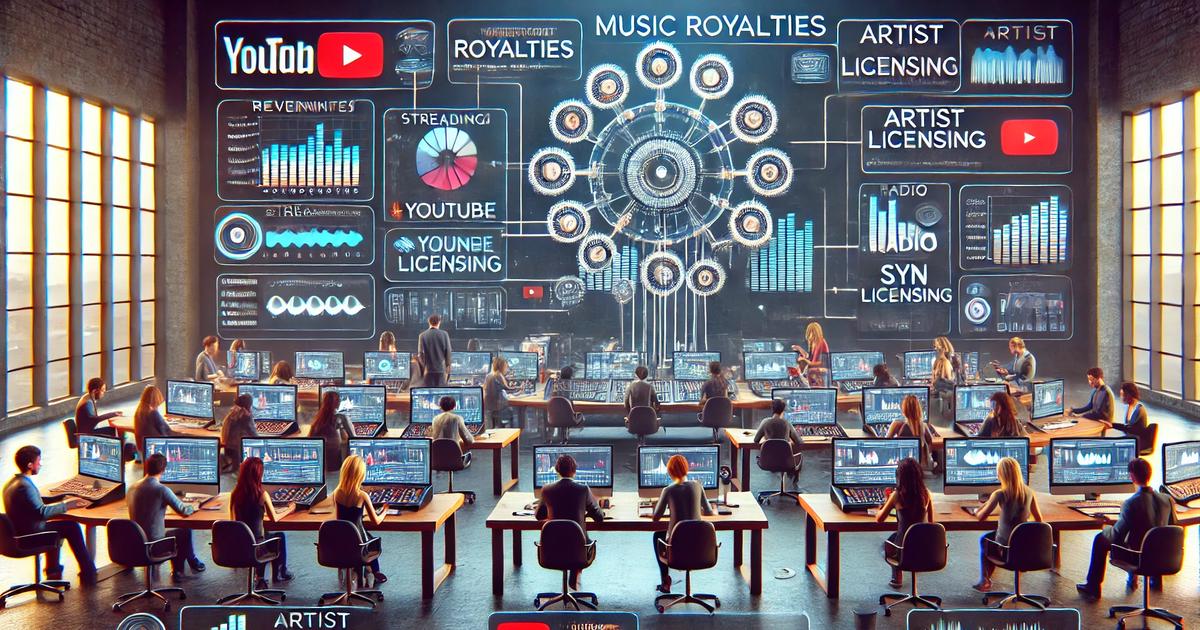

Understanding how are music royalties collected is not optional if you want to run a sustainable music career. Royalties do not arrive automatically, and no single platform or company handles everything for you. Money flows through multiple systems, each tied to a specific right, usage type, and collection body. Artists, managers, and labels who understand this structure can follow the money precisely instead of guessing where income should come from.
📌 Viberate Analytics: Professional music analytics suite at an unbeatable price: $19.90/mo. Charts, talent discovery tools, plus Spotify, TikTok, and other channel-specific analytics of every artist out there.
At its core, music royalty collection works through three connected layers. First, someone owns the rights. Second, someone uses the music. Third, an organization tracks that usage and pays the rights holder. If any part of that chain breaks, the money does not arrive. This is why many artists earn far less than they should, even when their music is widely played.
Every released track contains two completely separate copyrights. These rights earn different types of royalties and are collected by different organizations.
The first copyright is the composition, often called publishing. This covers the songwriting and lyrics. It is owned by the songwriters and, in many cases, a publisher. Publishing generates performance royalties, mechanical royalties, and synchronization income. Even if you never record a song yourself, the composition still earns money when others perform or reproduce it.
The second copyright is the master recording. This is the actual recorded audio that listeners hear. The master is usually owned by a record label or by the artist when releasing independently. Master recordings earn streaming royalties, sales income, neighboring rights, and synchronization income. Owning the master does not give you publishing income unless you also wrote the song.
These two sides operate independently. No single organization collects all royalties for both, which is why artists must manage multiple registrations to get paid correctly.
Performance royalties are generated whenever a song is played publicly. This includes radio airplay, television broadcasts, live concerts, bars, clubs, cafes, and digital streaming services. If music is played outside of a private home, performance royalties are triggered on the publishing side.
The collection process starts with businesses and broadcasters. They pay licensing fees to a Performing Rights Organization, often referred to as a PRO. These organizations are responsible for monitoring where and how music is used. They rely on data from playlists, cue sheets, broadcast logs, and digital fingerprinting to track performances.
Once usage is measured, the PRO distributes the collected money to the rights holders. Payments are split between songwriters and publishers, most commonly on a 50 percent writer and 50 percent publisher basis. If a songwriter controls their own publishing, they effectively receive both shares.
If a song is not registered with a PRO, performance royalties generated by that song cannot be paid. The money still exists, but it remains unclaimed or is distributed elsewhere based on the organization’s rules. This is one of the most common income losses for independent artists.
Mechanical royalties compensate songwriters for the reproduction of their compositions. These royalties apply when a song is copied or distributed in a fixed format. This includes digital downloads, physical formats such as CDs and vinyl, and interactive streaming on platforms like Spotify and Apple Music.
In the digital era, mechanical royalties are usually collected through designated mechanical rights organizations. Streaming services and download stores report usage and pay these organizations, which then distribute royalties to songwriters and publishers.
Mechanical income is often overlooked because it is less visible than streaming payouts. Many artists assume that streaming payments cover everything, but mechanical royalties exist separately on the publishing side. Without proper registration, this revenue never reaches the songwriter, even if the song performs well.
Streaming royalties tied to the master recording are paid by digital platforms such as Spotify, Apple Music, and Tidal. These payments are not sent directly to artists in most cases. Instead, they go to the master rights holder, which is usually a label or a digital distributor.
Streaming platforms calculate payouts using market share models. The total revenue pool is divided based on how often a track is streamed relative to all other music on the platform. The rights holder then receives their share and distributes it according to the artist’s contract.
Independent distribution deals often allow artists to keep between 50 and 85 percent of master revenue, depending on the agreement. Traditional label deals typically pay much less to the artist, as labels retain a larger portion of the income. Songwriters do not receive master royalties unless they also own the recording.

Neighboring rights generate income when recorded music is played on non-interactive platforms. This includes radio broadcasts, television airplay, and music played in public spaces. Unlike performance royalties, neighboring rights do not pay songwriters. They pay performers and master owners.
Broadcasters and venues pay licensing fees to neighboring rights societies. These organizations collect and distribute the money to featured performers, non-featured performers in certain countries through unions, and master owners. The exact structure varies by territory, but the principle remains consistent.
If performers or rights holders do not register with a neighboring rights collection society, their share of the royalties remains unclaimed. This is another area where artists often lose income simply because the administrative step was never completed.
Synchronization income is earned when music is licensed for use in visual media. This includes films, television shows, advertisements, video games, and licensed YouTube videos. Sync deals are structured differently from other royalty types and often generate higher upfront payments.
Every sync placement includes two separate fees. One fee is paid for the composition and is negotiated by the publisher or songwriter. The other fee is paid for the master recording and is negotiated by the label or the artist who owns the recording.
After the content is broadcast or distributed, performance royalties are generated from those uses and collected by PROs. For independent artists, sync can become a significant revenue source, especially when the rights are fully controlled and properly registered.
YouTube represents a unique royalty stream through its Content ID system. When music is used in videos, Content ID technology scans and identifies matching audio. Once a match is detected, advertising revenue generated by that video can be claimed by the rights holders.
The collected revenue is split between the composition and the master recording. Publishers receive the publishing share, while master owners receive the recording share. To access this system, artists must work with a distributor or a YouTube partner that can enroll recordings into Content ID.
Without Content ID enrollment, music may be used across the platform without generating any income for the rights holders, even if the videos receive millions of views.
Many artists assume that releasing music through a distributor automatically covers all royalty streams. This is not accurate. Income frequently goes unclaimed due to missing registrations and incomplete data.
Common issues include missing or incorrect metadata, songs not registered with a PRO, lack of mechanical rights registration, no neighboring rights registration, missing split sheets between collaborators, and no access to a global collection network. Each missing step creates a break in the revenue chain.
For managers and A&Rs, the largest gaps usually appear on the publishing side and in neighboring rights. These areas are rarely handled correctly by artists on their own, despite their long-term financial impact.
To collect royalties fully, artists usually need several registrations across both copyright sides. On the publishing side, this includes registering with a PRO and a mechanical rights organization. Some artists also work with a publishing administrator to manage registrations and reduce gaps.
On the master side, artists typically need a digital distributor to deliver music to streaming platforms, a neighboring rights agency to collect broadcast income, and a YouTube Content ID partner to monetize user-generated content.
When all of these elements are in place, the royalty system functions as intended. When they are not, revenue does not disappear, but it also does not reach the artist. Understanding the structure is the first step toward making sure every stream, broadcast, and placement is accounted for.
Source of music data: Viberate.com
 Next article
 Previous article
11M+ artists, 100M+ songs, 19M+ playlists, 6K+ festivals and 100K+ labels on one platform, built for industry professionals.