Matic Magister
May 26, 2026

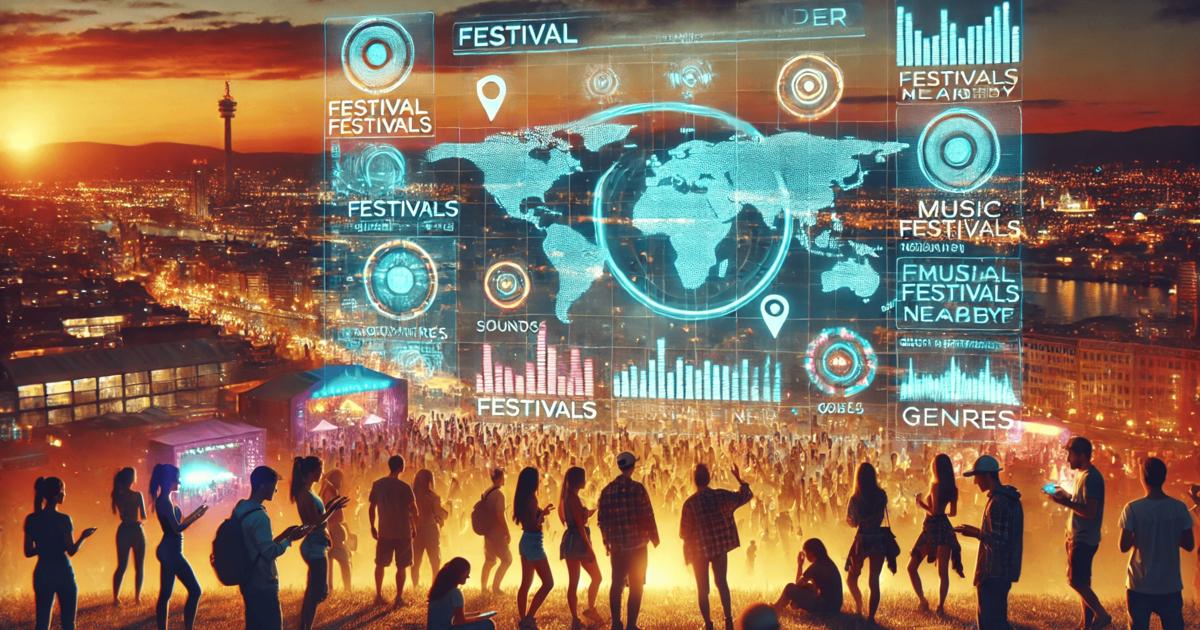

The global music festival scene has changed fast. What once meant a handful of iconic summer events has turned into a year-round network of festivals across continents, genres, and audience sizes. New festivals launch every season, while established ones expand, rebrand, or shift focus. For artists, managers, agents, promoters, and even fans, this growth created opportunity but also friction. Knowing where festivals take place is no longer the challenge. Knowing which festivals matter to you is.
For years, discovering relevant festivals relied on fragmented sources. Official festival websites, ticket platforms, social media announcements, word of mouth, and outdated blog lists formed an incomplete picture. These sources rarely agreed with each other and almost never provided context. You could see that a festival existed, but not how strong its lineup was, who attended, or how it compared to others in the same space. That lack of structure made strategic planning difficult.
Until recently, it was close to impossible to find a single database that featured most of the world’s music festivals in one place, let alone one enriched with meaningful analytics. Searching often meant switching between tabs, spreadsheets, and manual research. Decisions were based on assumptions instead of evidence. This gap became more obvious as the industry moved toward data-backed decision making in every other area.
Viberate’s Festival Finder was built to close that gap. You can access it directly at . The tool enables you to search for festivals anywhere in the world and explore them through a consistent, data-based framework. Instead of guessing, you can filter and compare festivals using clear criteria. This makes it easier to find opportunities that match your goals, whether that means booking shows, researching markets, or understanding festival trends.
The search process is designed to be practical. You can look for events by country, genre, or size and move from a broad overview to specific festivals in seconds. This changes how people approach the question of upcoming music festivals near me. Rather than scanning random lists, you start with a structured dataset and refine it based on what actually matters to you.
Once you identify festivals of interest, each festival profile opens up a detailed analytics view. This is where discovery turns into evaluation. Instead of stopping at names and dates, you can assess how a festival performs, who it reaches, and how it fits into the wider industry.
Every festival profile includes a complete overview of key music festival stats. These stats cover genres, lineup structure, and audience-related indicators. The goal is to give you context, not just raw numbers. You can quickly see what kind of event you are dealing with and how it positions itself within its market.
The performance overview provides an immediate snapshot. It shows lineup strength in comparison to other festivals, which helps you understand relative scale and relevance. It also highlights the state of the festival’s industry connections and lists similarly ranked festivals. This allows you to benchmark events instead of treating each one in isolation.
Looking at a festival lineup as a simple list of artists misses most of the story. Viberate breaks this down further by offering a complete lineup overview for each edition of the festival. You can explore historical lineups in detail and see how the event evolved over time.
Artists are sorted by their overall performance, which adds clarity to the lineup hierarchy. You can also identify top artists from previous editions, which is useful when assessing consistency and booking direction. This helps artists and industry professionals understand whether a festival aligns with their level and trajectory.
Genres are not static, and festivals reflect that. One of the strongest insights comes from tracking genre evolution through time. Viberate shows the festival’s predominant genres across different years and visualizes how genre distribution changes.
This view reveals long-term programming trends. You can see whether a festival stayed focused on a core sound or gradually shifted toward new styles. Subgenre distribution adds another layer, allowing for more precise positioning. This is especially useful for artists who work within niche scenes and want to find festivals that genuinely support their sound.
Understanding who attends a festival is as important as understanding who performs there. Viberate provides an audience map based on the festival’s latest lineup. This includes geo-location data of potential festival audiences, showing where listeners are concentrated.
The audience map also reflects listeners of the latest lineup and the social media followers of performing artists. Together, these signals paint a realistic picture of reach. Instead of relying on promotional claims, you can see where interest actually exists.
Demographics add another level of clarity. Viberate analyzes lineup audience demographics by gender and age, using data from Instagram, YouTube, and TikTok followers. This analysis is tied to the festival’s latest lineup, keeping the insight relevant.
This information helps align expectations. For promoters, it clarifies who the festival appeals to. For artists and agents, it shows whether the audience matches their fan base. For brands, it indicates whether a festival fits their target group. The data replaces vague assumptions with measurable signals.
Festivals operate within a wider industry network. Viberate’s analytics include an overview of a festival’s industry connections and social media mentions. This covers music industry network analysis, social media links with industry professionals, and mentions by artists or other festivals.
These connections often signal credibility and influence. A festival that is regularly mentioned by established artists or linked with other respected events usually holds a stronger position in the ecosystem. Seeing this network in one place makes it easier to judge long-term relevance.
Social media performance remains a key indicator of public interest. Viberate tracks the festival’s Instagram performance, including content performance, follower growth, and top-performing posts. Engagement rate is also shown in comparison to the industry average.
This comparison matters. A large follower count without engagement tells a different story than a smaller but active audience. By placing performance in an industry context, the data becomes actionable rather than decorative.
Beyond individual profiles, Viberate maintains a festival chart covering 8,000 popular music festivals. These festivals are ranked by overall performance, creating a global reference point. Filters by country, genre, and size help narrow the list.
This chart is especially useful when scouting opportunities. You can identify festivals worth pitching to, discover comparable events in new regions, and understand how different markets structure their festival scenes. Instead of starting from zero, you work from an organized overview.
Finding festivals is no longer just about collecting names. It is about evaluating fit, reach, and relevance. Viberate’s Festival Finder changes the process by combining global coverage with consistent analytics. It allows users to move from discovery to informed decisions without leaving the platform.
For anyone involved in the music industry, this approach saves time and reduces uncertainty. It replaces fragmented research with a clear system built around data. As the festival landscape continues to expand, tools that provide structure and insight will define how effectively people navigate it.
Source of music data: Viberate.com
-
📌 Viberate - Music Intelligence is the data & AI layer behind music analytics, connecting artist discovery, audiences, playlists, tracks, Spotify, TikTok, YouTube, streaming, and radio airplay.
 Next article
 Previous article
11M+ artists, 100M+ songs, 12M+ playlists, 6K+ festivals and 100K+ labels on one platform, built for industry professionals.