Kristian Gorenc Z
Oct 20, 2026

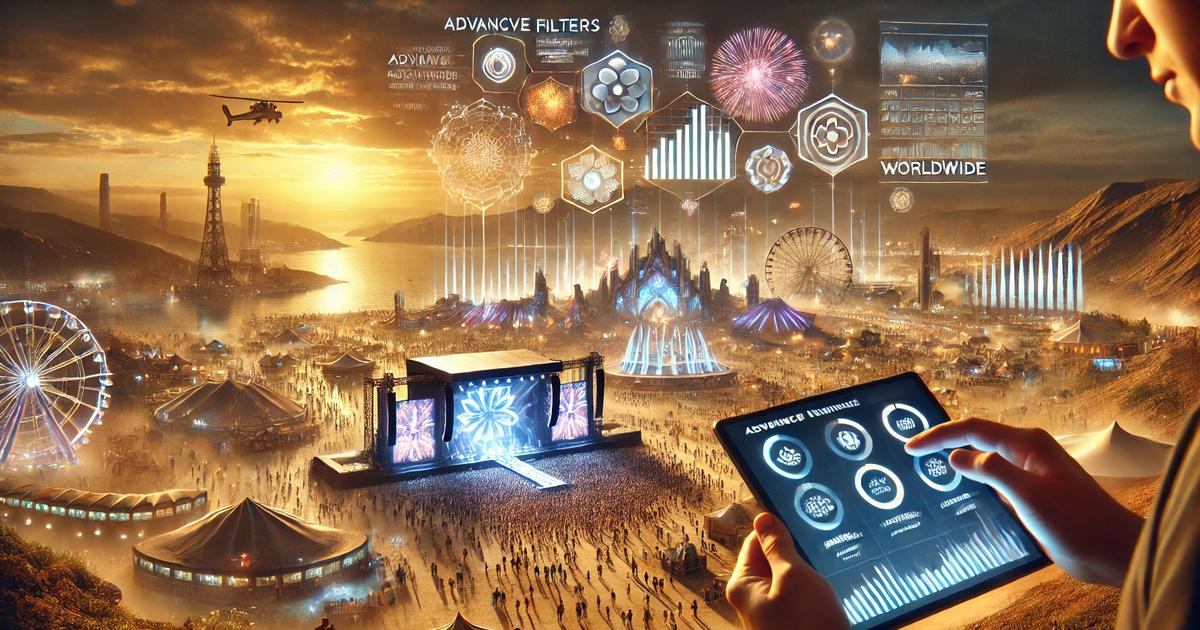

The global music festival landscape has expanded at a rapid pace. What used to be a handful of major events has turned into thousands of festivals across continents, genres, and audience types. From large-scale commercial events to niche underground gatherings, the number of options keeps growing every year.
For music professionals, this creates a clear challenge. Finding the right festivals is no longer about knowing a few big names. It requires understanding which events match a specific genre, audience, and career stage. For artists, managers, and booking agents, this directly affects touring strategy and growth opportunities.
Until recently, this process was fragmented. Information about festivals was spread across websites, social media, and industry contacts. There was no single place where you could explore festivals globally, compare them, and analyze their relevance in a structured way. Even less so with actual performance data behind each event.
This is where things have changed. With tools like Viberate’s festival finder, you can now search and filter festivals across the globe in one place. Instead of relying on manual research, you can access a centralized database that covers thousands of events.
If you are trying to identify the best music festivals in the world, you can now approach the task with data instead of guesswork. The tool allows you to filter festivals by country, genre, and size, making it easier to narrow down options that actually fit your goals.
You can explore the full database here: best music festivals in the world
Once you identify festivals that match your criteria, the next step is where the real value comes in.
Each festival in the database comes with a detailed analytics layer. This goes beyond basic event information and gives you a structured overview of how a festival performs, who it attracts, and how it evolves over time.
The first level is a quick performance overview. This helps you understand how strong a festival is compared to others. You can evaluate lineup strength, see how well connected the event is within the music industry, and identify similar festivals that operate at a comparable level.
This is useful when you are benchmarking opportunities. Instead of looking at festivals in isolation, you can place them in context and decide where they stand in the broader ecosystem.
Another key layer is the complete lineup overview. You can break down each edition of a festival and see exactly which artists performed. More importantly, those artists are ranked by their overall performance metrics.
This allows you to quickly identify the top artists associated with a festival and understand its booking profile. For artists and managers, this provides a clear signal of whether the festival aligns with their current level.
Looking at past editions also helps you spot patterns. Some festivals consistently book rising talent, while others focus on established names. Having access to this data removes uncertainty when planning submissions or outreach.
Genres are not static, and festivals evolve as audience preferences shift. The genre evolution feature shows how a festival’s musical direction has changed over the years.
You can analyze predominant genres, track how their share has shifted, and even break this down into subgenres. This is particularly useful if you are targeting specific markets or trying to align your sound with the right events.
Instead of relying on outdated perceptions, you get a current and historical view of what a festival actually represents.
One of the most practical insights comes from the audience mapping features. You can see where the potential audience of a festival is located geographically, based on the listeners and followers of the artists in its lineup.
This gives you a realistic picture of where demand exists. For touring artists, this can support decisions about where to perform and how to plan travel routes.
On top of that, you can explore audience demographics. The platform provides breakdowns by age and gender, using aggregated data from Instagram, YouTube, and TikTok followers. This helps you understand who you are actually playing to, not just who the festival claims to target.
Festival success is not only about the lineup. Industry connections and visibility also play a major role.
With the available analytics, you can assess a festival’s network within the music industry. This includes connections with professionals, mentions by artists, and relationships with other festivals.
Social media performance adds another layer. You can evaluate how the festival performs on Instagram, including follower growth, engagement rates, and top-performing content. This provides insight into how well the event communicates and how strong its brand presence is compared to others.
When you are dealing with thousands of festivals, prioritization becomes essential. The festival chart within the platform ranks over 8,000 events based on their overall performance.
You can apply filters by country, genre, and size to create a shortlist that matches your strategy. This makes it easier to focus on realistic opportunities instead of chasing events that are not aligned with your profile.
For artists looking to pitch gigs, this structured ranking system removes a lot of guesswork. You can identify where you stand and target festivals accordingly.
The process of discovering festivals has shifted from manual research to data-driven decision-making. Instead of spending hours collecting scattered information, you can now access a complete overview in a single environment.
For music professionals, this means faster decisions, better targeting, and more efficient planning. Whether you are building a touring strategy, scouting opportunities, or analyzing the market, having structured festival data changes how you approach the task.
The music festival space will continue to grow, and with it, the complexity of navigating it. Tools that combine discovery with analytics are becoming necessary if you want to stay competitive and make informed choices.
Using data does not guarantee success, but it gives you a clear advantage. And in an industry where timing and positioning matter, that advantage can make a measurable difference.
Source of music data: Viberate.com
-
📌 Viberate - Music Intelligence is the data & AI layer behind music analytics, connecting artist discovery, audiences, playlists, tracks, Spotify, TikTok, YouTube, streaming, and radio airplay.
 Next article
 Previous article

11M+ artists, 100M+ songs, 12M+ playlists, 6K+ festivals and 100K+ labels on one platform, built for industry professionals.