Vasja Veber
Oct 29, 2026

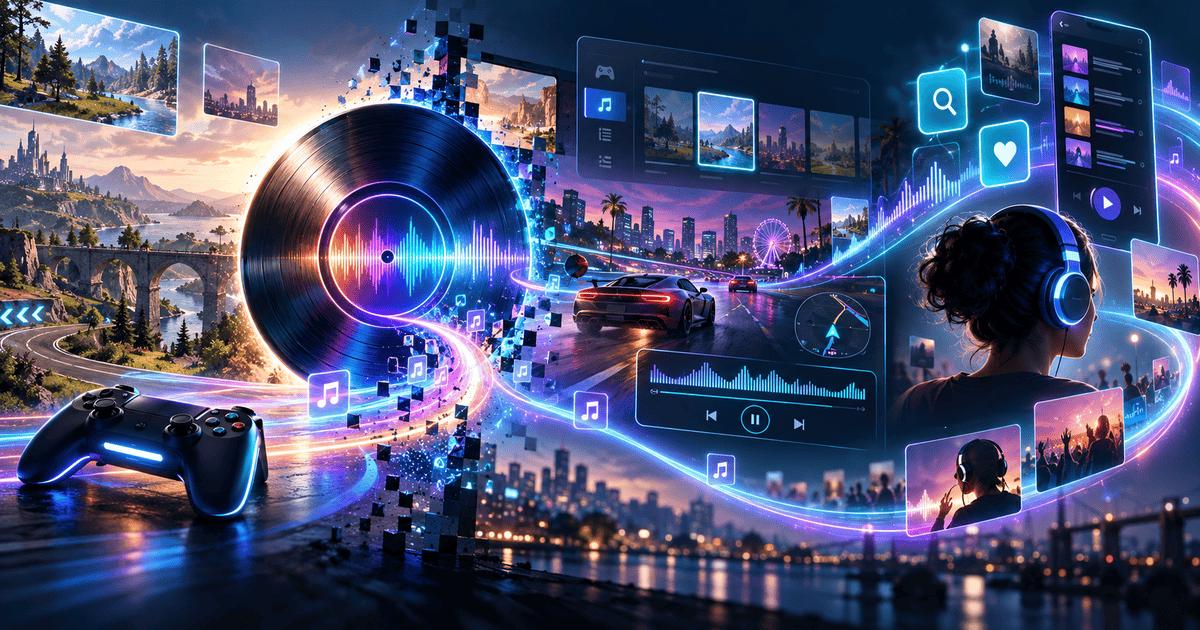

The Second Life of a Song After It Lands in a Video Game
A song placed in a film gets one moment. It plays under a scene, the credits roll, and whatever attention it earned has to be earned again on the next viewing. Interactive media runs on different arithmetic. A track attached to a menu screen, a racing level or an in-game radio station can reach the same listener hundreds of times across months, and that repetition is what turns a licensing agreement into a second career for a recording that had already finished its first one.
Repetition Does the Work Radio Used to Do
Familiarity used to be manufactured by rotation. A station spun a single often enough that listeners stopped noticing they knew it, and recognition did the rest. Terrestrial radio no longer holds that position for anyone under thirty, but the mechanism did not disappear. It moved. A game with a fifteen-hour campaign and a few dozen licensed tracks produces exactly the kind of unavoidable repeat exposure that programmers once engineered on purpose, except nobody scheduled it and the listener chose to be there.
What makes the exposure stick is that it arrives attached to activity rather than to passive listening. A player hears the same track while doing something difficult, failing at it, and eventually succeeding. The song becomes bound up with an experience the person had rather than one they watched. Years later the opening bars pull up a specific memory of a level, which is a far stronger hook than remembering a song was in a movie.
The Listener Goes Looking
None of this matters commercially unless the listener acts on it, and increasingly they do. A track heard often enough gets identified, saved, added to a playlist and shared, and the moment that happens the song has left the game and entered a catalog where it can keep working indefinitely. Short-session platforms have noticed the same effect. Someone moving through a puzzle app, a mobile racer and a HelloMillions sweepstakes casino in a single evening is passing through several distinct audio environments, each one competing for the same recognition reflex.
That reflex is measurable in a way the industry only recently learned to track. Identification apps, playlist additions and search spikes give rights holders a clear picture of which placements moved listeners and which just filled space. Some soundtracks generate almost no lift. Others produce a curve that looks like a release week for a record that had been out of the conversation for years, and the difference usually comes down to how central the music was to what the player was doing.
What the Agreement Actually Covers
The mechanics behind a placement are less glamorous than the result. Using an existing recording requires two separate permissions: a synchronization license covering the composition and a master license covering the specific recording. Both must be secured, often from different owners, and the terms of each shape everything that follows. Anyone whose catalog is being pitched into games benefits from understanding how a supervisor clears the rights before the negotiation starts rather than after.
Terms decide how long the second life can last. A limited-term agreement means the track disappears from the game when the license lapses, taking the discovery engine with it. A perpetuity agreement keeps the song in circulation for as long as the title stays available, which for a well-supported release can mean a decade of continuous exposure. Genre matters too. R&B and hip-hop currently move well in synchronization, while electronic music finds fewer placements, a pattern that shifts every few years and rewards artists who watch where the demand sits.
Recognition Arrived Later Than the Money
The cultural side took longer to catch up than the commercial side. Game music competed against film and television scores in a general category for years and almost never surfaced. That changed with a dedicated award, first presented in 2023, honoring original scores written specifically for games and other interactive media. Stephanie Economou took the first one. In 2026 Austin Wintory won the category for Sword of the Sea, beating a shortlist that included scores written for two of the largest releases of the year.
The distinction inside that award is worth noting, because it applies to original composition rather than to licensed songs. A track written for a game and a track borrowed by one follow different routes. The composer builds something inseparable from the title. The licensed song arrives with a history and leaves with a larger one, which is the entire point of the arrangement for a rights holder.
Where the Ongoing Revenue Comes From
In-game listening on a console at home is generally not treated as a public performance, so the fee negotiated up front is usually the whole of it. The revenue that continues arrives after the discovery. Once a listener moves the track onto a streaming service, into a video or a live setting, performance royalties enter the picture, and that money gets collected by performance rights organizations from a licensee list that runs through streaming platforms, thousands of websites and mobile apps, roughly 5,700 concert presenters and over a thousand symphony orchestras. A placement's real value sits in what it feeds, not in the agreement itself.
The Placement Is a Doorway, Not a Destination
Treating a game license as the finish line misreads what is happening. The agreement buys a recording repeated access to an attentive audience, and everything that matters commercially happens downstream of that access, in the streaming numbers, the playlist adds and the concert programs that follow. Catalog owners who understand this negotiate for reach and duration rather than for the largest single figure, because a modest fee attached to a title people keep returning to will outperform a generous one attached to something nobody finishes.
The songs that get a second life are rarely the ones with the loudest campaigns behind them. They are the ones a few million people happened to hear while concentrating on something else, often enough that the melody outlasted the session it belonged to.
Source of music data: Viberate.com
-
📌 Viberate - Music Intelligence is the data & AI layer behind music analytics, connecting artist discovery, audiences, playlists, tracks, Spotify, TikTok, YouTube, streaming, and radio airplay.
 Next article
 Previous article

11M+ artists, 100M+ songs, 12M+ playlists, 6K+ festivals and 100K+ labels on one platform, built for industry professionals.