Viberate
Oct 16, 2026

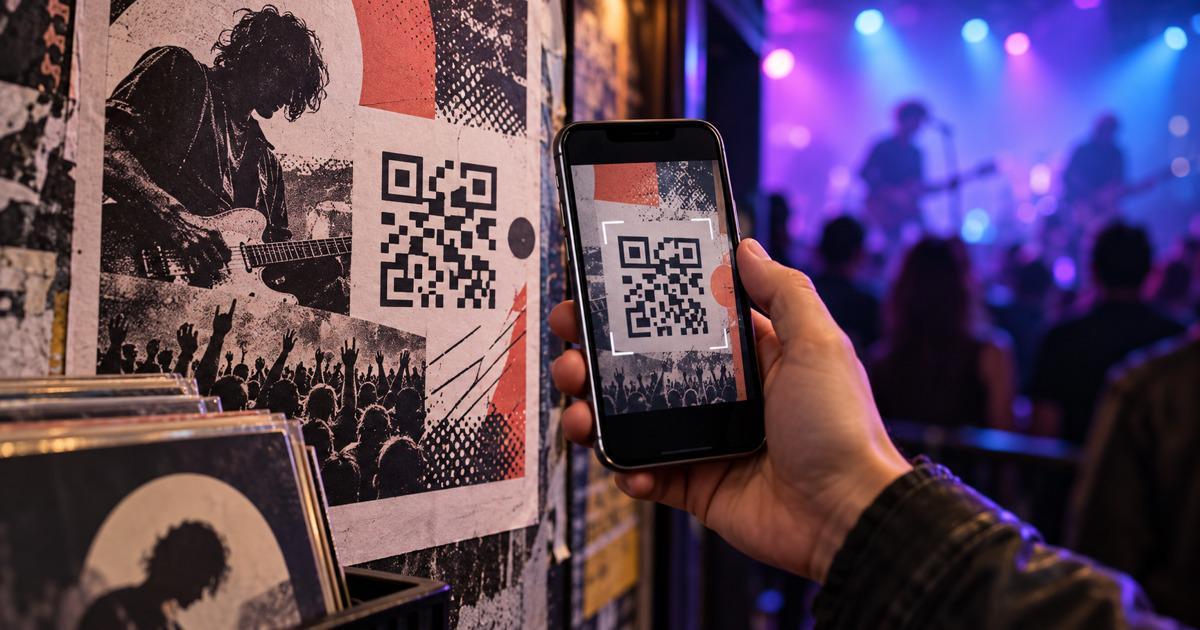

Music promotion increasingly moves between physical and digital spaces. On posters, album inserts, merchandise, or venue materials, ME QR can provide a direct route from an offline interaction to music, tickets, artist pages, or campaign content. For musicians and marketing teams, the main value lies in reducing the number of steps between discovering an artist and taking the next action.
A QR code can connect almost any physical promotional asset with a digital destination. A fan might scan a tour poster to buy tickets, open a streaming page from an album insert, or reach exclusive content from merchandise.
This format is especially useful when artists promote music across several channels at once. Instead of printing long URLs, social handles, or several calls to action, one compact element can connect audiences with the most relevant destination.
Some applications go beyond the obvious link to a song or profile. Music teams can use this technology in more focused ways:
● connect limited-edition merchandise with unreleased tracks, backstage videos, or digital collectibles;
● add scannable links to venue posters that open location-specific ticket or event pages;
● direct album buyers to updated credits, lyrics, production notes, or bonus materials;
● use separate codes for different cities to compare engagement during a tour;
● connect press kits, artist badges, or festival materials with current media resources.
These options make physical promotion measurable and easier to update. They also help artists maintain a consistent path from first contact to streaming, ticket sales, mailing-list registration, or another desired action.
The right QR code generator depends on how long a campaign will run and how often its content may change. Static codes can be sufficient for permanent destinations, while dynamic ones are better suited to evolving campaigns.
Analytics are another important factor. Location, time, and device information can help managers identify which posters, venues, cities, or events attract the most scans. A QR code maker with branding controls can also help a code fit the visual identity of an album, tour, or artist.
For agencies, labels, or teams managing several performers, bulk creation and API access may become more important than simple one-by-one generation.
An online QR code generator should therefore be evaluated as part of the complete promotion process rather than only as a quick design utility. Campaign duration, reporting requirements, branding, and management needs all affect the final choice.
ME-QR is an international platform for creating, managing, and analyzing QR codes, with dynamic destinations, scan analytics, bulk generation, API integration, and branding options, including logos, colors, and custom domains. The service works with users worldwide, offers its interface in 28 languages, and reports more than 20 million generated codes, over 300 million scans, and more than 500,000 users globally. Вставленный Markdown
Kiosque QR can be considered for campaigns that connect printed promotional materials with digital destinations. For musicians, the practical question is whether its available customization and management tools correspond to the scale of a release, tour, or event campaign.
Before using any free QR code generator for large print runs, artists should also check whether links remain manageable after materials have already been distributed.
QR.io is another option for creating scannable links for marketing materials. Music teams evaluating the service may focus on whether it supports the type of destination, design flexibility, and tracking required for their promotional activities.
A QR generator becomes more useful when it fits existing workflows rather than adding another isolated tool that requires constant manual administration.
QRFY may be relevant for campaigns where dynamic destinations and measurement are important. For example, promotional materials can remain unchanged while the linked page evolves from a pre-save campaign to a release page or later to tour information.
This flexibility can be particularly valuable when posters, packaging, or merchandise remain in circulation for months.
QRCodeKIT can also be assessed for artist promotion, events, and printed media. The main considerations should include how easily campaigns can be organized, whether destinations can be edited, and what performance data are available after launch.
For music teams looking to create QR code assets across several campaigns, centralized management can become more important as the number of releases and placements grows.
There is no universal platform for every artist. An independent musician promoting a single release may need only straightforward creation and customization, while a label or agency may require analytics, bulk generation, API access, and several managed campaigns.
The physical context matters as well. Codes printed on posters, merchandise, flyers, vinyl packaging, or event signage should be tested under realistic lighting and scanning conditions before mass production.
The best choice is therefore the service that matches both the promotional concept and the campaign lifecycle. A QR code generator online can be useful at the creation stage, but long-term value depends on whether the same platform supports updating, tracking, and managing content after the materials reach the audience.
Yes, if they use a dynamic code. The destination can then be updated without replacing the printed graphic itself.
They can appear on posters, album packaging, merchandise, event signage, flyers, press materials, and other physical promotional assets where scanning is convenient.
Yes. Scan data can help teams compare engagement by location, timing, device, or promotional placement and evaluate which offline materials generate stronger audience response.
Source of music data: Viberate.com
-
📌 Viberate - Music Intelligence is the data & AI layer behind music analytics, connecting artist discovery, audiences, playlists, tracks, Spotify, TikTok, YouTube, streaming, and radio airplay.
 Next article
 Previous article
11M+ artists, 100M+ songs, 12M+ playlists, 6K+ festivals and 100K+ labels on one platform, built for industry professionals.