Kristian Gorenc Z
Oct 1, 2026

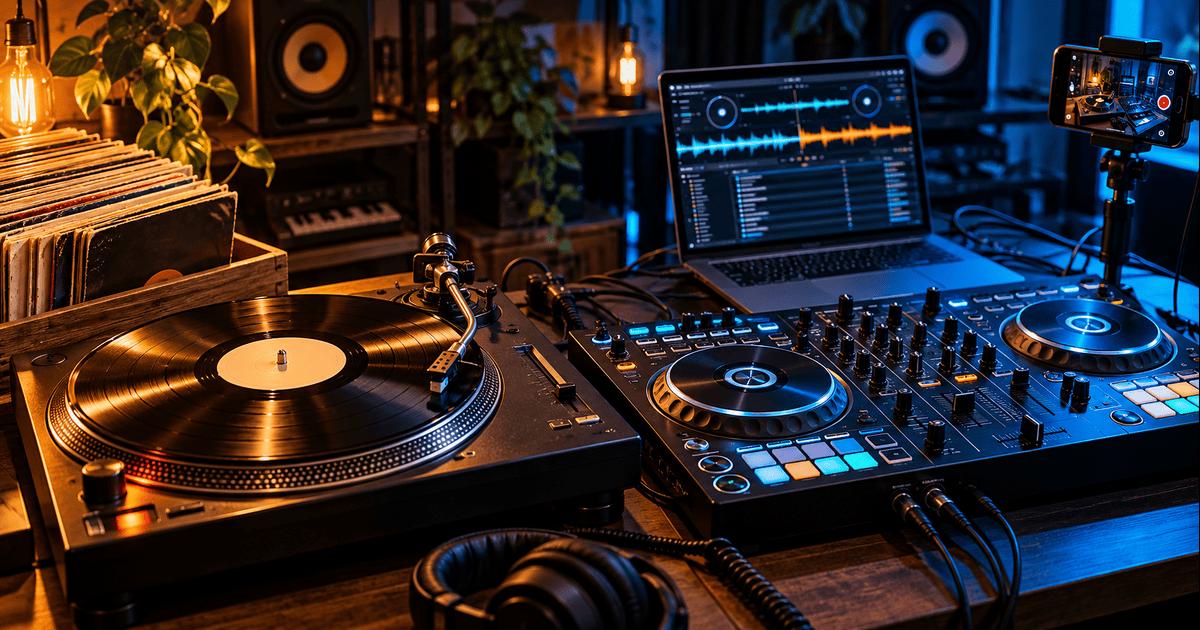

Go back to 1985 and ask around — people would tell you a DJ’s job was nothing fancy. Just put on some tracks, keep the vibe going, and survive the mix without looking like an amateur. Simple as that. Ask the same question today, and you'll get a much longer, messier answer involving software, algorithms, brand deals, and probably a TikTok account. Somewhere between those two points, the job changed shape entirely — and honestly, most people outside the industry haven't quite caught up with how much.
The Selector Era: Crates, Vinyl, and Physical Labor
Back in the disco and early house days, being a DJ was mostly a logistics problem. You needed crates of vinyl — heavy, fragile, expensive — and enough musical memory to know which 12-inch worked at 2 am versus which one cleared a room. Frankie Knuckles, often credited as the godfather of house music, made his own extended edits of disco records at Chicago's Warehouse era by cutting and splicing reel-to-reel tape, because the technology to do it digitally simply didn't exist yet.
There was no "undo" button. A bad transition stayed bad. Plus, traveling meant carrying real weight—20 to 25 kilos per crate, easy. Which is why touring DJs in the 80s and 90s often looked gassed before they even hit the stage.
The skill set back then was narrow but deep:
That narrowness is actually what made the role respected. You couldn't fake it. Either your hands were good, or they weren't.
CDJs, Software, and the Democratization Problem
Then the 2000s arrived. And everything cracked wide open. CDJs slowly took over club booths, and software like Traktor — later joined by Serato Scratch Live — meant you could carry your whole music collection on a laptop. Pioneer's CDJ-1000 arrived in 2001 and quickly became a club staple. It also helped cement a whole new digital workflow for pros.
Of course, convenience had a flip side — and it's still a sore subject today. Suddenly, the technical bar for entry was on the floor. Sync, auto-beat, looping — the software got so good that you could learn decent transitions in weeks instead of years.
Not everyone welcomed the shift. The idea that “real DJs don’t use sync” became a recurring form of gatekeeping within DJ culture and remains a subject of debate today, even as sync and other automated tools have become normal features of professional DJ equipment.
From Selector to Producer: Why the Job Split in Two
For DJs trying to build careers beyond the booth, producing original music has become increasingly valuable. DJ-producers are nothing new — they’ve been central to electronic music for decades — but today, having your own catalog can open doors that great DJ sets alone cannot. Gigs pay in the moment. Tracks keep paying — royalties, recognition, and something for promoters to remember you by.
Which helps explain why the DJ and producer roles have become so closely intertwined. Many of the bigger names on Beatport are touring, writing, remixing, and releasing at the same time. A strong discography works like a CV and a wallet in one — it proves your sound, builds your history, and keeps paying through royalties, syncs, and future gigs. Redhead Queen is a good example of how to present that identity clearly. At redheadqueen.com, everything’s pulled all together — tracks, live recordings, press, and contact details. Promoters don't have to play detective.
The shift has also broadened what success can require. DJing still revolves around selection, programming, technical mixing, and the ability to read a crowd. Production brings a different skill set — arrangement, sound design, recording, and mixing — while building an audience increasingly means understanding how streaming platforms, playlists, social media, and recommendation systems influence discovery.
The Digital Creator Layer: Content Isn't Optional Anymore
Being good behind the decks used to be enough. Increasingly, it isn't. Many bookers, brands, and club owners check a DJ's Instagram or TikTok early on, and some want to see the numbers before they even discuss a lineup slot.
Some artists hate this shift — and honestly, fair enough. Dropping beats at 3 am and editing reels at 9 am? Not exactly the same skill set. But the DJs who've leaned into it tend to build something more durable than a single-scene reputation. Take a working tech house DJ juggling production, live sets, and daily content — that kind of hybrid presence, documented in real time rather than staged, is honestly closer to where the whole industry has been heading for a while now.
A few things tend to separate DJs who make this transition successfully from those who struggle:
Where This Actually Leaves Things
Beatmatching, reading energy, knowing when to hold a track versus drop it — that instinct still separates good sets from forgettable ones, and no software fixes that. What changed is the size of the job description. These days, a DJ is basically a one-person startup. Producer, content creator, marketing department, and performer.
Get the fundamentals down. Gear changes, algorithms update, but a bad transition is a bad transition; it always has been. Build the production skills early, document the process honestly rather than performing it, and treat consistency as the actual strategy. The industry rewards the people who just keep showing up. A viral moment is nice, but the ones who make it are the ones who keep releasing, keep building, and don't disappear.
Source of music data: Viberate.com
-
📌 Viberate - Music Intelligence is the data & AI layer behind music analytics, connecting artist discovery, audiences, playlists, tracks, Spotify, TikTok, YouTube, streaming, and radio airplay.
 Next article
 Previous article
11M+ artists, 100M+ songs, 12M+ playlists, 6K+ festivals and 100K+ labels on one platform, built for industry professionals.