Kristian Gorenc Z
Sep 14, 2026

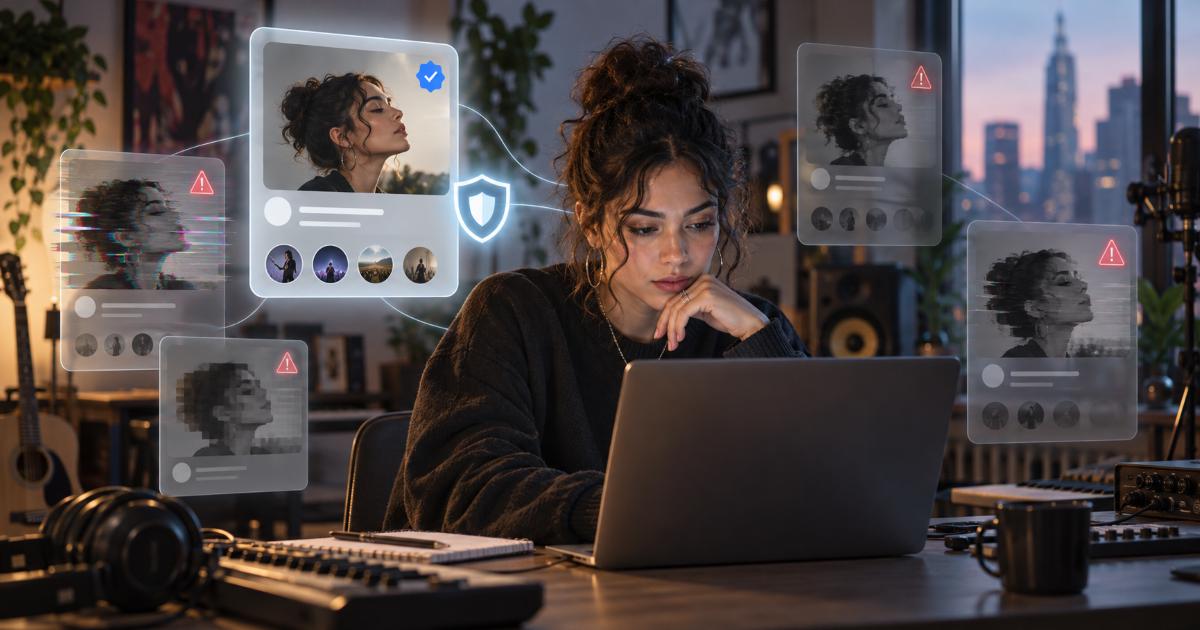

The internet has made it easier than ever for artists to build an audience. A musician can release a song, create a social profile, share behind-the-scenes content, and connect with listeners across several platforms without needing a traditional label or large marketing team.
But that same accessibility creates a problem: it is also easier for someone else to copy an artist’s identity.
Fake social profiles, reused photographs, impersonation accounts, and copied promotional materials can all make it difficult for fans and industry professionals to know which online presence is authentic. For independent artists in particular, protecting a recognizable digital identity has become an important part of building a sustainable career.
An artist's online identity is much more than a profile picture and username. It includes social media accounts, streaming profiles, promotional photographs, interviews, websites, videos, and other content connected with the artist.
When those assets are consistent, fans can easily recognize the official account and distinguish it from unrelated profiles. This also helps managers, labels, promoters, and potential business partners understand which channels represent the real artist.
The problem begins when somebody uses the same or similar photographs, names, biographies, or branding to create another profile.
Sometimes this is simply a fan account. In other cases, however, impersonation can be used to mislead followers, promote questionable links, sell fake merchandise, or communicate with people while pretending to be the artist.
Artists are particularly exposed because their photographs are intentionally public.
A single press photo may appear on Instagram, TikTok, Facebook, YouTube, music blogs, event websites, and dozens of other pages. Once an image is published, it can be downloaded and reused elsewhere.
This doesn't necessarily mean that every reused photograph represents malicious activity. Images naturally travel across the web when publications write about an artist or fans share content.
The challenge is identifying when an image appears in a context that doesn't belong to the artist.
For example, an artist might discover that a photograph from an official Instagram account has been used on another profile with a different name. A promoter could also come across a suspicious account claiming to represent the artist. In situations like these, knowing where an image appears online can provide an additional clue.
Tools that offer can help users investigate publicly available appearances of a person's image and discover whether the same or similar photograph is being used elsewhere.
Digital identity isn't only important for fans. It can also influence how music professionals evaluate artists.
A&R teams, managers, promoters, and marketers increasingly rely on online information when researching emerging talent. They may compare an artist's social activity, audience, engagement, content, and presence across different platforms.
When that information is mixed with fake or unrelated profiles, it can create confusion.
Imagine an emerging artist whose official Instagram account has 20,000 followers. A separate account using the artist's name and photographs has another 8,000 followers. If someone researching the artist doesn't recognize the difference, they could mistakenly combine information from both accounts.
The result is a distorted picture of the artist's actual audience.
This is one reason why clean and reliable music data matters. Platforms such as Viberate help artists, labels, and music professionals analyze performance and audience information across the digital music ecosystem. The more accurately an artist's online activity can be understood, the easier it becomes to make informed decisions about promotion and growth.
Impersonation isn't only a branding issue.
A fake profile can potentially damage an artist's reputation by publishing inappropriate content, communicating misleading information, or promoting something the real artist doesn't support.
There can also be financial consequences.
Someone pretending to be an artist could contact fans and ask for money, promote fake tickets, advertise nonexistent merchandise, or redirect followers to suspicious websites. Even if the scam is discovered quickly, the artist may still have to spend time explaining what happened and rebuilding trust.
For independent musicians who manage most of their online presence themselves, this can become a significant distraction.
A simple digital identity audit can go a long way.
Artists and their teams should periodically search for:
Image-based searches can be particularly useful when an artist suspects that an existing photograph has been reused somewhere unexpected.
The goal isn't to remove every appearance of an artist's image from the internet. That's unrealistic for anyone with a public career. Instead, the goal is to understand where important images and identity signals are appearing and determine whether those appearances are legitimate.
Prevention is just as important as monitoring.
Artists should make their official channels easy to identify. Using consistent usernames, profile photographs, biographies, website links, and branding across platforms makes it harder for fans to become confused.
A central artist website can also serve as an authoritative reference point. Social profiles can link back to it, while the website can list the artist's official platforms.
This creates a simple verification path.
If a fan encounters a suspicious account, they can check the artist's official website and compare the listed profiles.
Modern music promotion is increasingly data-driven. Artists and their teams can track audience growth, engagement, streaming activity, geographic trends, playlist performance, and other signals to understand what is working.
But data is only useful when the underlying information is trustworthy.
The same principle applies to digital identity. A large follower count doesn't automatically tell the full story. Neither does a single social profile.
Looking at multiple signals together can provide a much clearer picture of an artist's real digital presence.
That is especially valuable as artists expand across more platforms and reach audiences in different countries.
Artists don't need to treat online identity protection as a complicated technical project.
A few consistent habits can make a meaningful difference: maintain accurate official profiles, use consistent branding, monitor important photographs, keep track of impersonation attempts, and make official channels easy for fans to verify.
Most importantly, artists should remember that their digital identity is part of their professional reputation.
Music discovery may begin with a song, but an artist's broader online presence often determines how fans, media outlets, promoters, and industry professionals perceive them.
In an environment where photographs and profiles can be copied within seconds, taking a proactive approach to digital identity gives artists another layer of control over their careers.
Source of music data: Viberate.com
-
📌 Viberate - Music Intelligence is the data & AI layer behind music analytics, connecting artist discovery, audiences, playlists, tracks, Spotify, TikTok, YouTube, streaming, and radio airplay.
 Next article
 Previous article
11M+ artists, 100M+ songs, 12M+ playlists, 6K+ festivals and 100K+ labels on one platform, built for industry professionals.