Kristian Gorenc Z
Sep 3, 2026

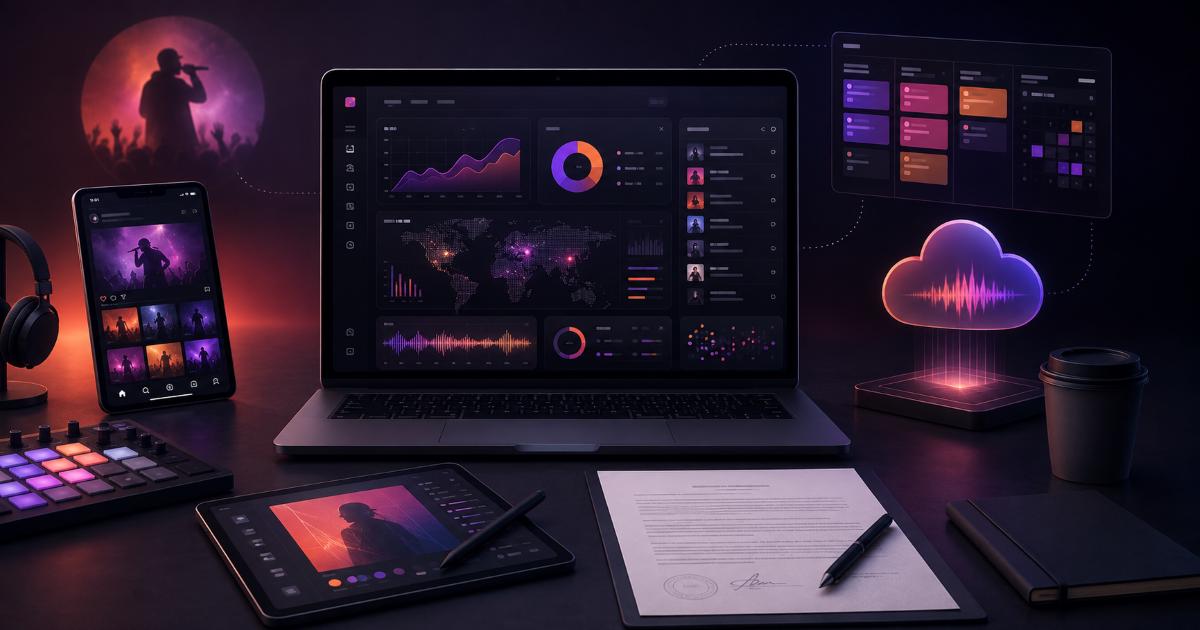

The modern music industry is about much more than making and releasing music. Artists, record labels, and music managers need to understand their audiences, create content, promote releases, manage business relationships, distribute music, and keep countless projects moving at the same time.
The good news is that there are tools designed for almost every part of this workflow. The right combination can help music professionals make better decisions, save time, and build a more consistent presence across platforms.
We've grouped 10 useful tools into five categories to help you find the right solutions for each stage of the music business.
Data can help artists and music professionals understand what's working, identify opportunities, and make more informed decisions about releases and promotion.
Viberate is a music analytics platform designed to help artists, labels, managers, and other industry professionals make sense of music data. Users can research artists, analyze audience and social performance, explore playlists and charts, and compare artists across different metrics.
For managers and labels, this type of data can be useful when discovering talent, evaluating an artist's growth, or planning a promotional campaign.
Key features:
Spotify for Artists gives musicians access to data about their performance on Spotify. Artists can monitor listeners, streams, audience demographics, playlist activity, and other metrics to understand how their music is performing.
The platform is particularly useful for evaluating releases and learning more about the people listening to an artist's music.
Key features:
Music promotion is increasingly visual. From album artwork and social media graphics to promotional campaigns, artists need compelling digital assets. At the same time, AI is changing how those assets are created and making content verification more important.
Adobe provides a broad collection of creative tools for producing professional visual and multimedia content. Artists and music marketing teams can use its ecosystem for image editing, graphic design, video production, and other creative work.
Its tools can be particularly useful for maintaining a consistent visual identity across album artwork, social media campaigns, promotional materials, and other artist assets.
Key features:
As AI-generated visuals become more common in music marketing, artists and teams may also need ways to verify how images were created. AImageDetector.ai helps users assess whether an image is likely to have been generated or modified using AI.
Its AI image detector analyzes visual signals, metadata, provenance, and other indicators associated with AI-generated or manipulated imagery. This can provide an additional verification step for promotional graphics, social media content, and other visual assets.
Key features:
AI is increasingly involved in digital content creation, making it useful for music professionals to understand when content has been generated or assisted by AI.
IsThisAI can be used as part of a broader content-verification workflow, helping users assess AI-generated content before publishing or distributing it. As an AI image checker, helps users assess whether an image is likely to have been generated or modified using AI. For artists and teams producing content at scale, this can provide an additional layer of awareness around AI-assisted workflows.
Key features:
Behind every successful music project is a business structure. Artists work with producers, managers, designers, marketers, venues, distributors, and other partners, making clear agreements an important part of the process.
Contracts can help artists, labels, and music professionals establish clear expectations around payments, responsibilities, services, and other business relationships.
LawDistrict provides customizable legal documents for a range of personal and business needs. Its business contract template can be useful for creating an agreement that outlines important terms between parties, helping music professionals formalize routine business arrangements.
Key features:
Music businesses also need practical tools for managing everyday administration. Google Workspace brings email, documents, spreadsheets, presentations, and cloud storage into one ecosystem.
Artists and managers can use it to prepare budgets, maintain release schedules, share promotional assets, manage documents, and collaborate with other members of a team.
Key features:
Creating music is only the beginning. Artists need to consistently communicate with fans, promote releases, and maintain a presence across multiple digital channels.
Hootsuite helps music professionals manage and schedule social media content from a centralized platform. Instead of manually publishing every post, artists and managers can plan campaigns around upcoming releases and other important events.
This can be particularly helpful when managing several social accounts or coordinating content over a longer promotional campaign.
Key features:
Email gives artists another direct way to communicate with their audience. Mailchimp can help musicians and music businesses create campaigns for new releases, events, merchandise, announcements, and other updates.
Building an email list can also give artists a communication channel that isn't entirely dependent on social media algorithms.
Key features:
Artists often need to send fans to multiple destinations, including streaming services, ticket pages, merchandise stores, websites, and social profiles.
Linktree provides a single landing page where artists can organize these destinations under one shareable URL, making it easier for fans to find their latest content.
Key features:
You don't need to adopt every tool on this list. The best technology stack depends on what you're trying to accomplish and how your music business is structured.
For independent artists, start with analytics, creative tools, distribution, and audience-building platforms. As your career develops, adding project management and legal resources can make the business side easier to handle.
For managers, analytics and workflow management become especially important. Managing multiple artists requires a reliable way to track campaigns, deadlines, content, and performance.
For record labels, a broader toolkit may be necessary. Research and analytics can support artist discovery, while legal, distribution, marketing, and collaboration tools can support the operational side of the label.
For teams using AI, creative tools can accelerate content production, but verification can also become part of the workflow. Tools such as AImageDetector.ai and IsThisAI can provide additional checks when teams work with AI-generated or AI-assisted content.
The modern music professional needs to combine creativity with data, marketing, technology, and business management. Fortunately, you don't have to handle every task manually.
The right tools can help you understand your audience, create better content, formalize business relationships, promote releases, distribute music, and keep projects organized.
Rather than choosing tools simply because they're popular, start by identifying the parts of your workflow that take the most time or create the most friction. Then build a toolkit around those specific needs.
A strong technology stack shouldn't replace creativity. It should give artists, managers, and labels more time and resources to focus on the music and the people who listen to it.
Source of music data: Viberate.com
-
📌 Viberate - Music Intelligence is the data & AI layer behind music analytics, connecting artist discovery, audiences, playlists, tracks, Spotify, TikTok, YouTube, streaming, and radio airplay.
 Next article
 Previous article
11M+ artists, 100M+ songs, 12M+ playlists, 6K+ festivals and 100K+ labels on one platform, built for industry professionals.