Matic Magister
Oct 23, 2026

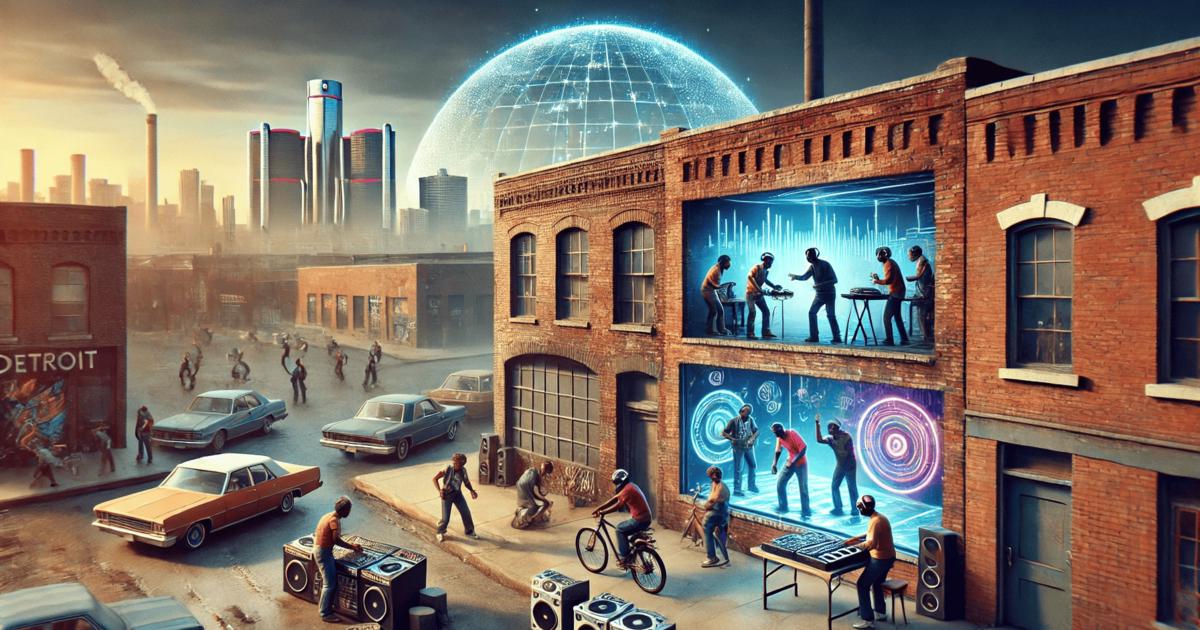

When people ask who made techno music, they’re often looking for a clear name or single inventor. But techno is not the work of one artist alone. It emerged in Detroit during the early 1980s, shaped by a group of young musicians experimenting with machines, rhythms, and futuristic ideas. Their sounds reflected both the industrial environment of their city and their fascination with technology. What started as a local underground movement soon became a global force in electronic music. To understand its beginnings, we need to look at the key pioneers, the cultural influences around them, and the way their work spread across continents.
Juan Atkins is often called the “Originator of Techno.” In the early 1980s, he teamed up with Richard “3070” Davis to form the project Cybotron. Their 1983 album Enter fused electro, funk, and futuristic concepts, setting the stage for what would later be recognized as techno. After Cybotron, Atkins worked under the name Model 500, creating tracks that defined the Detroit techno sound and set standards for the scene.
Derrick May earned the title “Innovator.” His productions balanced mechanical, machine-driven beats with deep emotion. A track like Strings of Life showed how techno could combine energy with soul, making it both powerful for the dancefloor and meaningful for listeners.

Kevin Saunderson, known as the “Elevator,” gave techno a push into wider audiences. He was skilled at blending techno with house grooves and pop structures. With his group Inner City, he achieved international hits that brought Detroit’s underground music into mainstream clubs and radio.
Together, Atkins, May, and Saunderson became known as The Belleville Three, named after the Detroit suburb where they grew up and went to school. Their combined efforts created the foundation of techno, marking the first wave of the genre.
The story of techno cannot stop at the Belleville Three. Underground Resistance, formed by Mike Banks, Jeff Mills, and Robert Hood, added another important chapter. They gave techno a harder edge, combined with strong political messages. Their work emphasized independence and resistance, turning techno into not just music but also a cultural statement.
Across the Atlantic, Kraftwerk in Germany had already introduced futuristic, machine-driven music in the 1970s. Their influence was crucial for Detroit artists. The precise rhythms and electronic tones of Kraftwerk provided inspiration for what would become techno’s aesthetic.
Meanwhile, the rise of house music in Chicago created a parallel path. The grooves and structures of house shaped the club culture in which techno thrived. Chicago’s energy and Detroit’s innovations were deeply connected, showing how two nearby cities influenced each other while creating separate electronic traditions.
Once Detroit laid the groundwork, techno began to expand worldwide. Canadian-born Richie Hawtin, working in Detroit, brought minimal approaches that reshaped the sound. Carl Craig explored new textures and futuristic directions, keeping Detroit at the center while pushing boundaries.
In Europe, techno found fertile ground. Berlin became a key hub, with its clubs and producers evolving Detroit’s ideas into new subgenres. The UK and Belgium also played major roles, developing acid techno, hardcore, and other variations. These scenes built upon Detroit’s foundation while adapting it to local cultures and club environments.

By the 1990s, techno was no longer a regional movement. It was a global culture with festivals, underground scenes, and endless subgenres. Yet at its heart, the DNA of Detroit remained clear in the beats, machines, and visions of the future.
Techno music was not made by a single person. It was the creation of a small group of Detroit artists in the 1980s—Juan Atkins, Derrick May, and Kevin Saunderson—who used drum machines, synthesizers, and futuristic themes to build something entirely new. Their combined efforts, supported by groups like Underground Resistance and inspired by influences such as Kraftwerk and Chicago house, laid the foundation for a genre that spread worldwide. Today, techno continues to evolve, but its roots remain tied to Detroit’s innovators who shaped its first wave.
Source of music data: Viberate.com
-
📌 Viberate - Music Intelligence is the data & AI layer behind music analytics, connecting artist discovery, audiences, playlists, tracks, Spotify, TikTok, YouTube, streaming, and radio airplay.
 Next article
 Previous article

11M+ artists, 100M+ songs, 12M+ playlists, 6K+ festivals and 100K+ labels on one platform, built for industry professionals.