Kristian Gorenc Z
Oct 3, 2026

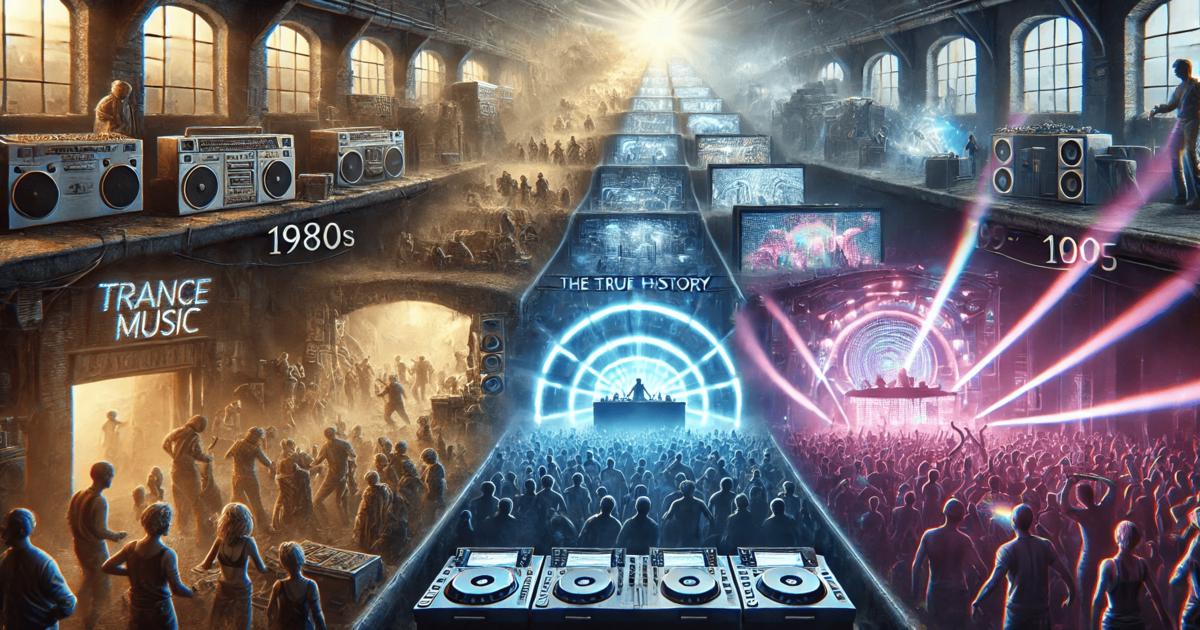

Trance music is one of the most structurally immersive and emotionally charged electronic music genres to emerge in the last few decades. For music professionals—whether label executives, DJs, festival organizers, or sync licensing agents—understanding the history of trance music offers both context and opportunity. This genre has gone through several distinct evolutionary stages, shaped by geography, culture, and industry trends.
Trance emerged from the fertile electronic scenes of Western Europe, specifically Frankfurt (Germany), the UK, the Netherlands, and Belgium. Rather than appearing fully formed, it evolved from a fusion of techno, acid house, ambient, and new beat. The earliest tracks were defined by hypnotic loops, extended build-ups, and euphoric climaxes.
The Frankfurt scene played a central role. Labels like Eye Q and Harthouse became synonymous with the genre’s foundational aesthetic. Artists such as Pete Namlook, Oliver Lieb, and Dance 2 Trance pioneered the early sound. One milestone: KLF’s “What Time Is Love? (Pure Trance)” from 1988, often credited as one of the genre’s first landmark tracks.
These early years set the blueprint for what would later evolve into globally recognized subgenres.
By the early 1990s, trance began spreading geographically and stylistically. Germany’s influence expanded to Ibiza, Goa, and the UK. The UK scene gave rise to progressive trance through labels like Platipus and Hooj Choons, with acts like Union Jack and Solarstone becoming key players. In India, Goa trance took root, emphasizing psychedelic atmospheres and long, journey-like tracks. Meanwhile, in Germany, hard trance emerged with faster BPMs and anthem-like hooks. Vocal and uplifting trance entered the mainstream, led by artists such as Paul van Dyk, Armin van Buuren, and Ferry Corsten.
During this "golden era," trance dominated clubs, mix compilations, and massive events. Its commercial appeal peaked in the late 1990s and early 2000s, placing the genre at the forefront of global dance music.

By the mid-2000s, trance started to lose its position in the commercial spotlight. The rise of mainstream EDM drew public attention away, and many trance artists adjusted their output or stepped back. Club representation declined, and the genre leaned heavily on the festival circuit. However, a core fan base remained. Many prominent DJs maintained relevance via radio shows and headline performances.
This period saw a contraction of the scene but not a disappearance. It also laid the groundwork for a more focused, underground identity.
Trance never fully disappeared—it adapted. Since the mid-2010s, the genre has seen a resurgence, driven by both nostalgia and innovation. New artists and audiences are drawn to its emotive structure and sonic depth. Trance elements are increasingly used in hybrid productions, especially in techno and experimental spaces.
In 2023, Beatport recognized the genre’s internal diversification by splitting it into two distinct categories: “Main Floor” and “Raw/Deep/Hypnotic.” This reflects how far trance has come—from monolithic club anthems to a spectrum of stylistic approaches. Notably, contemporary artists outside the traditional trance circuit are drawing from its legacy, blurring lines between scenes and subcultures.
During its earliest phase in the late ’80s and early ’90s, experimental trance was shaped by ambient influences and the roots of the Goa party scene. Between 1995 and 2005, uplifting, hard, progressive, and Goa trance styles reached their commercial peak, with globally recognized DJs and compilation CDs bringing the sound to mass audiences. From 2005 to 2015, trance found its place primarily at festivals while its presence in clubs diminished. Artist output became more focused, and the overall scene began to consolidate. Since 2015, the genre has experienced a revival, defined by deeper, more hypnotic styles, hybrid approaches, and renewed interest from both listeners and professionals.
The genre’s lifecycle shows how it can be leveraged across multiple domains. Trance’s legacy content, especially from the 1990s, is prime for reissues, remixes, and sync placements. Its long, emotionally-driven format makes it ideal for visual media and branded content. Young producers tapping into classic trance aesthetics are connecting with both older fans and newer listeners. There’s a demand for authenticity, but with modern production values. Niche labels reissuing vinyl or pushing raw and hypnotic trance are seeing success by targeting collectors and DJs seeking depth beyond mainstream EDM. Promoters are reintroducing trance stages, particularly the hypnotic and deep variants, into techno and house-centric festivals.
While mainstream charts no longer reflect trance dominance, its influence is embedded in modern electronic music. Many artists reference its peak-era motifs—arpeggiated leads, breakdowns, euphoric climaxes—within techno, ambient, and even pop tracks.
The genre’s comeback isn’t just about memory. It’s a practical response to the demand for emotional resonance in electronic music. That resurgence, backed by tangible changes in music categorization (as seen on platforms like Beatport), signals a shift in listener priorities.
For music industry professionals, especially those working in catalog management, sync licensing, and event curation, trance presents a renewed opportunity. It's a genre that has proven adaptable, enduring, and deeply tied to audience experience.
Understanding the history of trance music isn’t just an academic exercise—it’s a strategic one. From its experimental European roots to its global peak and recent reinvention, trance remains a powerful format with long-term value.
Its emotional design, historical impact, and recent revival mean it continues to shape how electronic music is made, marketed, and consumed. For those in the music business, it’s a genre worth revisiting—not just for what it was, but for what it can still become.
Source of music data: Viberate.com
-
📌 Viberate - Music Intelligence is the data & AI layer behind music analytics, connecting artist discovery, audiences, playlists, tracks, Spotify, TikTok, YouTube, streaming, and radio airplay.
 Next article
 Previous article
11M+ artists, 100M+ songs, 12M+ playlists, 6K+ festivals and 100K+ labels on one platform, built for industry professionals.