Kristian Gorenc Z
Aug 21, 2026



A music data API is a technical bridge that allows applications, websites, and internal systems to access structured music-related information automatically. Instead of manually collecting artist statistics, playlist data, or social media metrics from multiple platforms, a music data API delivers this information in a standardized format that developers can integrate directly into their products. This approach reduces human error, saves time, and enables real-time or near-real-time insights across the entire music ecosystem.
In today’s industry, where success is measured through streaming numbers, audience growth, and cross-platform visibility, access to reliable data is no longer optional. Labels, distributors, publishers, and technology providers depend on accurate metrics to make decisions about marketing budgets, tour planning, and artist development. A high-quality music data API provides the technical foundation for these decisions by connecting platforms such as Spotify, YouTube Music, and social media channels into a single data source.
Music consumption is spread across many platforms. Artists build their audience on streaming services, promote releases on social media, and perform at festivals and live events. Each of these environments produces different types of data, from monthly listeners and playlist placements to follower counts and event schedules. Without automation, collecting and aligning this information would require constant manual updates and reconciliation between sources.
A centralized API approach allows companies to work with consistent identifiers and daily-refreshed records. Instead of guessing whether two profiles belong to the same artist, a curated database ensures that one artist is represented by one unique profile. This eliminates duplicate entries and prevents distorted analytics. In practice, this means that trend analysis, ranking systems, and reporting tools can rely on stable datasets that reflect real performance rather than fragmented snapshots.
Viberate’s music data API is designed to cover the full scope of the modern music business. It provides access to Spotify, YouTube Music and social media data through one unified system. The database is refreshed daily and includes millions of industry entities that can be processed or integrated into external services.
The scale of the database illustrates the scope of this coverage. It includes over 11 million artists, more than 100 million tracks, around 19 million playlists, over 6,000 festivals, and approximately 100,000 labels. These figures reflect a global view of the industry rather than a limited subset focused only on major markets.
One of the defining features of this API is its focus on data integrity. Each artist is assigned a unique identifier, and the database is curated to avoid double entries. The principle is simple: one artist equals one profile. This structure makes it possible to connect streaming statistics, social media performance, and live activity to the same entity without conflicts. For businesses that depend on accurate rankings and comparisons, this consistency is essential.
Another key aspect is channel coverage. Viberate maps and analyzes performance across streaming platforms and social networks, subject to availability. This includes TikTok, Spotify, and YouTube Music, allowing users to either access raw data points or work with processed metrics. Instead of pulling numbers separately from each platform, companies can rely on a single interface to observe how artists perform across channels.
For organizations evaluating the technical side of such a solution, the ability to integrate spotify api data together with other music and social indicators in one environment simplifies development and long-term maintenance.
Data quality is one of the most critical issues in music analytics. Inconsistent naming conventions, duplicate profiles, and missing links between platforms can lead to incorrect conclusions. If an artist appears under multiple identities, their growth trends may look weaker than they actually are. If social media profiles are mismatched, engagement rates can be misinterpreted.
By maintaining a curated database with unique artist IDs, Viberate addresses these issues at the structural level. This approach allows developers and analysts to work with a dataset where relationships between artists, tracks, playlists, and events are clearly defined. Over time, this creates a stable reference point for longitudinal studies, market comparisons, and performance benchmarks.
Such integrity is particularly important for automated systems. Recommendation engines, A&R scouting tools, and reporting dashboards all depend on clean input data. When the underlying database is structured around verified profiles, these systems can operate with greater reliability and less manual correction.
Music trends change quickly. A song can go viral on social media within hours, and a playlist placement can shift an artist’s monthly listeners in a single day. Because of this volatility, outdated data has limited value for decision-making. Daily updates ensure that analytics tools reflect current performance rather than historical snapshots.
With daily-refreshed records on artists, tracks, playlists, festivals, and labels, businesses can track momentum instead of static totals. This makes it possible to identify rising artists, monitor campaign results, and evaluate the impact of releases or live appearances. Over time, this cadence supports more precise modeling of growth patterns and audience behavior.
In practical terms, this means that when companies integrate spotify api data into their internal systems, they can rely on figures that are synchronized with ongoing activity across platforms. This reduces the risk of acting on obsolete numbers when planning marketing or scouting strategies.

Music data APIs are not limited to one type of organization. Their value increases as more industry roles adopt data-driven workflows.
Talent agencies use structured data to maintain artist profiles without manual updates. Signature content, gig dates, and performance metrics can be fed directly into their systems, ensuring that public-facing pages and internal records stay consistent. This reduces administrative overhead and allows teams to focus on career strategy instead of data entry.
Collecting societies, publishers, and distributors benefit from automated data feeds that enrich artist profiles and reporting tools. By analyzing and ranking artists and tracks with popularity metrics, they can offer clearer insights to their clients and improve internal monitoring. This also supports transparency, as stakeholders can see how performance evolves over time based on standardized indicators.
Labels use music data APIs for talent discovery and market analysis. By applying advanced filters to a large database, A&R teams can identify emerging artists whose streaming and social media signals indicate growth. Verified data can then be sourced directly into internal tools, avoiding the need to cross-check multiple public platforms manually.
App developers rely on APIs to populate their products with up-to-date content. Whether the goal is to display festival lineups, show artist statistics, or build discovery features around streaming behavior, access to spotify api data combined with other music and social metrics enables richer user experiences. Automatic daily updates ensure that apps remain relevant without constant maintenance.
The technical value of a music data API depends not only on its scope but also on its accessibility. Early-stage start-ups and large enterprises face different budget constraints, yet both require reliable data to build and operate their services. By offering competitive pricing packages, Viberate positions its API as a solution for a wide range of organizations rather than a niche tool reserved for major corporations.
This approach encourages experimentation and innovation. Smaller teams can integrate professional-grade data into prototypes and early products, while established companies can scale usage across multiple departments. Over time, this broad adoption supports a more data-literate industry where decisions are grounded in measurable performance rather than anecdotal evidence.
As the industry becomes more interconnected, the demand for unified data sources will continue to grow. Streaming platforms, social networks, and live events generate complementary signals about audience interest. When these signals are combined through a structured API, they form a more complete picture of an artist’s reach and impact.
Future applications are likely to extend beyond simple dashboards. Machine learning models, recommendation systems, and predictive analytics all depend on consistent historical data. A curated database with daily updates provides the raw material for these advanced tools. Over time, this can reshape how labels scout talent, how promoters plan tours, and how digital services recommend music to listeners.
In this context, a music data API is not just a technical utility. It is an infrastructure layer that supports long-term strategy and innovation. By connecting streaming statistics, social media performance, and industry entities into one coherent system, Viberate’s solution illustrates how structured data can transform complex markets into analyzable environments.
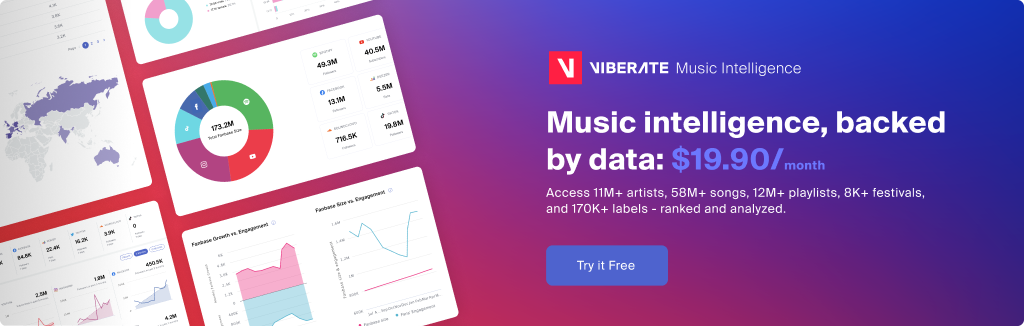
A music data API enables the modern music industry to operate on verified, up-to-date information rather than fragmented platform reports. By offering access to millions of artists, tracks, playlists, festivals, and labels, and by maintaining strict data integrity through unique identifiers, Viberate provides a foundation for analytics, automation, and product development.
With coverage that includes streaming platforms and social networks, daily updates, and competitive pricing, its API supports a wide range of use cases from talent agencies to app developers. As data-driven decision-making becomes standard practice, the importance of reliable spotify api data and integrated music metrics will only increase, positioning structured APIs as a core component of future music services.
Source of music data: Viberate.com
-
📌 Viberate - Music Intelligence is the data & AI layer behind music analytics, connecting artist discovery, audiences, playlists, tracks, Spotify, TikTok, YouTube, streaming, and radio airplay.
 Next article
 Previous article
11M+ artists, 100M+ songs, 12M+ playlists, 6K+ festivals and 100K+ labels on one platform, built for industry professionals.