Miha Prebil
Jul 1, 2026

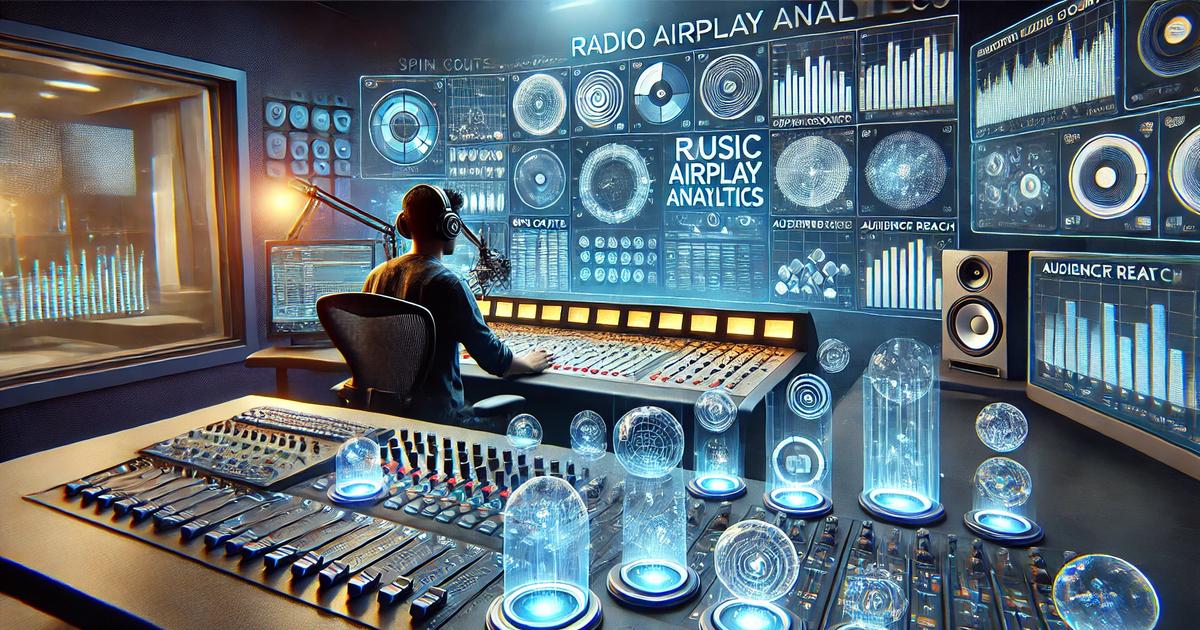

Radio airplay remains one of the most important indicators of a song’s reach and mainstream success. While streaming platforms dominate daily listening habits, radio still plays a key role in introducing music to new audiences and building recognition. For artists, labels, and industry professionals, understanding radio airplay helps measure exposure and evaluate promotional results.
Radio airplay refers to how often a song is broadcast on radio stations. Each time a track is played on the radio, it counts as an instance of airplay. The total number of plays is used to measure a song’s exposure and popularity on radio.
Airplay can occur across multiple types of broadcasting platforms, including FM and AM radio stations, digital radio such as DAB, satellite radio, and online radio stations. Despite major shifts in the music industry, radio airplay remains an important way for artists to reach listeners, especially in mainstream music markets.
Radio stations choose songs based on programming decisions. Music directors and programmers decide which tracks fit the station’s format and audience. These decisions usually depend on several factors, including genre compatibility, current popularity, record label promotion, listener demand, and chart performance.
Once a song is added to rotation, it may be played repeatedly over a period of weeks or months. Regular plays help increase audience familiarity and can significantly expand an artist’s reach.
Radio stations usually organize songs into rotation levels. Heavy rotation songs are played many times per day and usually include major hits or new singles that receive the highest exposure. Medium rotation songs are played several times per week and provide moderate exposure. Light rotation songs are played occasionally and often include new releases being tested or niche tracks aimed at smaller audiences.
Songs can move between rotation levels depending on audience response. Strong listener engagement and consistent performance often lead to increased exposure.

Airplay is tracked using automated monitoring systems that detect when songs are broadcast. These systems continuously scan radio signals and match audio fingerprints to identify tracks.
Measurements often include the number of plays, the number of stations playing the song, estimated audience reach, and geographic distribution. These statistics help determine how widely a song is heard and how effectively it performs across different markets.
Airplay data is often used to calculate music charts and industry rankings. High levels of radio airplay usually indicate that a song has strong support from radio programmers and audiences.
Radio airplay affects an artist’s visibility and career development in several ways. Strong radio presence can influence chart positions, increase streaming activity, boost concert attendance, and improve public recognition.
When a song receives consistent radio airplay, it signals strong mainstream support. This exposure often leads to additional opportunities such as festival bookings, label interest, and playlist placements.
Because of its continued influence, monitoring airplay performance remains an essential part of music promotion and artist development.
Modern analytics platforms make it possible to monitor airplay performance in detail. With analytics, professionals can track performance across more than 64,000 stations worldwide and monitor the radio presence of more than 11 million artists.
All relevant radio airplay metrics can be tracked on one platform, making it easier to evaluate overall performance and identify trends. Having centralized data allows music professionals to react quickly and adjust promotional strategies.
Audience geolocation data helps identify target markets by showing where an artist’s songs are played most frequently. This information makes it easier to plan marketing campaigns and touring strategies in regions where the audience is already responding.
Spin growth trends allow professionals to track changes in performance over time. By analyzing how the number of spins develops, it becomes possible to evaluate whether a campaign is gaining momentum or losing traction.
Radio airplay charts provide additional insight by highlighting trending artists across genres and countries. Custom filters allow users to identify relevant artists and track performance across different markets.
Detailed analytics provide a complete overview of an artist’s radio airplay performance. Professionals can monitor key metrics in one place and quickly evaluate overall results.
Play trends reveal how songs perform over different timeframes and help identify the stations that support an artist the most. By analyzing total spins across different periods, it becomes easier to understand how exposure evolves.
Most played songs can be identified by analyzing performance across different timeframes. This helps determine which releases received the most radio attention and which songs resonate best with radio audiences.
Geographic data shows the countries and cities where songs are played most often. Identifying these markets is an important step in planning efficient promotional strategies.
Station-level analysis provides insight into which radio stations are playing an artist’s music and when the songs are broadcast most frequently. Users can identify top stations, analyze them by genre, and filter them by timeframe.
Radio airplay charts make it possible to rank musicians and songs by performance metrics. Rankings are refreshed daily and can be customized by country, genre, rank, follower range, and other filters. This makes it easier to discover trending artists and identify potential opportunities for bookings or signings.
Understanding radio airplay performance gives music professionals a clearer picture of how songs spread across markets. Combined with streaming and social data, airplay analytics provides a complete view of an artist’s momentum and audience reach.
Source of music data: Viberate.com
-
📌 Viberate - Music Intelligence is the data & AI layer behind music analytics, connecting artist discovery, audiences, playlists, tracks, Spotify, TikTok, YouTube, streaming, and radio airplay.
 Next article
 Previous article
11M+ artists, 100M+ songs, 12M+ playlists, 6K+ festivals and 100K+ labels on one platform, built for industry professionals.