Kristian Gorenc Z
Oct 2, 2026



Radio remains one of the longest-standing channels for music promotion. Even in a streaming-driven industry, radio broadcasts continue to introduce songs to large audiences and help artists build recognition. When a track is played on a station, it is considered to receive airplay, and the term airplay radio is used to describe how often music is broadcast and how much exposure it gains through radio.
Airplay radio includes both traditional and digital forms of broadcasting. This covers FM and AM stations, digital radio such as DAB, satellite broadcasting, and internet-based radio stations. The amount of airplay a song receives is often used as a practical indicator of popularity and professional support within the industry.
For artists and labels, consistent radio exposure still signals momentum. A song that appears regularly on station playlists is more likely to reach new listeners and build familiarity over time.
Radio stations do not choose songs randomly. Each station follows a defined format and targets a specific audience. Music directors and programmers evaluate new releases and decide which tracks fit their programming.
If a song is accepted, it is usually added to a playlist and scheduled for regular broadcast. Stations often monitor listener reactions before increasing the number of plays.
In most cases, the path to radio exposure follows a familiar pattern. A new track is released and promoted to radio stations by the artist or label. Programmers test the song and evaluate audience response. If the reaction is positive, the track enters rotation and may receive increasing support.
Songs that perform well on airplay radio frequently remain in rotation for extended periods, sometimes lasting several months. This sustained presence helps artists maintain visibility without requiring constant new releases.
Airplay radio exists in several forms, each playing a different role in music promotion.
Commercial stations typically reach the largest audiences and rely on structured playlists. Their programming focuses mainly on popular releases that appeal to wide listener groups.
Public radio stations often receive public funding and usually present a broader musical selection. Alongside music programming, they often include cultural or educational content.
Specialty and niche stations concentrate on specific genres or scenes. Their audiences are smaller, but these stations can have strong influence within dedicated music communities.
Online stations represent another important segment. These internet-based broadcasters can reach listeners across multiple countries and may rely on either human curators or automated programming.
Airplay radio continues to play a meaningful role because it offers wide exposure across many markets at the same time.
Strong radio presence can increase artist recognition and support chart performance. Songs that receive consistent airplay often experience increases in streaming activity as listeners search for tracks they heard on the radio.
Radio exposure also supports live promotion. When listeners hear an artist regularly, they are more likely to attend concerts or follow future releases.
For mainstream artists in particular, airplay radio remains one of the primary channels for reaching broad audiences.

Airplay radio performance is evaluated by tracking broadcasts across radio stations.
Industry monitoring systems measure how often songs are played and where those broadcasts occur. These measurements typically include the number of spins, the number of stations playing the track, listener reach, and market coverage.
This data is used in chart calculations and industry reporting. Reliable measurement allows music professionals to compare performance across artists and territories and evaluate the results of radio campaigns.
Tracking radio activity across multiple countries used to be difficult, but modern analytics platforms now provide a complete overview. Modern analytics platforms make it possible to track performance for more than 11 million artists using data collected from over 64,000 stations worldwide.
Having all radio metrics in one place makes it easier to evaluate an artist's performance quickly. Instead of checking individual stations, users can review total spins, station coverage, and overall activity from a single platform.
Audience geolocation data shows where songs are receiving the most attention. Identifying the countries and cities with the strongest radio presence helps artists and labels plan targeted promotional campaigns and focus on markets that already show interest.
Spin growth trends provide a clear view of how radio support changes over time. A steady increase in spins often signals growing demand, while sudden spikes can indicate successful promotion or new market interest.
Detailed reports also reveal which songs receive the most attention on radio. Comparing play counts across different timeframes helps professionals understand which releases gained the strongest support and how interest evolves.
Radio station analysis adds another layer of insight. By examining which stations play an artist's music and when broadcasts occur, professionals can identify the most supportive broadcasters and understand peak airtime patterns.
Airplay-based charts provide a structured way to identify artists gaining traction. Rankings can be filtered by country, genre, and other criteria, allowing industry professionals to identify potential signings or booking opportunities.
Daily refreshed rankings make it possible to track movement across markets and monitor emerging artists in real time.
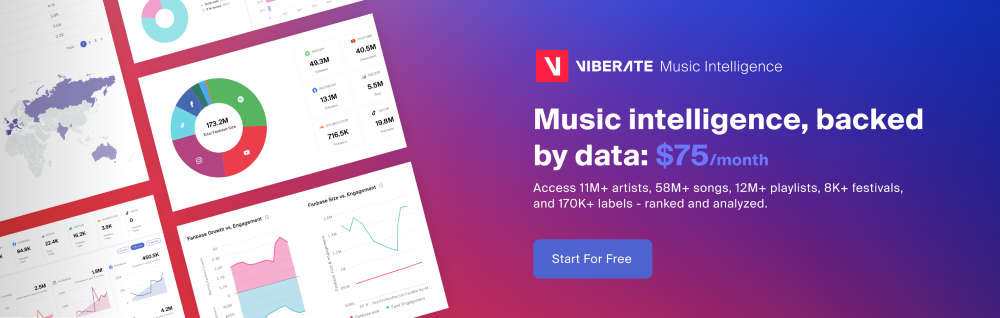
Airplay radio continues to be an important part of the music industry despite the rise of streaming platforms. Radio broadcasting still introduces songs to large audiences and supports long-term artist development.
Understanding how radio exposure works and how performance is measured helps artists and professionals make better decisions. With accurate analytics, airplay radio performance becomes easier to monitor, compare, and interpret across markets.
Source of music data: Viberate.com
-
📌 Viberate - Music Intelligence is the data & AI layer behind music analytics, connecting artist discovery, audiences, playlists, tracks, Spotify, TikTok, YouTube, streaming, and radio airplay.
 Next article
 Previous article
11M+ artists, 100M+ songs, 12M+ playlists, 6K+ festivals and 100K+ labels on one platform, built for industry professionals.