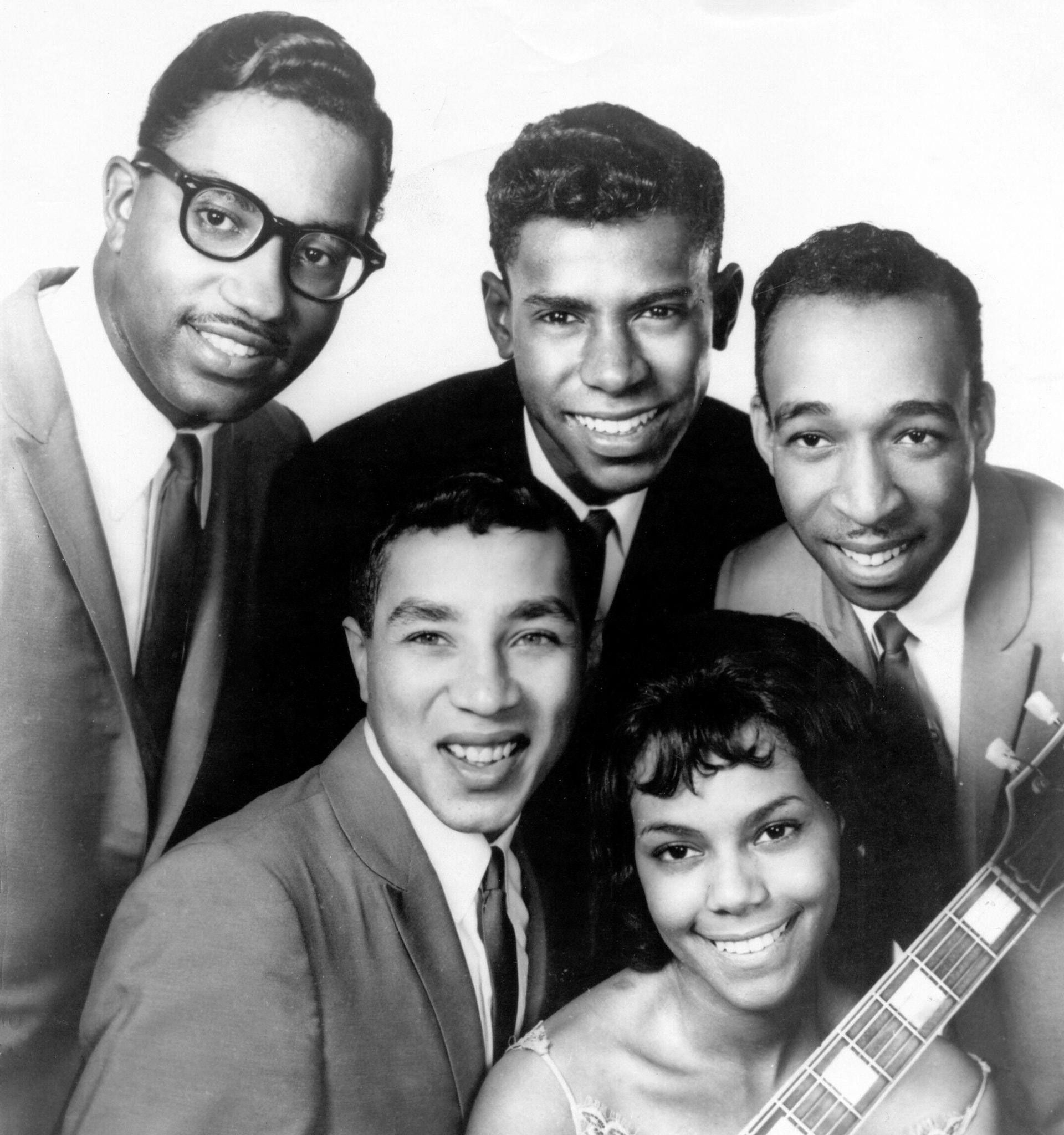
The Miracles

R&B
Soul
 Viberate Rank: 23062
 Viberate Rank: 23062
 Monthly ListenersFollowers
 Subscribers
 Followers
 Followers
 FansTop Spotify Songs
| Track | 7-Day Streams | |
|---|---|---|
1 | 413.37K | |
2 | 285.65K | |
3 | 36.96K | |
4 | 21.62K | |
5 | 18.99K |
Top YouTube VideosMonthly ListenersFeatured in Playlists| Playlist | Followers | |
|---|---|---|
1 |  Feelin' Good Spotify | 3.58M |
2 |  Soft 60s Spotify | 663.53K |
3 |  Motown Spotify | 498.37K |
4 |  Easy 60s Spotify | 366.21K |
5 |  This Is Marvin Gaye Spotify | 311.86K |
Audience| City | Monthly Listeners | |
|---|---|---|
1 | | 49.70K |
2 | | 21.01K |
3 | | 20.30K |
4 | | 17.52K |
5 | | 16.97K |
See full performance history, audience data, playlist activity, rankings, comparisons, and more in Viberate music analytics. Start with a free trial, then continue with a paid plan.
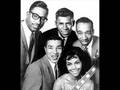
The Miracles’ Spotify BioMotown's first group and first million-selling act, the Miracles mastered styles ranging from doo wop to disco during a two-decade recording career that, most obviously, provided a platform for incomparable high tenor vocalist and proficient songwriter Smokey Robinson. The richness of the Miracles' group harmonies was evident on their 1958 Top Five R&B debut single, "Got a Job," which Berry Gordy, Jr., produced before he launched Motown. The group soon became reliable hitmakers for Motown subsidiary Tamla, achieving their first Top Ten pop and number one R&B hit in 1960 with "Shop Around." Similarly winning A-sides such as "You've Really Got a Hold on Me" followed by "Ooo Baby Baby," "The Tracks of My Tears," and "Going to a Go-Go" -- a trio featured on the 1965 number one R&B album Going to a Go-Go -- and the Grammy-nominated smash "I Second That Emotion," ensured their prominence through most of the '60s. "The Tears of a Clown" put them on top of the pop chart at the start of the… next decade, but Robinson left for a distinguished solo career and ceded his role to Billy Griffin. The Miracles moved on with five additional Top 40 R&B singles highlighted by the chart-topping "Love Machine," taken from the bold 1975 concept album City of Angels, another LP that crowned the R&B chart. The Miracles released their final album in 1978 and continued to perform in assorted incarnations. The early lineup was inducted into the Rock & Roll Hall of Fame in 2012.
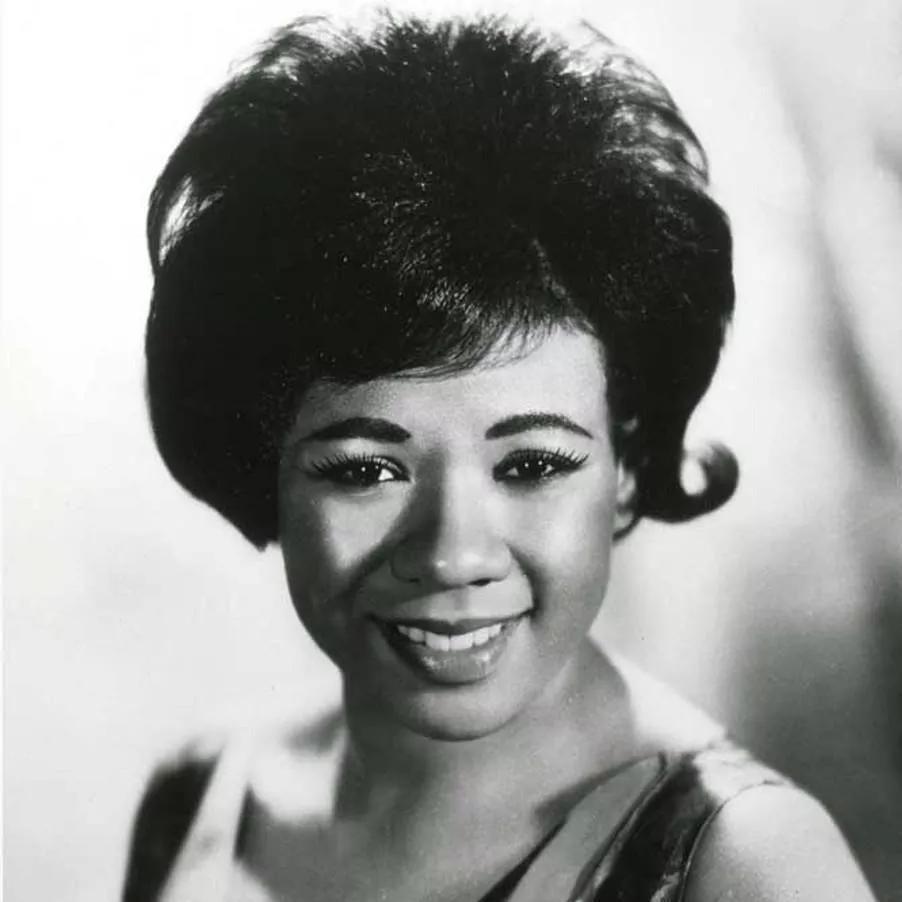
The Five Chimes and the Matadors preceded the Miracles. The Five Chimes, formed in Detroit in 1955, consisted of Northern High School classmates William "Smokey" Robinson (tenor), Warren "Pete" Moore (bass), and Ronnie White (baritone), along with Clarence Dawson and James Grice. The latter two singers left shortly after formation and were replaced by cousins Emerson "Sonny" Rogers (tenor) and Bobby Rogers (tenor and choreographer). The quintet then performed as the Matadors. Just before an audition for Jackie Wilson's manager and creative team in 1956, Sonny Rogers left to join the Army, and Robinson replaced him with Sonny's sister, Matador-ettes member Claudette Rogers (high tenor). Although Wilson's manager Nat Tarnopol found the Matadors too similar to the Platters, one of Wilson's songwriters present at the audition, Berry Gordy, Jr., soon began producing the group, who in 1957 became the Miracles after Gordy requested a name change. In 1958, the Miracles hit number five on Billboard's R&B chart with their Gordy- and Billy Davis-written debut single, "Got a Job" (an answer to the Silhouettes' "Get a Job"), leased to the New York-based End label. Another End single, "Money" (alternately "[I Need Some] Money"), composed by Robinson and Gordy, followed shortly thereafter.
The small royalty pay-out from those recordings prompted Gordy to establish Tamla/Motown in 1959. That year, under the name Ron & Bill, Ronnie White and Smokey Robinson released the sci-fi novelty "It" on Tamla, and then the Miracles offered "Bad Girl" (number 93 R&B), the first single to bear the Motown imprint. By the end of the year, guitarist and songwriter Marv Tarplin had joined the group. In 1960, after another minor charting single with "Way Over There" -- on Tamla, their outlet for the next 15 years -- the Miracles made their mainstream breakthrough. "Shop Around," another Robinson/Gordy collaboration, reached number one on the R&B chart and number two pop, and became Motown's first million seller. The next song by the Miracles to hit the number one R&B spot and reach the pop Top Ten came two years later with "You've Really Got a Hold on Me." Robinson and Claudette Rogers were married in 1963; the next year, against her wishes, Claudette Robinson stopped performing with the group, though she continued to record with them. Among other singles, the Miracles scored additional major hits over the next few years such as "Mickey's Monkey," "Ooo Baby Baby," "The Tracks of My Tears," and "Going to a Go-Go." The last of that run was the title song of the group's first album credited to Smokey Robinson & the Miracles. None of the Miracles' previous full-length releases had touched the upper half of Billboard's Top LPs chart, but Going to a Go-Go climbed to number eight and topped the R&B chart.
Consistently billed as Smokey Robinson & the Miracles by 1967, the group continued to have album success with titles like Make It Happen, Greatest Hits, Vol. 2, Special Occasion (number one R&B), and Live! all out by the end of the decade. Among the 11 additional Top 40 singles the Miracles scored during this period was another R&B number one, "I Second That Emotion" -- their only Grammy-nominated recording -- and the Top Ten R&B and pop hit "Baby, Baby Don't Cry." In July 1970, the Make It Happen album cut "The Tears of a Clown," written by Smokey, Hank Cosby, and Stevie Wonder (who had been discovered by Ronnie White), was released in the U.K. as a single. Two months later, around the time it hit number one on the U.K. pop chart, Tamla issued a revised version in the U.S. that repeated the feat in the Miracles' home country. Smokey had intended to step away to serve as Motown VP and spend time with his family, but these hits kept him with the group for another few years, during which he and the Miracles released four more studio albums as a unit. The best of these were the 1970 arrivals What Love Has...Joined Together and A Pocket Full of Miracles, though their last Top Ten R&B hits from this time, "I Don't Blame You at All" and "We've Come Too Far to End It Now," appeared respectively on 1971's One Dozen Roses and 1972's Flying High Together. A six-month tour in 1972 ended that July with Smokey introducing Billy Griffin as his replacement. The double album 1957-1972, released five months later, documented the final three dates of the tour.
Baltimore native Billy Griffin had performed with Last Dynasty, a group that won an NBC talent competition but saw a recording deal fall through. A songwriter and aspiring producer himself, Griffin developed a deep admiration for Smokey Robinson long before his successful audition to front the Miracles. In April 1973, the new-look Miracles -- also without Claudette Robinson -- appeared with Renaissance (number 33 R&B, number 174 pop), a set written and produced by a team of over a dozen Motown associates including Leon Ware, Willie Hutch, Freddie Perren, and Larry and Fonce Mizell. Smokey was credited with executive production. (Smokey launched his solo career only two months later.) The Miracles' Do It Baby arrived in August 1974 and found a larger audience. Leaner in terms of collaborators -- the likes of Ware, Hutch, and Perren remained -- it was also made without Marv Tarplin, who opted to leave to continue working with Smokey. "Do It Baby" itself reached number 13 on the pop chart (number four R&B) and pushed the parent release to number four on the R&B album chart. Don't Cha Love It and its title song put the group back in the Top Ten of the R&B charts early the next year. The Miracles' circle was smaller yet for that album, helmed by Perren and written almost exclusively by the producer with partner Christine Yarian.
Later in 1975, the Miracles' scored their third number one R&B album with the conceptual and alternately lush and funky City of Angels, written solely by Billy Griffin and Pete Moore, and produced by Moore and Freddie Perren. It was based around the narrative of a heartbroken singer/songwriter chasing his fame-seeking ex-girlfriend in Los Angeles. The lead single "Love Machine" motored to the top of the pop chart and became the group's best-selling single (with or without Smokey). Although it wasn't released as a single, "Ain't Nobody Straight in L.A." attracted attention with its title, lyrics ("Homosexuality is a part of society"), and closing dialogue between male characters looking for a good time who resolve to go to a gay bar because "some of the finest women" go there and "gay people are nice people too." The Power of Music, the Miracles' final album for Tamla, was released in 1976. Donald Griffin, Billy's brother, had played guitar on City of Angels and was officially a member of the group for this follow-up, and expanded his contributions to vocals and co-production. No singles were issued, though the album managed to peak on the R&B chart only six positions lower than City of Angels. The Miracles' subsequent stint on Columbia got off to a shaky start when radio programmers, fearful of attention from the FBI, hesitated to play the Martin Luther King, Jr.-inspired "Spy for Brotherhood," the lead single from the group's Love Crazy. Still, the song became the Miracles' 45th (and final) Top 40 R&B single.
After a self-titled second Columbia album was issued in 1978, the group split up, enabling Billy Griffin and Pete Moore to concentrate on writing for other artists. Ronnie White and Bobby Rogers performed as the New Miracles in the early '80s with additions David Finley and Carl Cotton. Smokey, Claudette Robinson, and Marv Tarplin reunited with Moore and Bobby Rogers to perform a medley for the 1983 television special Motown 25: Yesterday, Today, Forever. White and Rogers reactivated the Miracles a decade later (with occasional appearances from Claudette) and new lead singer Sydney Justin, formerly of Shalamar. (Justin successfully auditioned for the Miracles in the late '70s but chose to start a professional football career that lasted until the mid-'80s.) Justin was eventually replaced with Mark Scott. Justin and Scott eventually led different performing versions of the Miracles. In 2012, the Miracles (Moore, White, Rogers, Tarplin, and Claudette) were inducted into the Rock & Roll Hall of Fame, welcomed with a speech from Smokey, who'd been inducted 25 years earlier. White's and Tarplin's inductions were posthumous; White died of leukemia in 1995, and Tarplin died of undetermined causes in 2011. Rogers, the longest-performing member of the Miracles, died from diabetes complications in 2013. Donald Griffin, who continued after the Miracles' late-'70s breakup as a busy session musician (including collaborations with Billy Griffin), died in a 2015 car accident. Moore died from diabetes complications in 2017. ~ Andy Kellman & Joslyn Layne, Rovi
Viberate is a music analytics platform built for A&Rs, artist managers, labels, booking agents, marketers, and artists.
It helps music professionals track artist growth, analyze audience data, monitor playlist activity, compare artists, follow song performance, and identify opportunities across the music market.
Public artist pages provide a free preview of selected artist data. Paid plans provide access to deeper analytics, historical data, charts, comparisons, playlist tools, exports, alerts, reports, and additional professional features.
Yes. Public Viberate artist pages provide selected artist analytics and music data for free.
Viberate also offers a 7-day free trial of the full platform. A credit card is required to start the trial. The trial includes access to the complete product so users can test deeper artist analytics, historical views, playlist insights, comparisons, charts, exports, alerts, and reporting features before choosing a paid plan.
Viberate provides artist analytics across streaming, playlists, social media, video, radio airplay, songs, and audience markets.
Users can analyze Spotify performance, Spotify and Apple Music playlists, YouTube activity, TikTok and Instagram growth, radio spins, song performance, audience locations, demographics, rankings, and overall artist momentum.
Artist profiles also connect to music charts, similar artists, and comparison tools, helping users benchmark performance and evaluate artists in context.
Viberate updates key artist and track data daily.
For followed artists and tracks, selected data is refreshed multiple times per day. This helps teams monitor playlist changes, streaming movement, audience growth, releases, and campaign performance with more current data.
Update frequency can vary depending on the metric and data source.
Yes. Viberate lets users compare up to five artists side by side across streaming, social media, audience, and engagement metrics.
Users can compare fanbase growth, audience demographics, locations, Spotify performance, social metrics, and other artist data over selected time periods.
Artist comparison can be used for A&R scouting, benchmarking, booking decisions, campaign planning, and evaluating artists with similar audiences or market positions.