Billy Stewart

R&B
Contemporary R&B
Soul
 Viberate Rank: 50208
 Viberate Rank: 50208
 Monthly ListenersFollowers
 Subscribers
 Followers
 Followers
 FansTop Spotify Songs
| Track | 7-Day Streams | |
|---|---|---|
1 | 157.57K | |
2 | 64.78K | |
3 | 17.20K | |
4 | 12.49K | |
5 | 8.96K |
Top YouTube VideosMonthly ListenersFeatured in Playlists| Playlist | Followers | |
|---|---|---|
1 |  Soft 60s Spotify | 663.68K |
2 |  Fidi & Bumsi Spotify | 353.23K |
3 |  Lowrider Crusin' Spotify | 144.23K |
4 |  Once Upon A Time In...Hollywood Radio Josh Gardner | 100.15K |
5 | Lowrider oldies Pinchekodiak | 91.33K |
Audience| City | Monthly Listeners | |
|---|---|---|
1 | | 40.13K |
2 | | 15.20K |
3 | | 12.59K |
4 | | 11.16K |
5 | | 11.00K |
See full performance history, audience data, playlist activity, rankings, comparisons, and more in Viberate music analytics. Start with a free trial, then continue with a paid plan.
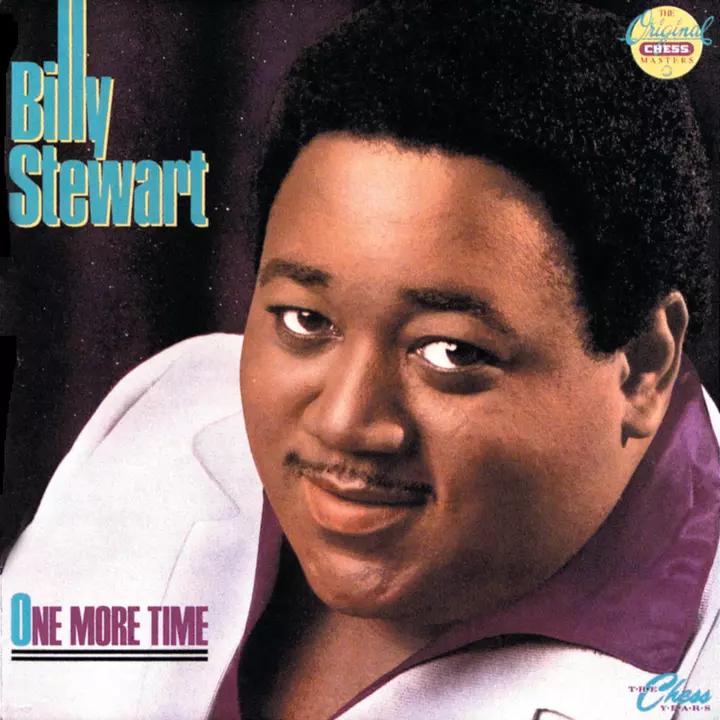
Billy Stewart’s Spotify BioPianist and singer Billy Stewart was a distinctive and influential R&B vocalist whose stuttering delivery and word-repetition technique borrowed liberally from the jazz practice of scat singing. Born in Washington, D.C., in 1937, Stewart started singing publicly with his mother's group, the Stewart Gospel Singers, as a teenager. He moved into secular music by filling in occasionally for the Rainbows, a D.C.-area vocal group led by future soul star Don Covay; like fellow Rainbows substitute Marvin Gaye, Stewart never recorded with them. Despite winning a local talent contest with a unique rendition of Gershwin's "Summertime," Stewart was first discovered as a pianist, not a singer -- while passing through on a tour, Bo Diddley heard him playing backstage and offered him a job as a backing musician. Thanks to his connection with Diddley, Stewart cut his first solo single, "Billy's Blues," for Chess in 1956. He moved to Okeh in 1957 and recorded "Billy's Heartache" backed by the Marquees,… another D.C.-area group featuring Gaye.
Stewart would not return to his solo career until 1962, when he returned to Chess and cut a song called "Fat Boy," a nickname he'd acquired for straightforward reasons. He scored his first charting single on the R&B side with "Reap What You Sow," recorded at the same session, and began to hit his creative stride with the warm "Strange Feeling" in 1963. The following year's "Count Me Out" was only a regional hit, but Stewart broke through in 1965 with two lovely R&B ballad hits, "I Do Love You" (which became the title track of his first album) and "Sitting in the Park." Stewart toured heavily behind those two successes, and also charted the following year with "How Nice It Is" and "Because I Love You." Later in 1966, he returned to the Chess studio to cut an album of jazz and pop standards, Unbelievable. Stewart's unique vocal stylings were in full flower, earning him the new nickname "Motormouth," and his revisitation of "Summertime" landed in the Top Ten on both the pop and R&B charts; it still ranks among the more radical reinterpretations of the oft-recorded warhorse. A waxing of Doris Day's "Secret Love" just missed the R&B Top Ten. However, the hits subsequently dried up, and Stewart's weight problem had worsened into diabetes. In 1969, he suffered minor injuries in a motorcycle accident, but the real tragedy struck on January 17, 1970, when the car Stewart was driving went off the road and plunged into the Neuse River in North Carolina, killing Stewart and the three bandmembers riding with him. He was not quite 33. ~ Steve Huey, Rovi
Viberate is a music analytics platform built for A&Rs, artist managers, labels, booking agents, marketers, and artists.
It helps music professionals track artist growth, analyze audience data, monitor playlist activity, compare artists, follow song performance, and identify opportunities across the music market.
Public artist pages provide a free preview of selected artist data. Paid plans provide access to deeper analytics, historical data, charts, comparisons, playlist tools, exports, alerts, reports, and additional professional features.
Yes. Public Viberate artist pages provide selected artist analytics and music data for free.
Viberate also offers a 7-day free trial of the full platform. A credit card is required to start the trial. The trial includes access to the complete product so users can test deeper artist analytics, historical views, playlist insights, comparisons, charts, exports, alerts, and reporting features before choosing a paid plan.
Viberate provides artist analytics across streaming, playlists, social media, video, radio airplay, songs, and audience markets.
Users can analyze Spotify performance, Spotify and Apple Music playlists, YouTube activity, TikTok and Instagram growth, radio spins, song performance, audience locations, demographics, rankings, and overall artist momentum.
Artist profiles also connect to music charts, similar artists, and comparison tools, helping users benchmark performance and evaluate artists in context.
Viberate updates key artist and track data daily.
For followed artists and tracks, selected data is refreshed multiple times per day. This helps teams monitor playlist changes, streaming movement, audience growth, releases, and campaign performance with more current data.
Update frequency can vary depending on the metric and data source.
Yes. Viberate lets users compare up to five artists side by side across streaming, social media, audience, and engagement metrics.
Users can compare fanbase growth, audience demographics, locations, Spotify performance, social metrics, and other artist data over selected time periods.
Artist comparison can be used for A&R scouting, benchmarking, booking decisions, campaign planning, and evaluating artists with similar audiences or market positions.