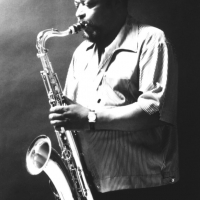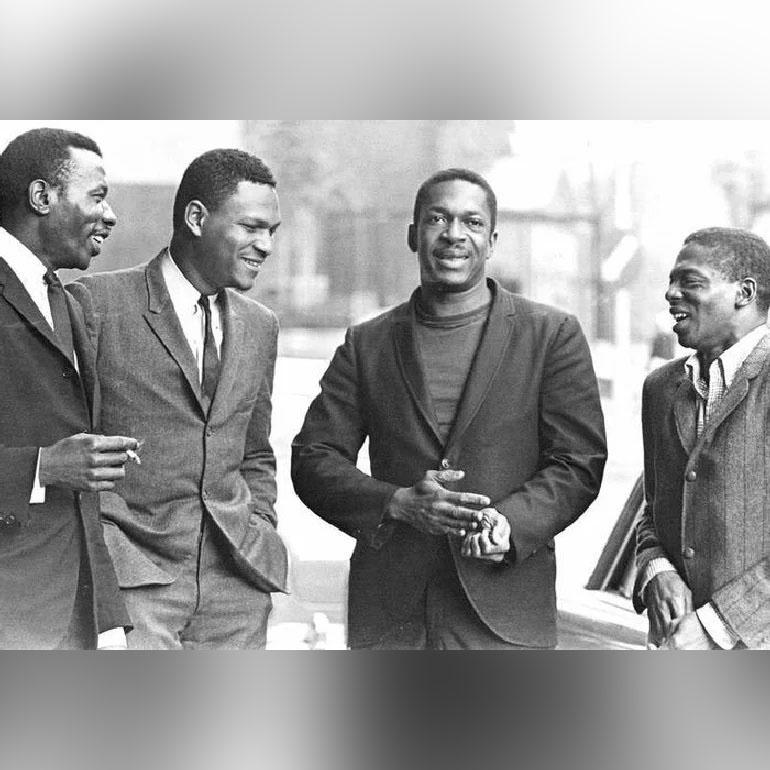
Benny Golson

Jazz
Bebop
 Viberate Rank: 66787
 Viberate Rank: 66787
 Monthly ListenersFollowers
 Subscribers
 Followers
 Followers
 FansTop Spotify Songs
| Track | 7-Day Streams | |
|---|---|---|
1 | 81.02K | |
2 | 12.81K | |
3 | 11.35K | |
4 | 8.11K | |
5 | 7.72K |
Top YouTube VideosMonthly ListenersFeatured in Playlists| Playlist | Followers | |
|---|---|---|
1 |  Soft Jazz Spotify | 359.30K |
2 |  Jazz Noir Spotify | 349.67K |
3 |  Dark Academia Jazz Spotify | 282.85K |
4 |  Jazz Bar Spotify | 208.13K |
5 |  Instrumental Jazz Standards Spotify | 184.17K |
Audience| City | Monthly Listeners | |
|---|---|---|
1 |  | 4.86K |
2 | | 4.05K |
3 | | 3.66K |
4 | | 2.92K |
5 |  | 2.71K |
See full performance history, audience data, playlist activity, rankings, comparisons, and more in Viberate music analytics. Start with a free trial, then continue with a paid plan.
Benny Golson’s Spotify BioA powerhouse tenor saxophonist and composer whose work was a paradigm of elegant, yet deeply soulful hard bop, Benny Golson distinguished himself both on his own and as a co-founder of the Jazztet. Emerging out of the vibrant Dizzy Gillespie Big Band of the 1950s, Golson released a string of his own albums, including 1958's The Modern Touch. He was also a member of Art Blakey's Jazz Messengers for their classic 1959 album Moanin'. Known as much for his composing as his playing, Golson penned numerous songs that would become jazz standards, including "I Remember Clifford," for Clifford Brown, with whom he played in Tadd Dameron's band. He also wrote "Blues March," "Stablemates," "Whisper Not," "Along Came Betty," and "Killer Joe," the latter of which he debuted on 1960's Meet the Jazztet, a group he co-led with Art Farmer. Following a period scoring for television in the '60s and '70s, he returned to jazz, reuniting the Jazztet and issuing more highly regarded small group albums like… 2004's Terminal 1, released the same year he played himself in the Tom Hanks film The Terminal. An NEA Jazz Master and Grammy Trustees Award winner, Golson was a living legend by the time of his passing in 2024.
Born in 1929 in Philadelphia, Pennsylvania, Golson grew up in a working-class household, the only child of his mother Celadia, a seamstress and waitress, and father Bennie, a foreman for the gas company. His parents had already split up before he was born, so it was Celadia who raised him, starting him on piano at age nine. Consequently, Golson initially aspired to be a classical concert pianist. However, jazz quickly became his passion. His uncle worked as a bartender at New York's famed Minton's Playhouse where a young Golson was exposed to emerging bebop stars like Thelonious Monk, Kenny Clarke, Joe Guy, and others. By age 14 he had switched to tenor saxophone, drawing inspiration from players like Coleman Hawkins, Lucky Thompson, Don Byas, and most importantly, Arnett Cobb, the latter of whom he credits with sparking his desire to play saxophone after seeing Cobb solo on "Flying Home" with Lionel Hampton's band during a 1943 concert at the Earle Theater in Philadelphia.
Coming up in the fertile Philly jazz scene, Golson was surrounded by musical peers, including friends like John Coltrane (with whom he went to jam sessions), Jimmy and Percy Heath, Red Garland, Philly Joe Jones, and Ray Bryant. After high school, he attended Howard University where he graduated in 1950. It was around this time that he joined Bull Moose Jackson's R&B band in Philadelphia. Also with the band was pianist and composer Tadd Dameron, who had a major influence on Golson's own writing. It was while with Dameron's group and trumpeter Clifford Brown that Golson made his recorded debut, playing on the 1953 Prestige sessions for A Study in Dameronia.
Apart from Dameron, he enjoyed stints with Lionel Hampton, Johnny Hodges, and Earl Bostic but initially rose to prominence as a key member of Dizzy Gillespie's globe-trotting big band from 1956 to 1958, where his writing, as much as his tenor playing, began to get noticed. It was during these years that Golson wrote such standards as "I Remember Clifford" (for the late Clifford Brown), "Killer Joe," "Stablemates," "Whisper Not," "Along Came Betty," and "Blues March." Many of these tunes were recorded first by other artists, though several did appear on Golson's albums with Gillespie. Along with the big band, he appeared on a handful of classic Verve albums, including Dizzy in Greece, Birks' Work, and Dizzy Gillespie at Newport.
Following his time with Gillespie, Golson came on board as one of Art Blakey's Jazz Messengers, joining fellow Gillespie big-band alum Lee Morgan, as well as Bobby Timmons and Jymie Merritt. Though he was only with Blakey for a year, he made an impact, playing on the group's classic 1959 Blue Note album Moanin'. Anchored by Timmons' gospel-infused title track, the album also featured several of Golson's songs, including the instant standards "Along Came Betty" and "Blues March," all of which helped to solidify Moanin' as one of the quintessential hard bop albums of all time. Golson, who left the band in 1959, also toured Europe with the Messengers, appearing on several live albums, as well as the soundtrack to director Eduardo Molinaro's film Des Femmes Disparaissent.
As a leader, Golson debuted in 1958 with Benny Golson's New York Scene, a quintet date with fellow future Jazztet co-leader Art Farmer on trumpet, pianist Wynton Kelly, bassist Paul Chambers, and drummer Charlie Persip. He had actually recorded a number of sessions in 1957 that were released in relatively quick order; among them, The Other Side of Benny Golson and The Modern Touch, the latter of which featured trumpeter Kenny Dorham, trombonist J.J. Johnson, pianist Wynton Kelly, bassist Paul Chambers, and drummer Max Roach. He then released a handful of highly regarded albums for the New Jazz label, including Gone with Golson, Groovin' with Golson, and Gettin' with It.
In 1959, he left Blakey to form the influential sextet ensemble the Jazztet with trumpeter/flugelhornist Art Farmer. The pair had worked together on and off since the early '50s and shared a passion for finely arranged and soulfully melodic arrangements built on the multiple lead voices a sextet offered. Initially joining them in the Jazztet were trombonist Curtis Fuller, pianist McCoy Tyner, bassist Addison Farmer, and drummer Dave Bailey. However, by the time of the group's 1960 debut on Argo, Meet the Jazztet, Bailey had been replaced by Lex Humphries. The album garnered considerable attention, especially for the Golson song "Killer Joe," which would become yet another beloved jazz standard. Over the next few years, Golson co-led the Jazztet with Farmer, overseeing several line-up changes, including welcoming players like Cedar Walton and Albert Heath on 1960's Big City Sounds and Grachan Moncur III and Harold Mabern on 1962's Here and Now.
However, the Jazztet's intricate arrangements and subsequent need for long practice sessions proved time consuming, and Golson and Farmer mutually ended the group in 1962. The saxophonist shifted focus back to his solo work, releasing albums like 1965's Pop + Jazz = Swing, Turning Point, and Free. He also spent several years in Europe where he released 1965's Stockholm Sojourn.
Returning to the States, he released 1967's Tune In, Turn On (a quirky album of reworked TV advertisement jingles) for Verve. More television work followed as Golson moved increasingly into studio, arranging and composition work for Hollywood. He supplied numerous scores for various TV shows, including The Partridge Family, M*A*S*H, Room 222, and Mission: Impossible, among others.
Following an almost 15-year-long sojourn away from jazz, Golson enjoyed a comeback in the mid-'70s. He marked his return with 1977's Killer Joe for Columbia, an album that showcased his slightly tougher-sounding tenor playing and found him blending his classic hard bop sound with funk and fusion influences. More albums followed, including 1980's California Message with Curtis Fuller, 1983's Time Speaks with Freddie Hubbard and Woody Shaw, and 1990's Benny Golson Quartet with Mulgrew Miller.
Golson, Farmer, and Fuller also reunited, putting together several different lineups of the Jazztet and releasing albums like 1983's Voices All and Moment to Moment, as well as 1986's Back to the City and Real Time. Throughout the '90s, Golson was increasingly active, releasing a string of well-regarded acoustic jazz dates, including 1992's I Remember Miles, 1995's That's Funky with Nat Adderley, 1997's Up Jumped Benny, and 1998's Remembering Clifford.
By the 2000s, Golson was a living legend, a feeling underscored by his cameo role in the 2004 Steven Spielberg and Tom Hanks comedy/drama The Terminal. Along with his appearance, he released the album Terminal 1, which featured trumpeter Eddie Henderson and found Golson reinterpreting several of his classic tunes, like "Killer Joe" and "Blues March." In recognition of his lasting influence, Golson picked up numerous accolades during his later years, including a 1996 NEA Jazz Masters Award, a 1999 honorary doctorate of music from Berklee College of Music, and a 2007 International Academy of Jazz Outstanding Lifetime Achievement Award from the University of Pittsburgh. In 2009, he was inducted into the International Academy of Jazz Hall of Fame and in 2021 he received the Grammy Trustees Award. His alma mater Howard University also created the Benny Golson Jazz Master Award in his honor. He stayed active well into his eighties, releasing 2005's The Masquerade Is Over, 2007s' Many Moods of Benny Golson, 2009's New Time, New 'Tet, and 2016's Horizon Ahead. Following a short illness, Golson died at his Manhattan home on September 21, 2024, at the age of 95. ~ Matt Collar, Rovi
Viberate is a music analytics platform built for A&Rs, artist managers, labels, booking agents, marketers, and artists.
It helps music professionals track artist growth, analyze audience data, monitor playlist activity, compare artists, follow song performance, and identify opportunities across the music market.
Public artist pages provide a free preview of selected artist data. Paid plans provide access to deeper analytics, historical data, charts, comparisons, playlist tools, exports, alerts, reports, and additional professional features.
Yes. Public Viberate artist pages provide selected artist analytics and music data for free.
Viberate also offers a 7-day free trial of the full platform. A credit card is required to start the trial. The trial includes access to the complete product so users can test deeper artist analytics, historical views, playlist insights, comparisons, charts, exports, alerts, and reporting features before choosing a paid plan.
Viberate provides artist analytics across streaming, playlists, social media, video, radio airplay, songs, and audience markets.
Users can analyze Spotify performance, Spotify and Apple Music playlists, YouTube activity, TikTok and Instagram growth, radio spins, song performance, audience locations, demographics, rankings, and overall artist momentum.
Artist profiles also connect to music charts, similar artists, and comparison tools, helping users benchmark performance and evaluate artists in context.
Viberate updates key artist and track data daily.
For followed artists and tracks, selected data is refreshed multiple times per day. This helps teams monitor playlist changes, streaming movement, audience growth, releases, and campaign performance with more current data.
Update frequency can vary depending on the metric and data source.
Yes. Viberate lets users compare up to five artists side by side across streaming, social media, audience, and engagement metrics.
Users can compare fanbase growth, audience demographics, locations, Spotify performance, social metrics, and other artist data over selected time periods.
Artist comparison can be used for A&R scouting, benchmarking, booking decisions, campaign planning, and evaluating artists with similar audiences or market positions.