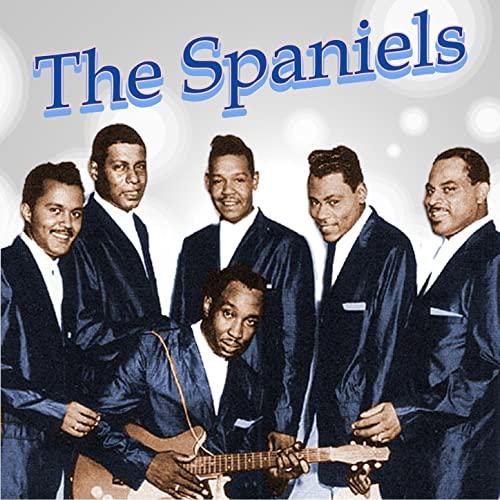
The Spaniels

R&B
Soul
Contemporary R&B
 Viberate Rank: 111005
 Viberate Rank: 111005
 Monthly ListenersFollowers
 Subscribers
 Followers
 Followers
 FansTop Spotify Songs
| Track | 7-Day Streams | |
|---|---|---|
1 | 41.81K | |
2 | 41.57K | |
3 | 809 | |
4 | 609 | |
5 | 566 |
Top YouTube VideosMonthly ListenersFeatured in Playlists| Playlist | Followers | |
|---|---|---|
1 |  Soft 50s Spotify | 546.28K |
2 | The 50s & 60s - Golden Oldies Pablo Reque | 91.72K |
3 |  This Is Cole Porter Spotify | 65.75K |
4 |  The 50s & 60s - Golden Oldies John Peter Furst | 60.27K |
5 |  oldies 🎭 darlingbaby❤️🔥 | 58.88K |
Audience| City | Monthly Listeners | |
|---|---|---|
1 | | 1.20K |
2 |  | 1.10K |
3 | | 977 |
4 |  | 900 |
5 | | 887 |
See full performance history, audience data, playlist activity, rankings, comparisons, and more in Viberate music analytics. Start with a free trial, then continue with a paid plan.
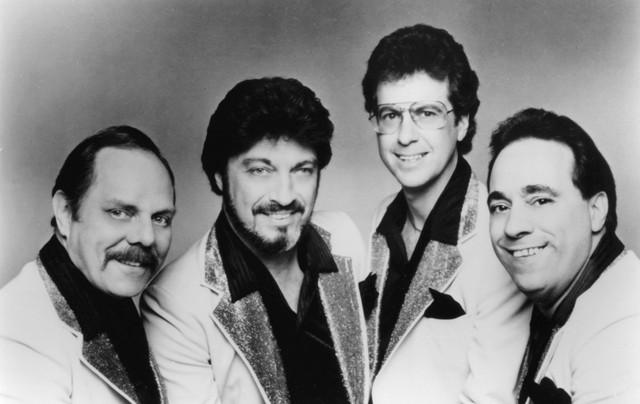
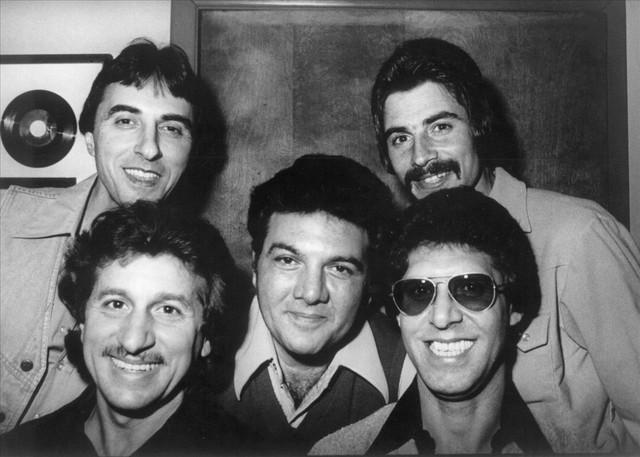
The Spaniels’ Spotify BioThe Spaniels are best known for their massive 1954 hit, "Goodnight, Sweetheart, Goodnight" (number five R&B). They were the first successful Midwestern R&B group, coming from Gary, Indiana by way of Chicago. Lead vocalist James "Pookie" Hudson was a graceful lead singer who influenced many who came after him, most notably Aaron Neville. They were also one of the first (if not the first) R&B groups to perform with the lead singer on one microphone and the rest of the group sharing another, and initiated a trend of using tap dance routines in live shows. Their often a cappella recordings showcase the purity of a sound and style uniquely their own. It was also the Spaniels who partially brought about the formation of one of R&B's legendary labels, Vee-Jay, which became one of the most successful Black-owned record companies in the country.
The story of how the Spaniels came to prominence begins in late 1952, when lead singer Hudson was convinced by four of his Roosevelt High classmates --… Ernest Warren (first tenor), Opal Courtney, Jr. (baritone), Willie Jackson (second tenor), and Gerald Gregory (bass) to join them for a school talent show. They had debuted as Pookie Hudson and the Hudsonaires for the Christmas show and fared so well they decided to continue. Not wanting to join the bird group club (Orioles, Ravens, etc.), they decided on the name Spaniels.
In the spring, the group visited the local record shop owned by James and Vivian Brackens, who had begun developing a record label called Vee-Jay Records. They soon moved their operation to Chicago, in a garage off 47th Street (later they would relocate to offices at 1449 South Michigan Avenue). The Spaniels were one of the first two artists signed to the label (the other was blues guitarist Jimmy Reed). On May 5, 1953, the Spaniels recorded "Baby It's You," released in July. On September 5, "Baby" hit number ten on the national R&B best-seller charts.
The Spaniels' next session produced additional singles, including "Goodnight, Sweetheart, Goodnight," which took off in March 1954, but it took about six months for the record to break nationally, charting at number five on the R&B charts. Its success prompted the McGuire Sisters to cover it for the "white" market, stealing a lot of the Spaniels' thunder when their version landed in the Top Ten (number seven).
The Spaniels' next single, "Let's Make Up," earned more for songwriter Hudson as someone else's B-side when it appeared on the flip of the Top 20 hit "The Ballad of Davy Crockett" (number 14, 1955). On June 11, 1954, the Spaniels made the first of numerous appearances at the Apollo Theatre and began touring the greater Midwest. Another single, "You Painted Pictures," reached number 13 R&B in October.
After Opal Courtney, Jr. was drafted, Vee-Jay A&R man and Spaniels producer Calvin Carter was pressed into service during their road trips for a few months until James "Dimples" Cochran took over permanently. Shortly thereafter, Ernest Warren was drafted and the group continued recording as a quartet. Two subsequent Spaniels singles failed to connect. Disappointed, Pookie Hudson and Willie Jackson both decided to leave the group. The Spaniels bravely continued, with Carl Rainge (lead), Gerald Gregory (bass), James Cochran (baritone), and Don Porter (second tenor). This contingent lasted for only one single until Pookie rejoined.
In April 1957, Vee-Jay released their first full-length album, Goodnight, It's Time to Go. By mid-summer, the group was back to turning out terrific singles. Incidentally, around this same time, Hank Ballard (of Hank Ballard & the Midnighters) had just rewritten the Drifters' 1955 number two pop hit "What'cha Gonna Do" -- already a revision of an old gospel tune, "What're You Going to Do" -- and offered his rewrite, called "The Twist," to the Spaniels, but they passed on it. It later became a number one hit for Ernest Evans, who recorded it under the name Chubby Checker.
By 1960, the Spaniels comprised Hudson, Ernest Warren, Gerald Gregory, Bill Carey, and Andy Magruder (former lead of the Five Blue Notes). They recorded the group's last Vee-Jay single, "I Know," in 1960; it reached number 23 R&B that summer. Meanwhile, Vee-Jay issued a second full-length album.
A year later, Magruder and Gregory left the group, and they broke up briefly after trying to sort out what to do. Road manager Ricky Burden took over on bass for the group's recording for Neptune. Hudson did a few solo sides for Jamie and in 1962 recorded with the Imperials (minus Little Anthony) for Lloyd Price's Double-L label. In the late '60s, Hudson formed his own North American Records and issued "Fairytales," which was picked up by Nate McCalla's Calla Records (distributed by Roulette). It became Pookie's last charting single (number 45 R&B) in the fall of 1970.
Two more singles were issued in the early '70s with a new Spaniels lineup: Hudson, Charles Douglas (first tenor), Alvin Wheeler (second tenor), Alvin Lloyd (baritone), and former guitarist for the group Pete Simmons (bass). He was later replaced by Andrew Lawyer (the Truetones) when the group recorded a remake of "Goodnight, Sweetheart, Goodnight" for Buddah. Their last release was for Henry Farag's Canterbury label in Gary, Indiana in 1974. Up until the time they disbanded, Hudson and the Spaniels were one of the more in-demand acts on the oldies circuit. ~ Bryan Thomas, Rovi
Viberate is a music analytics platform built for A&Rs, artist managers, labels, booking agents, marketers, and artists.
It helps music professionals track artist growth, analyze audience data, monitor playlist activity, compare artists, follow song performance, and identify opportunities across the music market.
Public artist pages provide a free preview of selected artist data. Paid plans provide access to deeper analytics, historical data, charts, comparisons, playlist tools, exports, alerts, reports, and additional professional features.
Yes. Public Viberate artist pages provide selected artist analytics and music data for free.
Viberate also offers a 7-day free trial of the full platform. A credit card is required to start the trial. The trial includes access to the complete product so users can test deeper artist analytics, historical views, playlist insights, comparisons, charts, exports, alerts, and reporting features before choosing a paid plan.
Viberate provides artist analytics across streaming, playlists, social media, video, radio airplay, songs, and audience markets.
Users can analyze Spotify performance, Spotify and Apple Music playlists, YouTube activity, TikTok and Instagram growth, radio spins, song performance, audience locations, demographics, rankings, and overall artist momentum.
Artist profiles also connect to music charts, similar artists, and comparison tools, helping users benchmark performance and evaluate artists in context.
Viberate updates key artist and track data daily.
For followed artists and tracks, selected data is refreshed multiple times per day. This helps teams monitor playlist changes, streaming movement, audience growth, releases, and campaign performance with more current data.
Update frequency can vary depending on the metric and data source.
Yes. Viberate lets users compare up to five artists side by side across streaming, social media, audience, and engagement metrics.
Users can compare fanbase growth, audience demographics, locations, Spotify performance, social metrics, and other artist data over selected time periods.
Artist comparison can be used for A&R scouting, benchmarking, booking decisions, campaign planning, and evaluating artists with similar audiences or market positions.