Lloyd Price

R&B
Soul
Contemporary R&B
 Viberate Rank: 57025
 Viberate Rank: 57025
 Monthly ListenersFollowers
 Subscribers
 Followers
 Followers
 FansTop Spotify Songs
| Track | 7-Day Streams | |
|---|---|---|
1 | 37.03K | |
2 | 37.03K | |
3 | 10.77K | |
4 | 9.57K | |
5 | 8.46K |
Top YouTube VideosMonthly ListenersFeatured in Playlists| Playlist | Followers | |
|---|---|---|
1 |  All Out 50s Spotify | 1.89M |
2 |  The Birth of Rhythm & Blues Spotify | 319.28K |
3 |  50s Party Spotify | 313.80K |
4 | Lowrider oldies Pinchekodiak | 91.32K |
5 | Wasteland Radio Expanded Neale Christopher Zeringue | 76.99K |
Audience| City | Monthly Listeners | |
|---|---|---|
1 |  | 3.18K |
2 | | 2.74K |
3 | | 2.67K |
4 |  | 2.18K |
5 | | 2.18K |
See full performance history, audience data, playlist activity, rankings, comparisons, and more in Viberate music analytics. Start with a free trial, then continue with a paid plan.
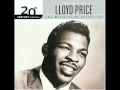
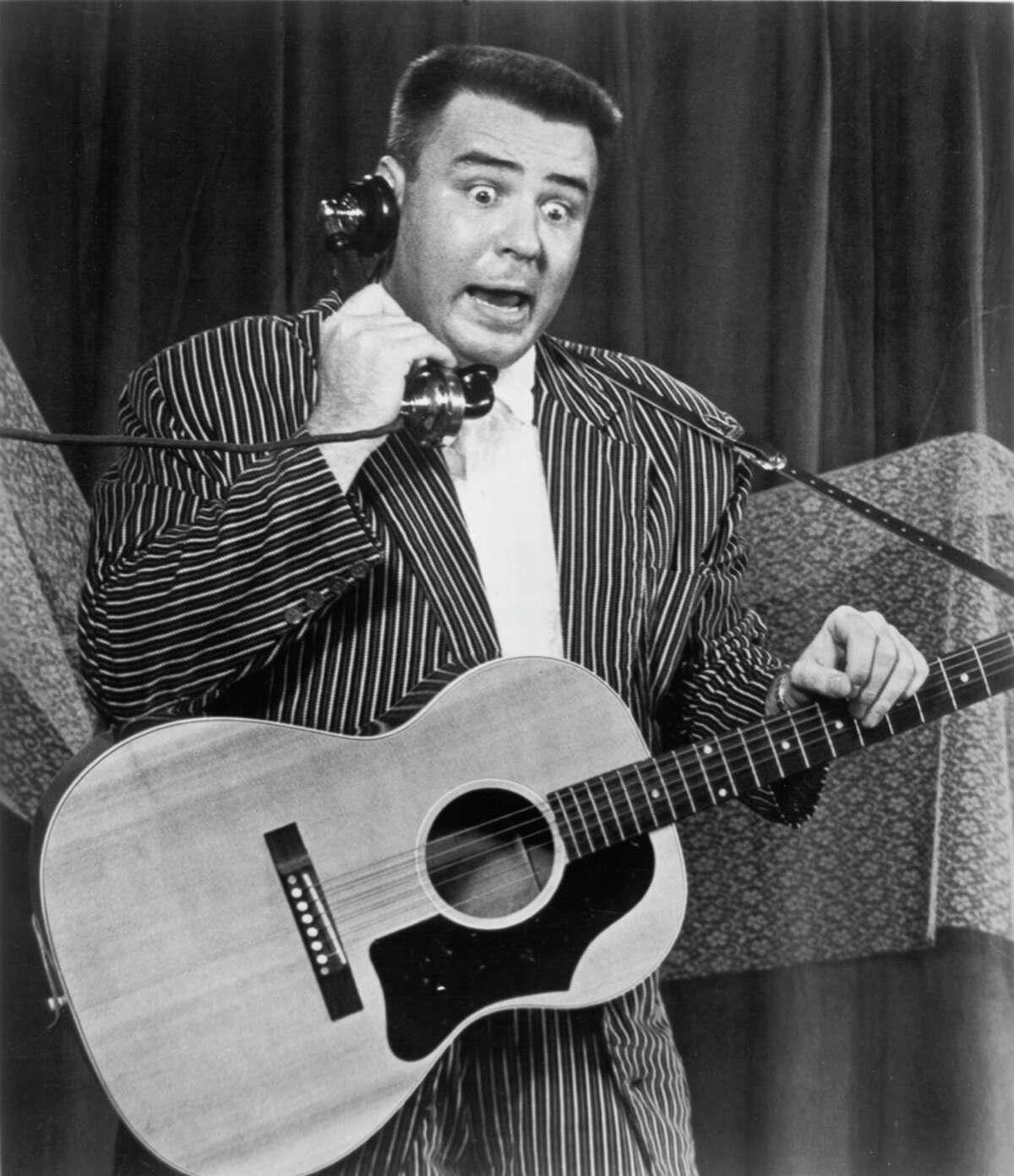
Lloyd Price’s Spotify BioOne of the more potent rhythm & blues shouters of the 1950s, Lloyd Price began his career singing gritty New Orleans-style material for Specialty Records that made him a star on the R&B charts with numbers like "Lawdy Miss Clawdy" (1952) and "Tell Me Pretty Baby" (1953). However, in the late '50s he jumped to the ABC-Paramount label, and glossier production and more full-bodied arrangements helped him scale the pop charts, scoring hit singles like "Stagger Lee" (1958) and "Personality" (1959). Regardless of his surroundings, Price sang with just the right amount of swagger, and his authoritative delivery could cut through any studio band. Price's finest Specialty sides are collected on the 1991 compilation Lawdy!, and a strong sampling of his late-'50s material can be found on 1994's Greatest Hits: The Original ABC-Paramount Recordings.
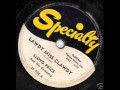
Lloyd Price was born in Kenner, Louisiana, on March 9, 1933. His mother ran a restaurant there called the Fish 'n' Fry, where Price got his start as an… entertainer, dancing for tips to songs on the jukebox. He discovered his vocal talents singing in church, and when Fats Domino's "The Fat Man" became a hit at the end of 1949, Price decided he wanted to make music in a similar style. He and his brother Leo Price formed a band, and they landed a gig at a nightclub in Kenner. Legendary producer and A&R man Dave Bartholomew caught their show one night and persuaded Art Rupe to sign the act to his Specialty Records label. With Lloyd at the vocal mike, they cut a song he'd written called "Lawdy Miss Clawdy." (To Price's great surprise, Fats Domino was the piano player on the session.) Released by Specialty in 1952, "Lawdy Miss Clawdy" rose to number one on the Rhythm & Blues charts, and held the top spot for seven weeks. Price's next four singles ("Oooh-Oooh-Oooh," "Restless Heart," "Ain't It a Shame," and "Tell Me Pretty Baby") would all reach the R&B Top Ten, but in 1954, he was drafted into the Army, and while Specialty would continue to release material they had in the vaults, none of them were hits.
After his hitch in the Army was over, Price discovered Specialty was scoring hits with Little Richard and Larry Williams (the latter had briefly worked as Price's chauffeur) and had lost interest in him. He bought back his contract from Specialty and with the help of promoter Harold Logan, he started his own label, KRC (for Kent Record Company). In 1956, Price put out his first single on KRC, "Just Because," and when it began breaking out as a regional hit, ABC-Paramount licensed it for nationwide distribution, and he soon signed directly to the label. His ABC-Paramount releases boasted glossier production values and better promotion and distribution, and in 1958, "Stagger Lee" shot to number one on the Pop and R&B charts. In 1959, Price scored two more major hits -- "Personality" was a number two Pop hit, "I'm Gonna Get Married" peaked at number three Pop, and both tunes hit number one on the R&B listing.
"I'm Gonna Get Married" would prove to be his last song to reach the Pop Top Ten, but he continued to fare well on the R&B survey, and after his deal with ABC-Paramount ran out in 1963, he started another new label, Double L Records, in tandem with Harold Logan. Price's cover of "Misty" was Double L's first hit, peaking at number 21 Pop and number 11 R&B, and he signed Wilson Pickett for his first solo hit, 1963's "If You Need Me."
In the late 1960s, Price opened a nightclub in New York City, Lloyd Price's Turntable, and he also launched a label of the same name that released records by Price, Howard Tate, and the Coasters. However, when Harold Logan was murdered in 1969, Price dropped out of the music business. He worked for a while with his longtime friend Don King, the famous boxing promoter, and helped him stage the 1974 title fight in Zaire between Muhammad Ali and George Foreman that became known as "The Rumble in the Jungle." In addition, Price was part of the bill for a concert staged in conjunction with the fight. He also teamed with King to found LPG Records, who released the 1976 single "What Did You Do with My Love," which was his last R&B hit, scraping the lower reaches of the charts at Number 99.
Price once again stepped away from his musical career and focused on business interests, but in 1993 he was persuaded to take part in a tour of Europe and the United Kingdom that featured him along with Jerry Lee Lewis, Little Richard, and Gary "U.S." Bonds. The success of the shows led to Price returning to live performing, and he toured at a comfortable pace for much of the rest of his life. In 2010, he was inducted into the Rock & Roll Hall of Fame, and the following year, he published his memoirs, The True King of the Fifties: The Lloyd Price Story. He also penned a collection of essays, Sumdumhonky, that was released in 2015. Lloyd Price died on May 3, 2021, at an extended care facility in New Rochelle, New York. He was 88 years old. ~ Mark Deming, Rovi
Viberate is a music analytics platform built for A&Rs, artist managers, labels, booking agents, marketers, and artists.
It helps music professionals track artist growth, analyze audience data, monitor playlist activity, compare artists, follow song performance, and identify opportunities across the music market.
Public artist pages provide a free preview of selected artist data. Paid plans provide access to deeper analytics, historical data, charts, comparisons, playlist tools, exports, alerts, reports, and additional professional features.
Yes. Public Viberate artist pages provide selected artist analytics and music data for free.
Viberate also offers a 7-day free trial of the full platform. A credit card is required to start the trial. The trial includes access to the complete product so users can test deeper artist analytics, historical views, playlist insights, comparisons, charts, exports, alerts, and reporting features before choosing a paid plan.
Viberate provides artist analytics across streaming, playlists, social media, video, radio airplay, songs, and audience markets.
Users can analyze Spotify performance, Spotify and Apple Music playlists, YouTube activity, TikTok and Instagram growth, radio spins, song performance, audience locations, demographics, rankings, and overall artist momentum.
Artist profiles also connect to music charts, similar artists, and comparison tools, helping users benchmark performance and evaluate artists in context.
Viberate updates key artist and track data daily.
For followed artists and tracks, selected data is refreshed multiple times per day. This helps teams monitor playlist changes, streaming movement, audience growth, releases, and campaign performance with more current data.
Update frequency can vary depending on the metric and data source.
Yes. Viberate lets users compare up to five artists side by side across streaming, social media, audience, and engagement metrics.
Users can compare fanbase growth, audience demographics, locations, Spotify performance, social metrics, and other artist data over selected time periods.
Artist comparison can be used for A&R scouting, benchmarking, booking decisions, campaign planning, and evaluating artists with similar audiences or market positions.