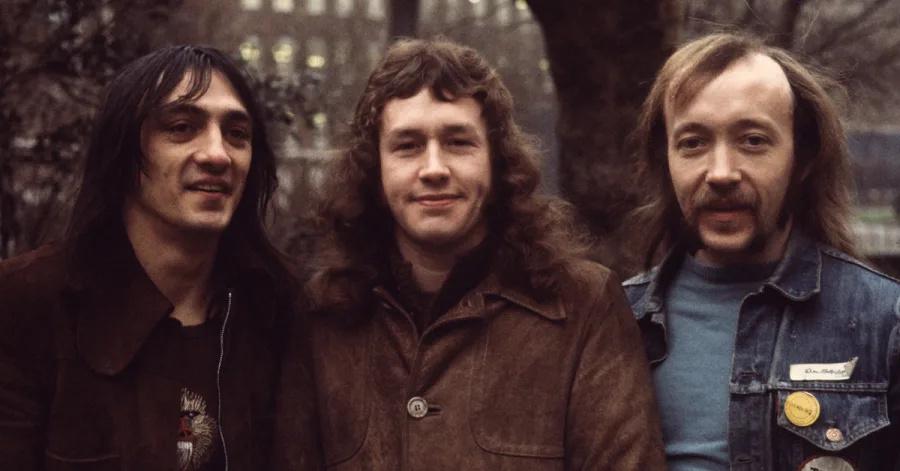
The Groundhogs

Rock
Alternative Rock
Folk Rock
Blues Rock
 Viberate Rank: 129722
 Viberate Rank: 129722
 Monthly ListenersFollowers
 Subscribers
 Followers
 Followers
 FansTop Spotify Songs
| Track | 7-Day Streams | |
|---|---|---|
1 | 5.29K | |
2 | 3.74K | |
3 | 3.65K | |
4 | 2.77K | |
5 | 1.97K |
Top YouTube VideosMonthly ListenersFeatured in Playlists| Playlist | Followers | |
|---|---|---|
1 |  FENRIZ METAL Gylve | 32.35K |
2 |  Stoner Rock A-Z boogievan | 24.16K |
3 |  Obscure 60s/70s Psychedelic Rock Jason LeValley | 15.23K |
4 |  70s Proto-Metal, Heavy Psych & Obscure Hard Rock Jordan Edrei | 11.27K |
5 |  Psychedelic Rock Aryna Livadari | 10.95K |
Audience| City | Monthly Listeners | |
|---|---|---|
1 | | 781 |
2 |  | 407 |
3 | | 344 |
4 | | 343 |
5 |  | 323 |
See full performance history, audience data, playlist activity, rankings, comparisons, and more in Viberate music analytics. Start with a free trial, then continue with a paid plan.
The Groundhogs’ Spotify BioPlaying tough, hard-edged guitar-based rock, the Groundhogs began as a potent British blues band and evolved into a more adventurous, progressive-oriented group without giving up their muscle and physical impact. The Groundhogs were a vehicle for guitarist Tony McPhee, who was the sole constant through their history, spanning from the mid-'60s into the 2010s, and maintained a loyal following as they started with the blues, went through a long period of experimentation, and eventually made their way back to the music that first inspired them. 1996's Hooker and the Hogs collected early recordings of the Groundhogs backing John Lee Hooker in 1965, 1970's Thank Christ for the Bomb was the point where their progressive influences started to take root, 1985's Razors Edge (recorded after a nine-year recording sabbatical) saw them detouring into hard rock, 1996's Who Said Cherry Red? was a live album devoted to oft requested songs the Groundhogs rarely played on stage, 2012's Blue and Lonesome… was a collaboration with blues artist Billy Boy Arnold, and 2021's Roadhogs (Live from Richmond to Pocono) included hard-hitting live material from 1969 and 1972.
The Groundhogs story began in 1962, when bassist Pete Cruickshank and his brother, singer and harmonica player John Cruickshank, formed a band called the Dollar Bills. The group was looking for a guitar player when John asked one of his co-workers, Tony McPhee, if he was interested. McPhee, who was gigging with a combo called the Seneschals, was more interested in blues than the pop-oriented material the Dollar Bills favored, and he convinced them to change their musical direction. They changed their name to the Groundhogs after "Groundhog's Blues," a song by John Lee Hooker, and began making a name for themselves on the fertile British blues circuit; Dave Boorman on drums and Bob Hall on keyboards completed their lineup. In 1964, John Lee Hooker was touring the United Kingdom, with John Mayall & the Bluesbreakers serving as his backing band. Circumstances forced Mayall and his band to drop out with a week of dates left to play, and the Groundhogs were recruited to back their hero for the remaining shows. (By this time, John Cruickshank had left the act, with McPhee taking over as lead singer.) Hooker liked working with the Groundhogs, and he invited them to serve as his band on a 1965 U.K. tour, as well as hiring them as session musicians for Hooker's 1966 album Seven Nights. (The Groundhogs' sessions with Hooker would be reissued several times in the years to come, in best form on 1996's Hooker and the Hogs.) Their success with Hooker led to more touring backing visiting American blues artists, including Jimmy Reed, Little Walter, and Champion Jack Dupree.
After a pair of one-off singles, the Groundhogs landed a contract with the British branch of Liberty Records; at this point, the lineup was Tony McPhee, Pete Cruickshank, Ken Pustelnik on drums, and Steve Rye on harmonica and backing vocals. Their first album under their own name, Scratching the Surface, appeared in 1968, and in 1969, they brought out their second LP, Blues Obituary, by which time they pared themselves down to a trio of McPhee, Cruickshank, and Pustelnik. As psychedelic and progressive rock was changing the sound of many British blues bands, the Groundhogs followed suit, with McPhee exploring a more adventurous, high-volume attack and stretching out the length of their tunes. 1970's Thank Christ for the Bomb, which combined their new musical outlook with several anti-war numbers, reached the Top 10 on the British album charts, and kicked off a prolific period for the Groundhogs, quickly followed quickly by 1971's Split and 1972's Who Will Save the World? The band also spent plenty of time on the road, including a 1971 British tour opening for the Rolling Stones; one of the dates with the Stones received a belated release in 2002 as Live at Leeds '71.
While many fans considered McPhee, Cruickshank, and Pustelnik trio to be the definitive Groundhogs lineup, in mid-1972, Ken Pustelnik dropped out of the group, and Clive Brooks, formerly of the prog rock band Egg, took over on drums. Hogwash, which came out in November 1972, was their first LP with Brooks, as well as their first LP on United Artists Records, who took over the group's contract after the U.K. Liberty label was phased out. 1974 brought the album Solid, recorded for the short-lived WWA label. While the album was a modest success, it marked a temporary end to the Groundhogs, as McPhee broke up the band that same year. They weren't disbanded for long; McPhee introduced a new lineup in 1975, featuring Dave Wellbelove on second guitar, Martin Kent on bass, and Mick Cook on drums. This edition of the Groundhogs went into the studio to record 1976's Crosscut Saw, which dialed back a bit on their progressive leanings in favor of the blues, and before the year was out, they delivered a second LP, Black Diamond, with Rick Adams replacing Dave Wellbelove on guitar. After this flurry of activity, McPhee once again folded the tent on the Groundhogs.
The Groundhogs emerged again in 1982, once again in an entirely new lineup, with McPhee joined by bassist Alan Fish and drummer Wilgar Campbell. While Fish would stay in the group until 1994, a procession of drummers and guitarists would make their way through the band in the years to come. This incarnation of the Groundhogs issued a studio album in 1985, Razors Edge, that showed them adding a harder rock edge to their attack, and 1986's Back Against the Wall followed a similar sound. 1988's Hogs on the Road was a live album recorded in Germany and England, and was the first of many concert recordings that would dominate their release schedule from the 1990s onward. 1998's Hogs in Wolf's Clothing saw the band covering a set of songs made famous by Howlin' Wolf, and 1999's Muddy Waters' Songbook was a similarly themed set. In 2003, to celebrate the 40th anniversary of the Groundhogs' first gigs, the classic McPhee, Cruickshank, and Pustelnik lineup reunited for a year of touring, and when the trio finished their commitments, the Groundhogs once again went on hiatus.
McPhee focused on acoustic music, often performing with singer Joanna Deacon, until 2007, when the Groundhogs staged another comeback, with bassist Dave Anderson and drummer Marco Anderson. Not unlike the version that McPhee formed in 1982, the band went through a number of drummers, but bassist Dave Anderson remained a constant, and beginning in 2011, Joanna Deacon also began touring with the group as a vocalist, after a stroke impacted McPhee's ability to sing. Further health problems led McPhee to retire from touring in 2015. Beginning in 2018, the British label Fire Records began reissuing classic albums from the Groundhogs' catalog on vinyl and CD, beginning with Scratching the Surface and Blues Obituary, and followed by Thank Christ for the Bomb, Split, and Who Will Save the World? In 2021, Fire issued an archival live collection, Roadhogs (Live from Richmond to Pocono), featuring two concerts from the McPhee, Cruickshank, and Pustelnik lineup, one recorded in 1969 and the other in 1972 at what proved to be the classic trio's final performance prior to their 2003 reunion. Tony McPhee died on June 6, 2023 at the age of 79, closing a distinctive chapter in British blues. ~ Mark Deming, Rovi
Viberate is a music analytics platform built for A&Rs, artist managers, labels, booking agents, marketers, and artists.
It helps music professionals track artist growth, analyze audience data, monitor playlist activity, compare artists, follow song performance, and identify opportunities across the music market.
Public artist pages provide a free preview of selected artist data. Paid plans provide access to deeper analytics, historical data, charts, comparisons, playlist tools, exports, alerts, reports, and additional professional features.
Yes. Public Viberate artist pages provide selected artist analytics and music data for free.
Viberate also offers a 7-day free trial of the full platform. A credit card is required to start the trial. The trial includes access to the complete product so users can test deeper artist analytics, historical views, playlist insights, comparisons, charts, exports, alerts, and reporting features before choosing a paid plan.
Viberate provides artist analytics across streaming, playlists, social media, video, radio airplay, songs, and audience markets.
Users can analyze Spotify performance, Spotify and Apple Music playlists, YouTube activity, TikTok and Instagram growth, radio spins, song performance, audience locations, demographics, rankings, and overall artist momentum.
Artist profiles also connect to music charts, similar artists, and comparison tools, helping users benchmark performance and evaluate artists in context.
Viberate updates key artist and track data daily.
For followed artists and tracks, selected data is refreshed multiple times per day. This helps teams monitor playlist changes, streaming movement, audience growth, releases, and campaign performance with more current data.
Update frequency can vary depending on the metric and data source.
Yes. Viberate lets users compare up to five artists side by side across streaming, social media, audience, and engagement metrics.
Users can compare fanbase growth, audience demographics, locations, Spotify performance, social metrics, and other artist data over selected time periods.
Artist comparison can be used for A&R scouting, benchmarking, booking decisions, campaign planning, and evaluating artists with similar audiences or market positions.