Pixinguinha

Latin
Samba
Other Latin Music
 Viberate Rank: 86932
 Viberate Rank: 86932
 Monthly ListenersFollowers
 Subscribers
 Followers
 Followers
 FansTop Spotify Songs
| Track | 7-Day Streams | |
|---|---|---|
1 | 14.62K | |
2 | 8.46K | |
3 | 6.70K | |
4 | 2.99K | |
5 | 2.75K |
Top YouTube VideosMonthly ListenersFeatured in Playlists| Playlist | Followers | |
|---|---|---|
1 |  Peaky Blinders Soundtrack - All Songs Jasons 24/7 Supermarket | 308.03K |
2 |  Pérolas Negras Spotify | 176.85K |
3 |  Samba Classics Spotify | 144.94K |
4 |  Brasil Anos 50 Spotify | 89.72K |
5 |  Choros Essenciais Spotify | 77.27K |
Audience| City | Monthly Listeners | |
|---|---|---|
1 | | 15.84K |
2 | | 8.04K |
3 | | 4.45K |
4 | | 3.62K |
5 | | 2.57K |
See full performance history, audience data, playlist activity, rankings, comparisons, and more in Viberate music analytics. Start with a free trial, then continue with a paid plan.
Pixinguinha’s Spotify BioBrazilian Popular Music was individualized around the second half of 19th century, and the end of that century witnessed the presence of the African rhythmic tradition in an urban setting. Humble people from the carioca hills created their own musical instruments, percussion generally, consisting of frying pans, cans filled with sand or stones, cuícas, tamborins, and atabaques, the latter made of cat skins.
The Portuguese colonization brought elements of European culture with it, including musical forms and orchestral instruments. Brazilian musicians who already played the European repertoire on pianos, flutes, violins, and Spanish guitars naturally transposed the rhythms of the percussion to their instruments. Around 1875 the generic title "choro" was already being used to designate any small orchestra with a solo instrument performing popular music, especially in the open.
Alfredo da Rocha Vianna, Jr., nicknamed the "Pixinguinha," had a prominent role in the definition of the so-called… regional development of choro, as the typical small groups of this genre are called. A virtuoso flutist at a tender age, he composed his first song at age 13, the choro "Lata de Leite," dedicated to his friends with whom he used to play tricks like stealing milk cans from the front of neighboring houses.
Starting with the small, chamber-like groups which were common by then and utilized flute, acoustic guitar, and cavaquinho (ukulele), Pixinguinha modified their structure and created what would be his fundamental group, Os Oito Batutas. With this revolutionary ensemble, he introduced jazz-based instrumentation in Brazil, with trumpet, trombone, saxophone, and banjo, in addition to the varied Brazilian percussion.
Born in Piedade, carioca suburb, on April 23, 1898, Saint George's Day, (also known as Ogum's Day) he was a recognized master of the flute at 22, with several records. It was September, 1920. After touring São Paulo and Minas, Os Oito Batutas were invited to work at the Theatro Municipal's Assírio cabaret, accompany the performances of Duque and Gabi, a dance couple who became famous in Europe dancing to maxixe (a Brazilian genre derived from Lundu and a direct precursor of choro). At Duque's suggestion, millionaire Eduardo Guinle, a huge admirer of the Batutas, decided to sponser the group for a tour in Europe. They arrived in Paris in the winter of 1922 to play in the Scheherazade cabaret, where Duque had already danced successfully. With the main concern of simply having his sound heard in the ample Parisian rooms (which were much larger than the carioca ones), Pixinguinha started to think of an instrument with a more powerful sound. Because of this, he bought a Selmer soprano sax, introducing this instrument into the genre of Brazlian jazz. Besides this radical transformation in the traditional instrumentation of the choro, Os Oito Batutas was the first group to employ (in addition to the traditional flute, acoustic guitar, and cavaquinho) instruments like the reco-reco, the pandeiro, and the ganzá.
The season touring, initially intended to be one month long, was extended to six months. Paris lapped up the cabaret, raving with the hallucinatory rhythms of the Brazilians. Rave reviews from audiences and critics alike, Pixinguinha was honored by famous musicians, including Harold de Bozzi, first-award winner flutist from Paris Conservatories.
Meanwhile, tired from the professional touring when they were used to playing largely for pleasure in Brazil, they returned home to their old gig at the Assírio, complete with their new assortment of instrumentation: Donga took on the banjo, leaving the guitar; Pixinguinha introduced the saxophone (although he kept the flute as his main instrument for 20 years, until his drinking-tremble affected his embouchure so noticeably he was forced to play only the saxophone ).
In 1926 he became the director of the Teatro Rialtoa Orchestra, where he knew Albertina de Souza, a chorus girl with the company that held shows there. Two years later, he dissolved the Batutas to take on new commitments. In 1928 he recorded "Carinhoso" to negative criticism, with complaints that the harmony was "too Americanized." The other difference in his style that annoyed purists was the formal change from the three-part scheme traditional in choro to one with a distinct introduction and two separate parts. The same year, he organized he Orquestra Típica Pixinguinha-Donga with Donga, recording several records for the Parlophon label.
The beginning of his success as an orchestrator came around this time. As the remarkable composer/orchestrator Radamés Gnatalli notes, "there weren't composed arrangements in Brazil at that time." Sheet music was imported from Europe or the United States, and Pixinguinha was one of the first to write arrangements for Brazilian music, especially in the form of carnival marches, initially for Transmissora Radio, and after November, 1929, for the newborn Victor Talking Machine Co. of Brazil.
Working with such talents as Heitor Dos Prazeres, João Da Baiana, Radamés Gnatalli, Luís Americano, and Tute, he was creating a new phase in the Brazilian music. The first Victor record had two Pixinguinha's choros: "Vem cá! Não Vou" and "Urubatan." Several others came to document his instrumental mastery and improvisational ability.
In 1932, still working for Victor, created the famous group Guarda Velha, with rare artists as Bonfiglio de Oliveira, Luís Americano, Vantuil, Donga, João da Baiana among others. Of the recordings of this group deserve mention "Linda Morena," "O Teu Cabelo Não Nega" e "Moleque Indigesto," all of them from Lamartine Babo, sung by Mário Reis, Carmem Miranda, Castro Barbosa.
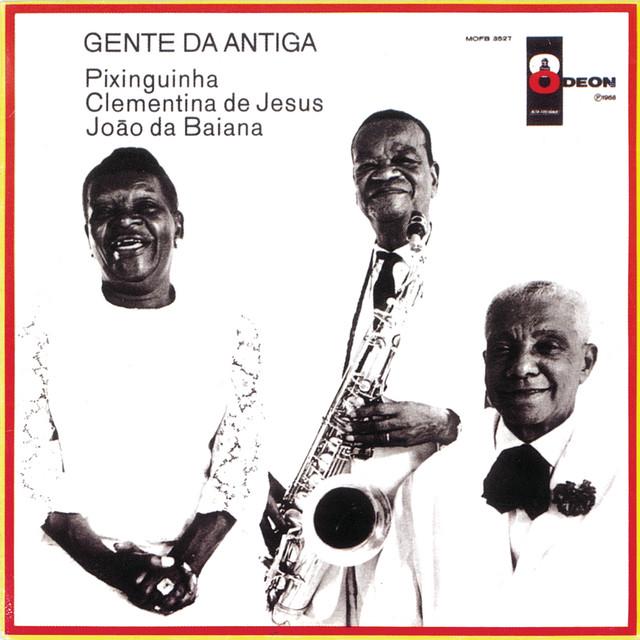
In 1940, renowned maestro Stokowsky came to Brazil to supervise the recording of the best popular music of the Latin-American countries. Asking Brazilian composer Heitor Villa-Lobos for recommendations, he was advised to look for Pixinguinha, who called Donga, João da Baiana, Cartola, Luís Americano, Zé Da Zilda, Jararaca, and Ratinho. Stokowsky contbuted eight records of Brazilian popular music for a U.S. record company. Describing his meetings with the maestro, Pixinguinha was given "a compliment on arriving, an enthusiastic praise when leaving."
In that same year, 1940, Pixinguinha joined Benedito Lacerda's regional band, which coincided with the beginning of one of the most fertile periods of Brazilian music, embodied by a perfection of execution not known until then. Pixinguinha again revolutionized Brazilian music writing, with his sax doing superb improvised counterpoints to Lacerda's flute melody. New creative and innovative works emerge during this phase, such as "Ingênuo," "Um a Zero," "Segura Ele," "Sofres Porque Queres," "Proezas do Sólon," "Oito Batutas," "O Gato e o Canário," and "Ainda Me Recordo," among others. Although Lacerdaappears as co-author of all these songs, they were written by Pixinguinha alone, who gave partner credits to Lacerda because of all the publicity he generated for Pixinguinha's work.
In the '50s, Brazilian music was dominated by the sad tone of samba-canção, boleros, and tangos, while the joyful flamboyance of Pixinguinha's music was forgotten by the time he turned 50. Between the ages of 55 and 56, he recorded three LPs with the group Velha Guarda for the Sinter label.
The bossa nova of the late '50s sung the praises of the good old traditional values in Brazilian music. Pixinguinha was given an opportunity to use his vast experiene with the genre in creating the soundtrack for the movie #Sol Sobre a Lama, along with Vinícius de Moraes.
But soon, in 1964, he would suffer the stroke that would take away most of his pleasure and music. In 1968 he said he was retiring from Brazilian popular music: "Now I want tranquillity and living in peace with everyone. I'm afraid death takes me by surprise. I want to die peacefully." And peace followed in his routine, meeting his buddies in Downtown Rio and sleeping early, until the death of his beloved Albertina in July, 1972.
On February 17 of the next year, he went out to baptize one of his grandsons. He was at the church in Ipanema around 4:00 P.M. After some time talking with family, he began to feel sick. He didn't wait for medical care. At 4:30 that afternoon, the father of Brazilian popular music died in the Igreja da Paz at the age of 74. ~ Alvaro Neder, Rovi
Viberate is a music analytics platform built for A&Rs, artist managers, labels, booking agents, marketers, and artists.
It helps music professionals track artist growth, analyze audience data, monitor playlist activity, compare artists, follow song performance, and identify opportunities across the music market.
Public artist pages provide a free preview of selected artist data. Paid plans provide access to deeper analytics, historical data, charts, comparisons, playlist tools, exports, alerts, reports, and additional professional features.
Yes. Public Viberate artist pages provide selected artist analytics and music data for free.
Viberate also offers a 7-day free trial of the full platform. A credit card is required to start the trial. The trial includes access to the complete product so users can test deeper artist analytics, historical views, playlist insights, comparisons, charts, exports, alerts, and reporting features before choosing a paid plan.
Viberate provides artist analytics across streaming, playlists, social media, video, radio airplay, songs, and audience markets.
Users can analyze Spotify performance, Spotify and Apple Music playlists, YouTube activity, TikTok and Instagram growth, radio spins, song performance, audience locations, demographics, rankings, and overall artist momentum.
Artist profiles also connect to music charts, similar artists, and comparison tools, helping users benchmark performance and evaluate artists in context.
Viberate updates key artist and track data daily.
For followed artists and tracks, selected data is refreshed multiple times per day. This helps teams monitor playlist changes, streaming movement, audience growth, releases, and campaign performance with more current data.
Update frequency can vary depending on the metric and data source.
Yes. Viberate lets users compare up to five artists side by side across streaming, social media, audience, and engagement metrics.
Users can compare fanbase growth, audience demographics, locations, Spotify performance, social metrics, and other artist data over selected time periods.
Artist comparison can be used for A&R scouting, benchmarking, booking decisions, campaign planning, and evaluating artists with similar audiences or market positions.