Nelson Cavaquinho

Latin
Samba
Other Latin Music
 Viberate Rank: 76803
 Viberate Rank: 76803
 Monthly ListenersFollowers
 Subscribers
 Followers
 Followers
 FansTop Spotify Songs
| Track | 7-Day Streams | |
|---|---|---|
1 | 52.71K | |
2 | 19.68K | |
3 | 11.85K | |
4 | 4.12K | |
5 | 3.83K |
Top YouTube Videos| Video | 7-Day Views | |
|---|---|---|
1 | 68 | |
2 | 43 | |
3 | 33 | |
4 | 30 | |
5 | 25 |
Monthly ListenersFeatured in Playlists| Playlist | Followers | |
|---|---|---|
1 |  Samba de Raiz Spotify | 631.09K |
2 |  Coleção Samba Spotify | 293.69K |
3 |  Caipirinha Spotify | 233.93K |
4 |  Pérolas Negras Spotify | 176.85K |
5 |  Samba Classics Spotify | 144.94K |
Audience| City | Monthly Listeners | |
|---|---|---|
1 | | 41.57K |
2 | | 18.72K |
3 | | 10.07K |
4 | | 7.51K |
5 | | 6.22K |
See full performance history, audience data, playlist activity, rankings, comparisons, and more in Viberate music analytics. Start with a free trial, then continue with a paid plan.
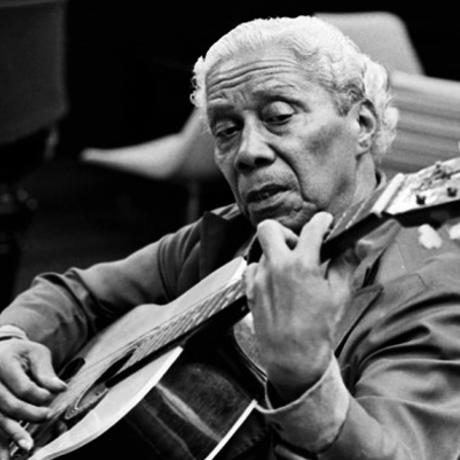
Nelson Cavaquinho’s Spotify BioNelson Cavaquinho was arguably the best samba composer ever, behind Cartola. He left 600 compositions that have been recorded by some of the greatest interpreters of Brazilian music, including Ciro Monteiro, Elis Regina, Elizeth Cardoso, Chico Buarque, Guinga, Paulinho da Viola, João Bosco, Rafael Rabello, Zizi Possi, Beth Carvalho, Toquinho, Luiz Melodia, Maria Bethânia, Leny Andrade, Clara Nunes, Jards Macalé, Itamar Assumpção, Arnaldo Antunes, Nelson Gonçalves, Zeca Pagodinho, and others.
Nelson Cavaquinho was in fact born one year after the date consigned on his birth certificate (October 28, 1910). His father, Brás Antônio da Silva (a tuba player from the military police band of Rio), worried about the precocious signs of a dedicated Bohemian, changed the certificate so he could enlist in the Army one year sooner. He was born in the São Cristóvão neighborhood in Rio. At eight, he moved with his family to Lapa. Soon after, he abandoned the junior high school to go to work. Nine… years later, he moved again with his family to a blue-collar neighborhood in Gávea, where he began to play the cavaquinho in the local rodas de choro, where he got the nickname. His first choro compositions date from that period, when he also enrolled with the military police (at 19), due to his father's insistency. He got married the next year and moved to the Brás de Pina neighborhood, but his marriage lasted for only a short period, due to his Bohemian habits.
By and by, he began to frequent the rodas de samba in the hills when he wrote his first song, "Entre a Cruz e a Espada." Becoming acquainted with Cartola, wrote some sambas with him, but the partnership ended when Cavaquinho sold one of those songs. He also became friends with many of the hills' composers, but very few of his partners participated in the composition of Cavaquinho 's sambas. As a Bohemian, he used to give partnerships of his songs in exchange for a hotel room for the night (as he did many times at the Hotel Brasil), a dish of food, or even a night of love. In spite of his always being cherished by women in the bars he frequented, most of Cavaquinho 's "partners" were hotel or bar owners or pimps. In 1938, Cavaquinho left the police and became a mason like Cartola. His first samba to be recorded was "Não Faça Vontade a Ela" (with Rubens Campos and Henricão), by Alcides Gerardi in 1939. Ciro Monteiro, a highly popular artist, began to record his songs in 1943 with "Apresenta-me Aquela Mulher" (with Augusto Garcez/Gustavo de Oliveira), followed by "Não te Dói a Consciência" (with Ari Monteiro); in 1945, he recorded "Aquele Bilhetinho" (with Augusto Garcez/Arnô Canegal), all for Victor. In 1946, he recorded Cavaquinho's first big hit, "Rugas" (with Augusto Garcez/Ari Monteiro). Instead of jumping on the success and opening his way into radio, which represented the big avenue for fame and money, he continued to show new songs in rodas de samba. In 1952, he moved to Mangueira. In 1954, Roberto Silva recorded "Notícia" (with Alcides Caminha/Nourival Bahia).
In 1955, he started a long (30 years) and fruitful partnership with Guilherme de Brito, his most constant and important partner. They settled a pact of musical fidelity, which was broken a couple of times (one was in the song "Rei Vagabundo" with José Ribeiro) by Cavaquinho, under alcohol's effluviums. In that same year, Cavaquinho came out with "Cinzas" (with Guilherme de Brito and R. Gaetani); in 1956, he had "Pranto de Poeta" (with Guilherme de Brito); and, in 1957, his masterpiece "A Flor e o Espinho" (with Guilherme de Brito and Alcides Caminha). Caminha was broadly known in Brazil as an erotic cartoonist who signed under the pseudonym of Carlos Zéfiro. His only participation in the song was the amount paid by him, three contos de réis. According to Guilherme de Brito, when there was anyone other than him and Cavaquinho on one of their songs, the person paid to be included in the credits. In 1961, Roberto Silva recorded "Degraus da Vida" (with Antônio Braga and César Brasil, through Copacabana). In the next year, together with Zé Keti, Paulinho da Viola, and Jair do Cavaco, he formed the samba group A Voz do Morro, which would generate a famous show in 1968 by Elton Medeiros and Paulinho da Viola. When Cartola opened his restaurant/nightclub Zicartola, Cavaquinho began to perform for audiences. In 1964, he also performed in the important show Opinião and Nara Leão recorded his "Luz Negra" (with Hiraí Barros) for her opening album, Nara. In the next year, he played violão on Maria Bethânia's opening album on the track "Feiticeira." "A Flor e o Espinho" was recorded in the same year by Elizeth Cardoso on her famous Elizete Sobe o Morro. He also recorded "Luz Negra" in 1966 (with Amâncio Cardoso), a year in which CBS released an LP with only his compositions and three of his interpretations. Three years later, Leon Hirzman shot a short-subject documentary about him, Nelson Cavaquinho. In 1968, he and the samba masters Clementina de Jesus, Cartola, and Carlos Cachaça, recorded the LP Fala Mangueira (Odeon), which was never released on CD. His first solo LP came only in 1970, Depoimentos do Poeta, for Castelinho, and was reissued on CD by Continental.
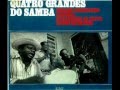
Later, his "Folhas Secas" (with Guilherme de Brito) was re-recorded by Elis Regina. The song would also be re-recorded by Beth Carvalho, with whom Cavaquinho toured Brazil in the Pixinguinha project. In 1973 and 1974, he recorded other solo albums for Odeon. In 1974, Eduardo Gudin, Paulo César Pinheiro, and Márcia opened the show O Importante é que a Emoção Sobreviva, which was recorded live and released on an eponymous LP containing Cavaquinho's "Tatuagem." In the same year, he played his characteristic and rude violão in Beth Carvalho's Pra seu Governo, on "Miragem." The following year, she recorded the old master again on her Pandeiro e Viola, both for ABW. In 1977, Cavaquinho recorded Os Quatro Grandes do Samba with Elton Medeiros, Candeia, and Guilherme de Brito. In 1985, he was paid tribute in Mangueira at an event where the album Flores em Vida was presented. The album had his compositions interpreted by Chico Buarque, Paulinho da Viola, Christina Buarque, João Bosco, Rafael Rabello, Beth Carvalho, Toquinho, Carlinhos Vergueiro, and others. Cavaquinho also plays violão and sings on three tracks. Cavaquinho continued to live this way until he died of pulmonary emphysema. In 1995, Leny Andrade interpreted his songs on Luz Negra (Velas), a year in which Wayne Shorter, Wallace Roney, Guilherme Vergueiro, Mads Vinding, Robertinho Silva, and Raul de Souza interpreted his songs at São Paulo's Heineken Concerts. In 1996, Zizi Possi recorded his "Juízo Final" (with Élcio Soares) for her Mais Simples, and the compilations Quando eu me Chamar Saudade (EMI) and Nelson Cavaquinho (RCA Victor) were released. In 1998, Nelson Gonçalves recorded "Quando eu me Chamar Saudade" (with Guilherme de Brito) on his Quando a Lapa era Lapa, and Jair Rodrigues also recorded the old sambista on his Jair de Todas as Bossas. In 1999, the label EMI released a compilation of his works on the Raízes do Samba series. In 2000, Flávio Moreira da Costa released the book Nelson Cavaquinho -- Enxugue os Olhos e me dê um Abraço, and Ricardo Cravo Albin presented the show Cavaquinho -- 90 Anos. In the same year, the Banda Mantiqueira presented a selection of his works at the 31o. Festival de Inverno de Campos do Jordão, and the series A Música Brasileira Deste Século por seus Autores e Intérpretes was released, bringing the transcription of 25 of producer Fernando Faro's 400 interviews and TV specials, which include the ones done with Nelson Cavaquinho. Marisa Monte recorded his "Gotas de Luar" on her Memórias, Crônicas e Declarações de Amor. The important compilation Mangueira -- Sambas de Terreiro e Outros Sambas, with Cavaquinho and other bambas, was also released that year. In the same year, the Quinteto em Branco e Preto recorded "Pranto de Poeta" (with Guilherme de Brito). ~ Alvaro Neder, Rovi
Viberate is a music analytics platform built for A&Rs, artist managers, labels, booking agents, marketers, and artists.
It helps music professionals track artist growth, analyze audience data, monitor playlist activity, compare artists, follow song performance, and identify opportunities across the music market.
Public artist pages provide a free preview of selected artist data. Paid plans provide access to deeper analytics, historical data, charts, comparisons, playlist tools, exports, alerts, reports, and additional professional features.
Yes. Public Viberate artist pages provide selected artist analytics and music data for free.
Viberate also offers a 7-day free trial of the full platform. A credit card is required to start the trial. The trial includes access to the complete product so users can test deeper artist analytics, historical views, playlist insights, comparisons, charts, exports, alerts, and reporting features before choosing a paid plan.
Viberate provides artist analytics across streaming, playlists, social media, video, radio airplay, songs, and audience markets.
Users can analyze Spotify performance, Spotify and Apple Music playlists, YouTube activity, TikTok and Instagram growth, radio spins, song performance, audience locations, demographics, rankings, and overall artist momentum.
Artist profiles also connect to music charts, similar artists, and comparison tools, helping users benchmark performance and evaluate artists in context.
Viberate updates key artist and track data daily.
For followed artists and tracks, selected data is refreshed multiple times per day. This helps teams monitor playlist changes, streaming movement, audience growth, releases, and campaign performance with more current data.
Update frequency can vary depending on the metric and data source.
Yes. Viberate lets users compare up to five artists side by side across streaming, social media, audience, and engagement metrics.
Users can compare fanbase growth, audience demographics, locations, Spotify performance, social metrics, and other artist data over selected time periods.
Artist comparison can be used for A&R scouting, benchmarking, booking decisions, campaign planning, and evaluating artists with similar audiences or market positions.