Abel Ferreira

Latin
Samba
Latin Jazz
 Viberate Rank: 233861
 Viberate Rank: 233861
 Monthly ListenersFollowers
 Subscribers
 Followers
 Followers
 FansTop Spotify Songs
| Track | 7-Day Streams | |
|---|---|---|
1 | 2.48K | |
2 | 1.69K | |
3 | 1.69K | |
4 | 1.38K | |
5 | 1.28K |
Top YouTube VideosMonthly ListenersFeatured in Playlists| Playlist | Followers | |
|---|---|---|
1 |  Chorinho Brasileiro For Play | 13.70K |
2 |  The Jazz Clarinet Adam Price | 10.18K |
3 | Melhores sambas! Alessandra Mauro | 10.08K |
4 | Instrumental Brasileiro Gustavo Palamone | 9.83K |
5 |  A Maior Playlist de Música Brasileira do Mundo Petrobras | 9.01K |
Audience| City | Monthly Listeners | |
|---|---|---|
1 | | 2.69K |
2 | | 1.41K |
3 | | 844 |
4 | | 824 |
5 | | 433 |
See full performance history, audience data, playlist activity, rankings, comparisons, and more in Viberate music analytics. Start with a free trial, then continue with a paid plan.
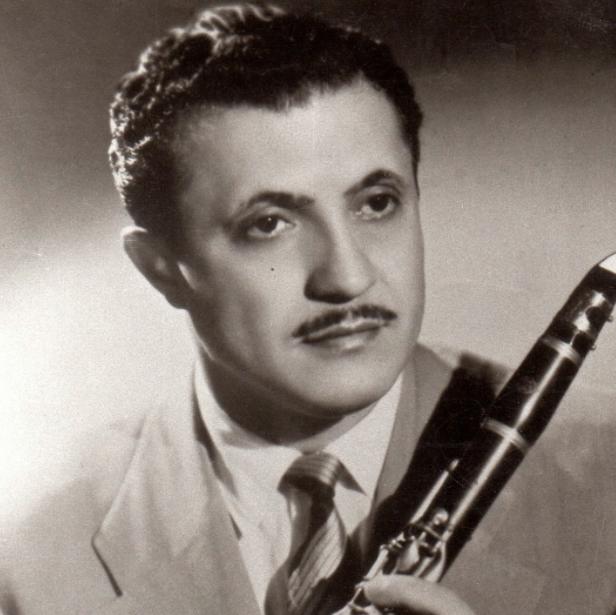
Abel Ferreira’s Spotify BioOne of the most important names in the choro genre, Abel Ferreira had a noted career at the prestigious Rádio Nacional after playing in the orchestras of Vicente Paiva and Bené Nunes. At Rádio Nacional, he became widely known with the Turma do Sereno and the Escola de Danças. Between the '50s and the mid-'60s, he accumulated a good deal of international experience. Throughout that period, the choro genre showed a decrease of interest from audiences, but Ferreira managed to keep himself in good shape, ready to profit on the revival of choro in the '70s as one of the most important names. An excellent improviser, Ferreira had his best moments in recordings with the Cinco Companheiros (where he played with Pixinguinha, among others). His most successful compositions are the choros "Chorando Baixinho" and "Acariciando."
His musical studies began when he was around 12, on the clarinet. At 17, he moved to Belo Horizonte and included the alto and tenor saxes in his playing, starting to perform… at Rádio Guarani. In 1935, he moved again, this time to São Paulo SP, where he joined the Maurício Cascapera Orchestra. He moved again to Uberaba MG, where he became the artistic director of a local radio station. In Poços de Caldas MG, he accompanied the sisters Aurora Miranda and Carmen Miranda in a show. Returning to Belo Horizonte, he played with J. França e sua Banda until 1937. In 1940, he performed in São Paulo SP, at the Rádio Tupi, playing later on the same outing with Pinheirinho e seu Regional. In 1941, he moved to Rio de Janeiro RJ, joining the Ferreira Filho e sua Orquestra, who used to play at the sophisticated Cassino da Urca. In the next year, he recorded his choro "Chorando Baixinho" and his valse "Vânia" for Columbia. In 1944, he recorded another version of his two first compositions with Claudionor Cruz e seu Regional. In 1945 and 1946 he played in the orchestras of Bené Nunes and Vicente Paiva. With these orchestras and his own group, formed in 1947, he accompanied the important singers of that period. In 1949, he was hired for Rádio Nacional as the leader of the Turma do Sereno, the name of the show (dedicated to an ancient repertory of modinhas, maxixes, valses, xotes, and polkas) and the group formed by virtuosi Irany Pinto (violin), João de Deus (flute), Sandoval Dias (clarone), Carlos Lentini, Rubem Bergman (violões, or acoustic guitars), and Waldemar de Melo (cavaquinho). In the same year, he played with the Rui Rei e sua Orquestra and recorded his choro "Acariciando" (with Lourival Faisal) for Todamérica. With Paulo Tapajós, he formed the Escola de Ritmos in 1952, who toured throughout Brazil. In 1954, he recorded the LP Jantar Dançante (Copacabana) and, in 1955, No Tempo do Cabaré. He toured Portugal in 1957, and in the following year, toured through several European countries and recorded the LP Os Brasileiros na Europa in the cultural mission that grouped himself alongside conductor Guio de Moraes, Sivuca, Trio Iraquitã, Dimas, and Pernambuco under the name Os Brasileiros. In 1960, he toured the U.S.A. with Bené Nunes, and, in the next year, toured Argentina with Waldir Azevedo. In 1964-1965, he toured Europe again, recording the album Abel Ferreira e Sua Turma. In 1968, he played in the then-U.S.S.R. and European countries. After the recording of Beth Carvalho's album Pra Seu Governo (Tapecar, 1970), he became the most requested accompanist for shows and recordings, also developing his own solo work in shows with trombonist Raul de Barros and clarinetist Copinha. ~ Alvaro Neder, Rovi
Viberate is a music analytics platform built for A&Rs, artist managers, labels, booking agents, marketers, and artists.
It helps music professionals track artist growth, analyze audience data, monitor playlist activity, compare artists, follow song performance, and identify opportunities across the music market.
Public artist pages provide a free preview of selected artist data. Paid plans provide access to deeper analytics, historical data, charts, comparisons, playlist tools, exports, alerts, reports, and additional professional features.
Yes. Public Viberate artist pages provide selected artist analytics and music data for free.
Viberate also offers a 7-day free trial of the full platform. A credit card is required to start the trial. The trial includes access to the complete product so users can test deeper artist analytics, historical views, playlist insights, comparisons, charts, exports, alerts, and reporting features before choosing a paid plan.
Viberate provides artist analytics across streaming, playlists, social media, video, radio airplay, songs, and audience markets.
Users can analyze Spotify performance, Spotify and Apple Music playlists, YouTube activity, TikTok and Instagram growth, radio spins, song performance, audience locations, demographics, rankings, and overall artist momentum.
Artist profiles also connect to music charts, similar artists, and comparison tools, helping users benchmark performance and evaluate artists in context.
Viberate updates key artist and track data daily.
For followed artists and tracks, selected data is refreshed multiple times per day. This helps teams monitor playlist changes, streaming movement, audience growth, releases, and campaign performance with more current data.
Update frequency can vary depending on the metric and data source.
Yes. Viberate lets users compare up to five artists side by side across streaming, social media, audience, and engagement metrics.
Users can compare fanbase growth, audience demographics, locations, Spotify performance, social metrics, and other artist data over selected time periods.
Artist comparison can be used for A&R scouting, benchmarking, booking decisions, campaign planning, and evaluating artists with similar audiences or market positions.