Clementina De Jesus

Latin
Samba
 Viberate Rank: 88225
 Viberate Rank: 88225
 Monthly ListenersFollowers
 Subscribers
 Followers
 Followers
 FansTop Spotify Songs
| Track | 7-Day Streams | |
|---|---|---|
1 | 23.07K | |
2 | 10.84K | |
3 | 10.23K | |
4 | 9.64K | |
5 | 5.27K |
Top YouTube VideosMonthly ListenersFeatured in Playlists| Playlist | Followers | |
|---|---|---|
1 |  Coleção Samba Spotify | 293.74K |
2 |  Canto aos Orixás Spotify | 181.26K |
3 |  Pérolas Negras Spotify | 176.87K |
4 |  Samba Classics Spotify | 145.00K |
5 |  Os Melhores Pontos de Umbanda deborahmla | 114.73K |
Audience| City | Monthly Listeners | |
|---|---|---|
1 | | 34.14K |
2 | | 14.34K |
3 | | 7.05K |
4 | | 5.23K |
5 | | 4.91K |
See full performance history, audience data, playlist activity, rankings, comparisons, and more in Viberate music analytics. Start with a free trial, then continue with a paid plan.
Clementina De Jesus’ Spotify BioThe low voice of the partido-alto singer Clementina de Jesus was only discovered outside her community when she was 62. Immediately acknowledged both nationally and internationally as a highly expressive singer, she still had time to participate in historic events like the Rosa de Ouro, Zicartola (at the Teatro Opinião), Noitada de Samba, and others. She has recorded and performed with artists of stature such as Nelson Cavaquinho, Turíbio Santos, Pixinguinha, João da Baiana, and many others. As a child, Clementina de Jesus listened to folkloric and religious music (jongo, partido-alto, ladainhas, etc.) sung by her mother. She remained an amateur for decades, participating in Carnaval blocos, and singing in church choirs and rodas de samba (samba get-togethers). After 20 years working as a maid, her career was launched in December 1964 by the classical guitarist Turíbio Santos at Kleber Santos' Teatro Jovem (Rio de Janeiro) in the show O Menestrel. A few months later, in 1965 when she… was 63, Clementina de Jesus had her definitive public consecration after being featured in Hermínio Bello de Carvalho's musical Rosa de Ouro at the same theater. Performances, which also featured Araci Cortes, Paulinho da Viola, and Elton Medeiros, followed in Bahia and São Paulo. De Carvalho's first album was this live show, released in the same year as Rosa de Ouro, Vol. 1, followed by a second volume released two years later. On this album, Clementina de Jesus presented the virtually unknown genre of jongo with songs like "Benguelê" (Pixinguinha/Gastão Vianna) and "Boi Não Berra." She also performed sambas like "Sementes do Samba" (Hélio Cabral) and "Nasceste de Uma Semente" (José Ramos), and the lundu "Bate Canela." In August 1983 she was paid tribute by the Brazilian state government at Rio de Janeiro's Teatro Municipal. The gala event attracted many artists like Elizeth Cardoso, Beth Carvalho, Orquestra Sinfônica Brasileira, João Nogueira, Paulinho da Viola, Gilberto Gil, Dona Zica, Dona Neuma, accompanied by the bateria (percussion section) of the Mangueira samba school. In 1985 de Jesus was decorated by the French government. Also known as Quelé (a corrupted use of her name) and as Rainha Ginga (Ginga Queen), she had her majesty truly expressed through this award.
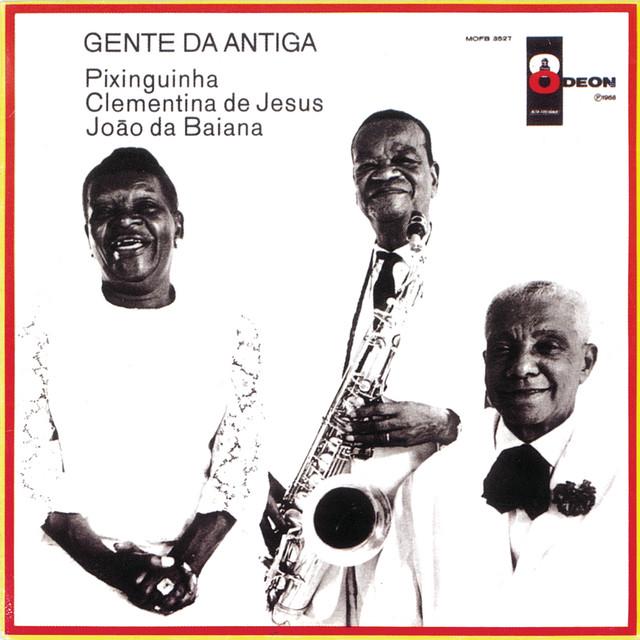
In 1966 she represented Brazil together with Paulinho da Viola, Elizeth Cardoso, and Elton Medeiros at the Black Arts Festival in Dakar and Senegal. In the same year she performed at the Cecília Meireles Hall (in Rio) José Maria Neves' Missa de São Benedito, for tamba (Hélcio Milito) and voice. Also in that year she recorded her first individual LP, Clementina de Jesus. Together with Pixinguinha and João da Baiana, she participated in the album Gente da Antiga, produced by Odeon in 1968. In the same year she also appeared on the LP Mudando de Conversa, a recording of the show of the same name, along with Ciro Monteiro and Nora Ney, produced at the Teatro Santa Rosa (Rio de Janeiro). In 1970 she had another LP released, Clementina Cadê Você?, edited by the Museu da Imagem e do Som (Sound and Image Museum, Rio de Janeiro), with corimás, jongos, modas, and sambas. In 1973 she had thrombosis, but five months later recorded the LP Marinheiro Só, which had songs by Paulinho da Viola and adaptations of popular songs like "Fui Pedir Às Almas Santas," "Atraca, Atraca," and "Incelença." In that year she also participated in Milton Nascimento's Milagre dos Peixes, recording "Escravo de Jó" (Milton Nascimento/Fernando Brant). In 1982 she was paid tribute by the Lins Imperial samba school, with the play Clementina -- Uma Rainha Negra. In the next year she recorded with Doca and Geraldo Filme the LP Canto dos Escravos, in which she interpreted slave songs from Minas Gerais collected by the researcher Aires da Mata Machado Filho. In 1985 she recorded Clementina e Convidados, which had her composition "Laçador" (co-written by Catoni). The album also had as guests Clara Nunes, João Bosco, Roberto Ribeiro, Martinho da Vila, Ivone Lara, Adoniram Barbosa, and Carlinhos Vergueiro. De Jesus also performed live with Nelson Cavaquinho in São Paulo, upstate Rio de Janeiro, and in Curitiba, Paraná. Her last live performance was in 1987 at the Teatro Carlos Gomes (Rio de Janeiro). ~ Alvaro Neder, Rovi
Viberate is a music analytics platform built for A&Rs, artist managers, labels, booking agents, marketers, and artists.
It helps music professionals track artist growth, analyze audience data, monitor playlist activity, compare artists, follow song performance, and identify opportunities across the music market.
Public artist pages provide a free preview of selected artist data. Paid plans provide access to deeper analytics, historical data, charts, comparisons, playlist tools, exports, alerts, reports, and additional professional features.
Yes. Public Viberate artist pages provide selected artist analytics and music data for free.
Viberate also offers a 7-day free trial of the full platform. A credit card is required to start the trial. The trial includes access to the complete product so users can test deeper artist analytics, historical views, playlist insights, comparisons, charts, exports, alerts, and reporting features before choosing a paid plan.
Viberate provides artist analytics across streaming, playlists, social media, video, radio airplay, songs, and audience markets.
Users can analyze Spotify performance, Spotify and Apple Music playlists, YouTube activity, TikTok and Instagram growth, radio spins, song performance, audience locations, demographics, rankings, and overall artist momentum.
Artist profiles also connect to music charts, similar artists, and comparison tools, helping users benchmark performance and evaluate artists in context.
Viberate updates key artist and track data daily.
For followed artists and tracks, selected data is refreshed multiple times per day. This helps teams monitor playlist changes, streaming movement, audience growth, releases, and campaign performance with more current data.
Update frequency can vary depending on the metric and data source.
Yes. Viberate lets users compare up to five artists side by side across streaming, social media, audience, and engagement metrics.
Users can compare fanbase growth, audience demographics, locations, Spotify performance, social metrics, and other artist data over selected time periods.
Artist comparison can be used for A&R scouting, benchmarking, booking decisions, campaign planning, and evaluating artists with similar audiences or market positions.