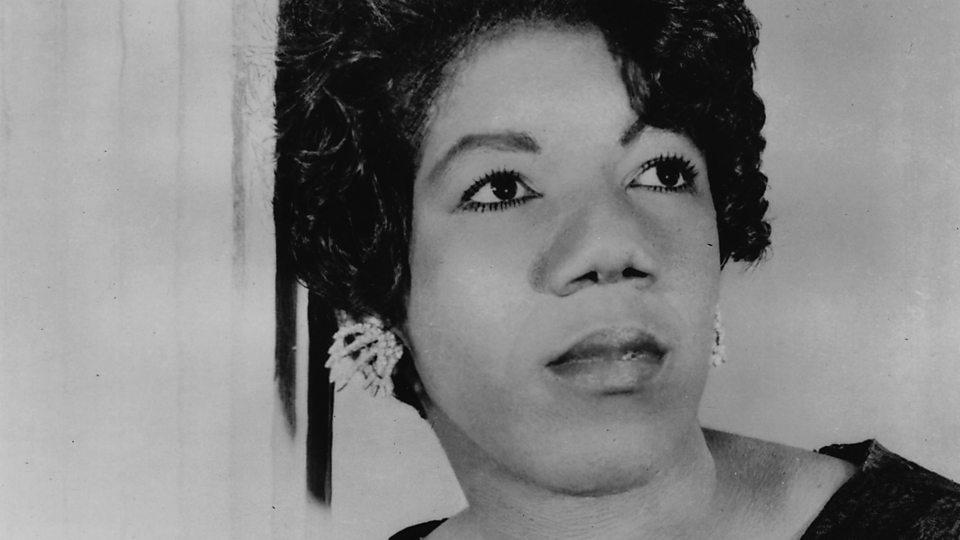
Mitty Collier

R&B
Funk
Soul
Christian Music
 Viberate Rank: 240223
 Viberate Rank: 240223
 Monthly ListenersFollowers
 Subscribers
 Followers
 Followers
 FansTop Spotify Songs
| Track | 7-Day Streams | |
|---|---|---|
1 | 2.06K | |
2 | 1.08K | |
3 | 963 | |
4 | 439 | |
5 | 396 |
Top YouTube VideosMonthly ListenersFeatured in Playlists| Playlist | Followers | |
|---|---|---|
1 | 60s Soul Classics teo227 | 44.94K |
2 |  Essential Classics Essential Classics | 31.39K |
3 | Craig Charles Funk and Soul Show Playlist - BBC 6 Music fostertron3000 | 28.30K |
4 | Motown, Funk, and Soul Megan | 16.11K |
5 |  Northern Soul ajmcdonald007 | 14.67K |
Audience| City | Monthly Listeners | |
|---|---|---|
1 |  | 207 |
2 |  | 128 |
3 |  | 108 |
4 | | 108 |
5 | | 97 |
See full performance history, audience data, playlist activity, rankings, comparisons, and more in Viberate music analytics. Start with a free trial, then continue with a paid plan.
Mitty Collier’s Spotify BioSinger Mitty Collier is best known for her sensual orchestrated ballad "I Had a Talk with My Man," a 1964 Chess single, which ironically wasn't her highest-charting single. A later single, "Sharing You," was a Top Ten R&B hit.
Born June 21, 1941, in Birmingham, AL, Mitty Collier sang in church as a teen and toured with the Hayes Ensemble, a gospel group. While in college, Collier started singing rhythm and blues in local clubs. While visiting her brother in Chicago in the summer of 1959, a former instructor suggested that she enter talent shows. Winning WGES DJ Al Benson's Talent Contest at the legendary Regal Theater for six weeks straight, she was offered a record contract by Ralph Bass of Chess Records in 1960.
Her first charting single was an answer record to Little Johnny Taylor's "Part Time Love," a number one R&B smash in summer 1963. Collier's "I'm Your Part Time Love" b/w "Don't You Forget It" hit number 20 R&B in fall 1963. Her next hit became her signature song. Inspired in… part by gospel great James Cleveland's "I Had a Talk with God Last Night" and produced by Chess staff producer Billy Davis, "I Had a Talk with My Man" b/w "Free Girl (In the Morning)" hit number three R&B on Cashbox Magazine's R&B chart in fall 1964. Another hit inspired by Cleveland ("No Cross No Crown"), "No Faith, No Love" b/w "Together," peaked at number 29 R&B in early 1965.
Collier's other Chess singles were "Come Back Baby" b/w "Aint That Love," the local hit "For My Man" b/w "Help Me," "Sharing You" b/w " Walk Away," "Watching and Waiting" b/w "Like Only Yesterday," "That'll Be Good Enough" b/w "Git Out," and "You're the Only One" b/w "Do It With Confidence." In 1969, Collier signed with Peachtree Records of Atlanta, GA and released the singles "True Love Never Comes Easy" and "You Hurt So Good" b/w "I Can't Lose." Her other releases are the single "Let Them Talk" and the CD Shades of Genius.
In 1972, Collier left secular music and began singing gospel music. In the '90s, she was a minister at a church in Chicago. "I Had a Talk with My Man" has been covered by Dusty Springfield (Anthology, 1997), Shirley Brown (Timeless, 1991), Inez Foxx (Memphis & More, 1996), and Marva Wright (Marvalous, 1995), among others. ~ Ed Hogan, Rovi
Viberate is a music analytics platform built for A&Rs, artist managers, labels, booking agents, marketers, and artists.
It helps music professionals track artist growth, analyze audience data, monitor playlist activity, compare artists, follow song performance, and identify opportunities across the music market.
Public artist pages provide a free preview of selected artist data. Paid plans provide access to deeper analytics, historical data, charts, comparisons, playlist tools, exports, alerts, reports, and additional professional features.
Yes. Public Viberate artist pages provide selected artist analytics and music data for free.
Viberate also offers a 7-day free trial of the full platform. A credit card is required to start the trial. The trial includes access to the complete product so users can test deeper artist analytics, historical views, playlist insights, comparisons, charts, exports, alerts, and reporting features before choosing a paid plan.
Viberate provides artist analytics across streaming, playlists, social media, video, radio airplay, songs, and audience markets.
Users can analyze Spotify performance, Spotify and Apple Music playlists, YouTube activity, TikTok and Instagram growth, radio spins, song performance, audience locations, demographics, rankings, and overall artist momentum.
Artist profiles also connect to music charts, similar artists, and comparison tools, helping users benchmark performance and evaluate artists in context.
Viberate updates key artist and track data daily.
For followed artists and tracks, selected data is refreshed multiple times per day. This helps teams monitor playlist changes, streaming movement, audience growth, releases, and campaign performance with more current data.
Update frequency can vary depending on the metric and data source.
Yes. Viberate lets users compare up to five artists side by side across streaming, social media, audience, and engagement metrics.
Users can compare fanbase growth, audience demographics, locations, Spotify performance, social metrics, and other artist data over selected time periods.
Artist comparison can be used for A&R scouting, benchmarking, booking decisions, campaign planning, and evaluating artists with similar audiences or market positions.