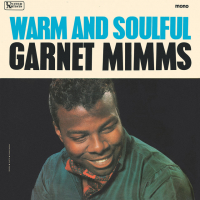
Garnet Mimms

R&B
Contemporary R&B
Soul
Contemporary Blues
 Viberate Rank: 221496
 Viberate Rank: 221496
 Monthly ListenersFollowers
 Subscribers
 Followers
 Followers
 FansTop Spotify Songs
| Track | 7-Day Streams | |
|---|---|---|
1 | 5.90K | |
2 | 5.38K | |
3 | 2.07K | |
4 | 968 | |
5 | 792 |
Top YouTube VideosMonthly ListenersFeatured in Playlists| Playlist | Followers | |
|---|---|---|
1 |  Northern Soul Classics Spotify | 152.99K |
2 | 60s Soul Classics teo227 | 44.94K |
3 |  Northern Soul Classics Numero Group Dance | 38.55K |
4 |  Better call Saul Season 1 & 2 & 3 & 4 & 5 & 6 jo_flick | 28.04K |
5 | Best of Tedeschi Trucks Band delroybent | 21.53K |
Audience| City | Monthly Listeners | |
|---|---|---|
1 |  | 844 |
2 | | 455 |
3 | | 223 |
4 |  | 213 |
5 | | 201 |
See full performance history, audience data, playlist activity, rankings, comparisons, and more in Viberate music analytics. Start with a free trial, then continue with a paid plan.
Garnet Mimms’ Spotify BioBest known for his original rendition of "Cry Baby," later a major item in Janis Joplin's repertoire, Garnet Mimms' pleading, gospel-derived intensity made him one of the earliest true soul singers. His legacy remains criminally underappreciated, since for some reason he never scored another hit on the level of "Cry Baby," but his output from the early to mid-'60s -- a blend of uptown sophistication and earthy, impassioned vocals -- has earned comparisons to Sam Cooke and Jackie Wilson from hardcore soul aficionados. Mimms was actually born Garrett Mimms in Ashland, WV, on November 16, 1933. He was mostly raised in Philadelphia, and began singing in church as a boy; during his teen years, he performed with several area gospel groups, including the Evening Stars, the Harmonizing Four, and the Norfolk Four, with whom he cut his first record in 1953.
Mimms subsequently served several years in the military, and upon his release, he returned to Philadelphia in 1958 and formed a doo wop… quintet called the Gainors, whose ranks included Sam Bell and onetime Evening Star Howard Tate (later an acclaimed solo singer in his own right). The Gainors recorded singles for several labels over the next three years, including Red Top (later picked up by Cameo), Mercury (from 1959-1960), and Tally Ho (1961). Failing to produce a hit, Mimms left the group along with Bell and put together Garnet Mimms & the Enchanters, which were completed by Charles Boyer and Zola Pearnell. Thanks to Dick Clark's American Bandstand program, Philadelphia had become a haven for teen idols, and Mimms took his group to New York in 1963 in search of a more receptive scene. There they met songwriter/producer Bert Berns, who signed them to United Artists and teamed them with another songwriter/producer, Jerry Ragovoy.
Mimms quickly struck gold with the proto-soul performance of "Cry Baby," a smash hit that reached the pop Top Five and topped the R&B charts in 1963. The follow-up, a cover of Jerry Butler & the Impressions' "For Your Precious Love," hit the pop Top 40 later that year, as did the flip side, "Baby Don't You Weep." Mimms and the Enchanters parted ways in 1964; the group to record separately with a new lead vocalist, while Mimms cut solo sides for UA steadily over the next few years. Ragovoy's productions became increasingly polished, mirroring the shift in R&B spearheaded by Motown, yet Mimms' vocals retained all the fire of his gospel training, making for a combination that was fairly unique for the time. Minor hits like "It Was Easier to Hurt Her" and "I'll Take Good Care of You" (the latter Mimms' last Top 40 hit in 1966) didn't perform nearly as well commercially as their quality seemed to indicate. In 1967, United Artists moved him to their Veep subsidiary, where "My Baby" was another inexplicable flop (it, too, was later covered by Janis Joplin on Pearl).
Mimms subsequently followed Ragovoy to Verve, where he recorded four singles to little response; ditto for his brief stint at MGM. Mimms did make one last minor chart appearance in 1977, recording for Arista as Garnet Mimms & the Truckin' Company; the disco-funk single "What It Is" was produced by Brass Construction mastermind Randy Muller. Mimms retired from the music business permanently after becoming a born-again Christian. ~ Steve Huey, Rovi
Viberate is a music analytics platform built for A&Rs, artist managers, labels, booking agents, marketers, and artists.
It helps music professionals track artist growth, analyze audience data, monitor playlist activity, compare artists, follow song performance, and identify opportunities across the music market.
Public artist pages provide a free preview of selected artist data. Paid plans provide access to deeper analytics, historical data, charts, comparisons, playlist tools, exports, alerts, reports, and additional professional features.
Yes. Public Viberate artist pages provide selected artist analytics and music data for free.
Viberate also offers a 7-day free trial of the full platform. A credit card is required to start the trial. The trial includes access to the complete product so users can test deeper artist analytics, historical views, playlist insights, comparisons, charts, exports, alerts, and reporting features before choosing a paid plan.
Viberate provides artist analytics across streaming, playlists, social media, video, radio airplay, songs, and audience markets.
Users can analyze Spotify performance, Spotify and Apple Music playlists, YouTube activity, TikTok and Instagram growth, radio spins, song performance, audience locations, demographics, rankings, and overall artist momentum.
Artist profiles also connect to music charts, similar artists, and comparison tools, helping users benchmark performance and evaluate artists in context.
Viberate updates key artist and track data daily.
For followed artists and tracks, selected data is refreshed multiple times per day. This helps teams monitor playlist changes, streaming movement, audience growth, releases, and campaign performance with more current data.
Update frequency can vary depending on the metric and data source.
Yes. Viberate lets users compare up to five artists side by side across streaming, social media, audience, and engagement metrics.
Users can compare fanbase growth, audience demographics, locations, Spotify performance, social metrics, and other artist data over selected time periods.
Artist comparison can be used for A&R scouting, benchmarking, booking decisions, campaign planning, and evaluating artists with similar audiences or market positions.