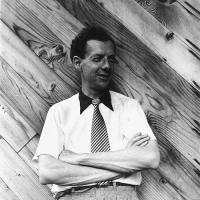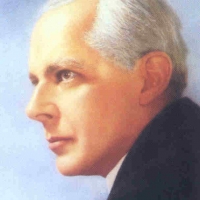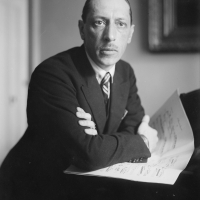
Igor Stravinsky

Classical
Orchestral
Chamber Music
 Viberate Rank: 34255
 Viberate Rank: 34255
 Monthly ListenersFollowers
 Subscribers
 Followers
 Followers
 FansTop Spotify Songs
| Track | 7-Day Streams | |
|---|---|---|
1 | 27.70K | |
2 | 17.72K | |
3 | 15.05K | |
4 | 14.10K | |
5 | 9.71K |
Top YouTube VideosMonthly ListenersFeatured in Playlists| Playlist | Followers | |
|---|---|---|
1 |  Classical Essentials Spotify | 3.82M |
2 |  Chilled Classical Spotify | 888.62K |
3 |  Dramatic Classical Spotify | 521.82K |
4 |  Morning Classical Spotify | 460.14K |
5 |  Música Clásica Que Sí Es Clásica José Gonzales | 339.49K |
Audience| City | Monthly Listeners | |
|---|---|---|
1 |  | 6.24K |
2 |  | 5.93K |
3 |  | 5.12K |
4 |  | 3.79K |
5 | | 3.57K |
See full performance history, audience data, playlist activity, rankings, comparisons, and more in Viberate music analytics. Start with a free trial, then continue with a paid plan.
Igor Stravinsky’s Spotify BioIgor Stravinsky was one of music's truly epochal innovators; no other composer of the 20th century exerted such a pervasive influence or dominated his art in the way that Stravinsky did during his seven-decade musical career. Aside from purely technical considerations such as rhythm and harmony, the most important hallmark of Stravinsky's style is, indeed, its changing face. Emerging from the spirit of late Russian nationalism and ending his career with a thorny, individual language steeped in 12-tone principles, Stravinsky assumed a number of aesthetic guises throughout the course of his development while always retaining a distinctive, essential identity.
Although he was the son of one of the Mariinsky Theater's principal basses and a talented amateur pianist, Stravinsky had no more musical training than that of any other Russian upper-class child. He entered law school but also began private composition and orchestration studies with Nicolai Rimsky-Korsakov. By 1909, the orchestral… works Scherzo fantastique and Fireworks had impressed Sergei Diaghilev enough for him to ask Stravinsky to orchestrate -- and subsequently compose -- ballets for his company. Stravinsky's triad of early ballets -- The Firebird (1909-1910), Petrushka (1910-1911), and most importantly, The Rite of Spring (1911-1913) -- did more to establish his reputation than any of his other works; indeed, the riot which followed the premiere of The Rite is one of the most notorious events in music history.
Stravinsky and his family spent the war years in Switzerland, returning to France in 1920. His jazz-inflected essays of the 1910s and 1920s -- notably, Ragtime (1918) and The Soldier's Tale (1918) -- gave way to one of the composer's most influential aesthetic turns. The neo-Classical tautness of works as diverse as the ballet Pulcinella (1919-1920), the Symphony of Psalms (1930), and, decades later, the opera The Rake's Progress (1948-1951) made a widespread impact and had a special influence upon the fledgling school of American composers that looked to Stravinsky as its primary model. He had begun touring as a conductor and pianist, generally performing his own works. In the 1930s, he toured the Americas and wrote several pieces fulfilling American commissions, including the Concerto in E flat, "Dumbarton Oaks."
After the deaths of his daughter, his wife, and his mother within a period of less than a year, Stravinsky emigrated to America, settling in California with his second wife in 1940. His works between 1940 and 1950 show a mixture of styles but still seem centered on Russian or French traditions. Stravinsky's cultural perspective changed after Robert Craft became his musical assistant, handling rehearsals for Stravinsky, traveling with him, and later, co-authoring his memoirs. Craft is credited with helping Stravinsky accept 12-tone composition as one of the tools of his trade. Characteristically, though, he made novel use of such principles in his own music, producing works in a highly original vein: Movements (1958-1959) for piano and orchestra, Variations: Aldous Huxley in Memoriam (1963), and the Requiem Canticles (1965-1966) are among the most striking. Craft prepared the musicians for the exemplary series of Columbia Records LPs Stravinsky conducted through the stereo era, covering virtually all his significant works. Despite declining health in his last years, Stravinsky continued to compose until just before his death in April 1971. ~ TiVo Staff, Rovi
Viberate is a music analytics platform built for A&Rs, artist managers, labels, booking agents, marketers, and artists.
It helps music professionals track artist growth, analyze audience data, monitor playlist activity, compare artists, follow song performance, and identify opportunities across the music market.
Public artist pages provide a free preview of selected artist data. Paid plans provide access to deeper analytics, historical data, charts, comparisons, playlist tools, exports, alerts, reports, and additional professional features.
Yes. Public Viberate artist pages provide selected artist analytics and music data for free.
Viberate also offers a 7-day free trial of the full platform. A credit card is required to start the trial. The trial includes access to the complete product so users can test deeper artist analytics, historical views, playlist insights, comparisons, charts, exports, alerts, and reporting features before choosing a paid plan.
Viberate provides artist analytics across streaming, playlists, social media, video, radio airplay, songs, and audience markets.
Users can analyze Spotify performance, Spotify and Apple Music playlists, YouTube activity, TikTok and Instagram growth, radio spins, song performance, audience locations, demographics, rankings, and overall artist momentum.
Artist profiles also connect to music charts, similar artists, and comparison tools, helping users benchmark performance and evaluate artists in context.
Viberate updates key artist and track data daily.
For followed artists and tracks, selected data is refreshed multiple times per day. This helps teams monitor playlist changes, streaming movement, audience growth, releases, and campaign performance with more current data.
Update frequency can vary depending on the metric and data source.
Yes. Viberate lets users compare up to five artists side by side across streaming, social media, audience, and engagement metrics.
Users can compare fanbase growth, audience demographics, locations, Spotify performance, social metrics, and other artist data over selected time periods.
Artist comparison can be used for A&R scouting, benchmarking, booking decisions, campaign planning, and evaluating artists with similar audiences or market positions.