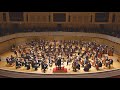
Chicago Symphony Orchestra

Classical
Orchestral
Chamber Music
 Viberate Rank: 18014
 Viberate Rank: 18014
 Monthly ListenersFollowers
 Subscribers
 Followers
 Followers
 FansTop Spotify Songs
| Track | 7-Day Streams | |
|---|---|---|
1 | 38.33K | |
2 | 14.14K | |
3 | 9.94K | |
4 | 8.85K | |
5 | 8.09K |
Top YouTube VideosMonthly ListenersFeatured in Playlists| Playlist | Followers | |
|---|---|---|
1 |  Classical Essentials Spotify | 3.82M |
2 |  This Is Bach Spotify | 720.77K |
3 |  Epic Classical Spotify | 705.95K |
4 |  Classical Moments in Movies Spotify | 445.79K |
5 |  Disney Classical Spotify | 412.45K |
Audience| City | Monthly Listeners | |
|---|---|---|
1 |  | 16.94K |
2 |  | 13.19K |
3 |  | 11.94K |
4 |  | 10.80K |
5 |  | 9.68K |
See full performance history, audience data, playlist activity, rankings, comparisons, and more in Viberate music analytics. Start with a free trial, then continue with a paid plan.
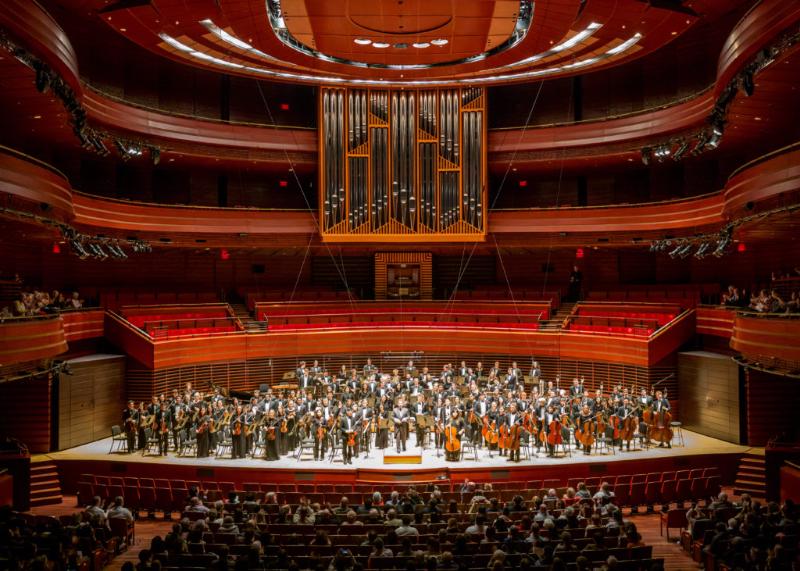
Chicago Symphony Orchestra’s Spotify BioThe Chicago Symphony Orchestra is one of the three most acclaimed orchestras in America and one of the few serious rivals the New York Philharmonic has had in its long history. Curiously, the histories of the two orchestras are somewhat intermingled.
Theodore Thomas had organized and led orchestras in New York during the 1870s and 1880s, competing with the Philharmonic Society of New York for audiences, soloists, and American premieres of works. His orchestra did very well as a major rival to the group that would become the New York Philharmonic. The orchestra visited Chicago during several seasons, and it was intended that he would be music director of the 1893 World's Columbian Exposition in that city. However, in 1891, he abandoned New York entirely in favor of Chicago and arrived as the first conductor of what was then called the Chicago Orchestra. Thomas held that position until his death in 1905. In his honor, the Chicago Orchestra changed its name to the Theodore Thomas Orchestra… in 1906. Six years later, the group was renamed the Chicago Symphony Orchestra.
It was under the leadership of Thomas' assistant, Frederick Stock, that the Chicago Symphony's modern reputation was formed. From 1905 until his death in 1942, Stock led the orchestra in decades of programs that featured not only the established classics but the American premieres of many post-romantic works. Additionally, Stock raised the level of performance and the financial status of his players and established the orchestra in a major teaching role for aspiring musicians in its home city. Its recordings were relatively few in number because the long-playing record -- central to the appreciation of classical music -- had not yet been invented, which means there is little evidence by which modern listeners can judge the work of the orchestra during this period, but some of the recordings from that era were among the best in the world at the time. Among the few available from the period on major labels are the Beethoven Piano Concertos Nos. 4 and 5 on the BMG label, featuring soloist Arthur Schnabel with Stock conducting.
Stock's death in 1942 precipitated a difficult decade for the orchestra. Apart from the general complications of World War II, it had a great deal of trouble finding acceptable leadership. Désiré Defauw lasted for only four years, from 1943 until 1947, and Artur Rodzinski (best known for his leadership of the New York Philharmonic) was in the job for only one year (1947-1948). Rafael Kubelik served three years as music director from 1950 until 1953, but his gentlemanly manner and decidedly modern, European-centered taste in music proved unsuited to the players, critics, and management -- although it was under Kubelik that the orchestra made its first successful modern recordings, for the Mercury label, many of which were reissued in the mid-'90s.
Fritz Reiner became the music director of the Chicago Symphony in 1953, beginning the modern renaissance and blossoming of the orchestra. Under Reiner, the orchestra's playing sharpened and tightened, achieving a clean, precise, yet rich sound that made it one of the most popular orchestras in the United States. The Chicago Symphony under Reiner became established once and for all as an international-level orchestra of the first order, rivaling the New York Philharmonic, the Philadelphia Orchestra, and the Boston Symphony. Moreover, Reiner's arrival with the orchestra coincided with its move to RCA Victor, which, in 1954, was beginning to experiment with stereo recording. With Reiner as conductor, these "Living Stereo" recordings -- characterized by vivid textures, sharp stereo separation, and microphone placement that gave the impact of a live performance -- became some of the best-selling classical albums of all time and have since been reissued numerous times on compact disc to new acclaim from critics and listeners, more than a generation removed from their original era.
Reiner's death in 1963 led to another interregnum period, during which conductor Jean Martinon led the orchestra (1963-1968). In 1969, Sir Georg Solti joined the orchestra as its music director. Under Solti, the orchestra's national and international reputations soared, as did its record sales. Reiner had begun the process of cultivating the burgeoning audience for late-romantic composers such as Mahler, but it was with Solti that the works of Mahler and Bruckner became standard fare in the orchestra's programs, right alongside those of Beethoven and Mozart. The playing standard achieved during Solti's tenure, in concert and recordings, was the highest in the history of the orchestra. Additionally, the orchestra under Solti began a quarter-century relationship with London Records that resulted in some of the best-sounding recordings of the era. Solti's approach to performance was very flamboyant yet intensely serious -- even his performances of lighter opera and concert overtures strike a perfect balance between broad gestures and finely wrought detail, attributes that have made him perhaps the most admired conductor of a major American orchestra, if not the most famous (Leonard Bernstein inevitably got more headlines during the 1960s, especially with his knack for publicity). Solti was both popular and respected, and his tenure with the Chicago Symphony coincided with his becoming the winner of the greatest number of Grammy Awards of any musician in history (he also recorded with orchestras in London and Vienna). Daniel Barenboim succeeded Solti and served as music director from 1991 until 2006, with Solti transitioning to the post of music director emeritus. Bernard Haitink was named the orchestra's first principal conductor, holding this position from 2006 through 2010. Riccardo Muti was chosen as the tenth music director in the orchestra's history in 2010.
As with other major American orchestras, the Chicago Symphony found itself competing with its own history, especially where recordings are concerned. Reissues of its work under Reiner and Solti continue to sell well and are comparable or superior to the orchestra's current recordings in sound and interpretive detail. Even the early-'50s recordings under Kubelik were reissued by Mercury in the late '90s, while RCA-BMG and some specialty collector's labels have re-released the recordings under Stock. The recordings of Solti and Reiner leading the Chicago Symphony are uniformly excellent, and virtually all of them can be recommended. The orchestra also maintains composer-in-residence and artist-in-residence partnerships; in 2023, Jessie Montgomery occupied the former, and Hilary Hahn the latter. ~ Bruce Eder, Rovi
Viberate is a music analytics platform built for A&Rs, artist managers, labels, booking agents, marketers, and artists.
It helps music professionals track artist growth, analyze audience data, monitor playlist activity, compare artists, follow song performance, and identify opportunities across the music market.
Public artist pages provide a free preview of selected artist data. Paid plans provide access to deeper analytics, historical data, charts, comparisons, playlist tools, exports, alerts, reports, and additional professional features.
Yes. Public Viberate artist pages provide selected artist analytics and music data for free.
Viberate also offers a 7-day free trial of the full platform. A credit card is required to start the trial. The trial includes access to the complete product so users can test deeper artist analytics, historical views, playlist insights, comparisons, charts, exports, alerts, and reporting features before choosing a paid plan.
Viberate provides artist analytics across streaming, playlists, social media, video, radio airplay, songs, and audience markets.
Users can analyze Spotify performance, Spotify and Apple Music playlists, YouTube activity, TikTok and Instagram growth, radio spins, song performance, audience locations, demographics, rankings, and overall artist momentum.
Artist profiles also connect to music charts, similar artists, and comparison tools, helping users benchmark performance and evaluate artists in context.
Viberate updates key artist and track data daily.
For followed artists and tracks, selected data is refreshed multiple times per day. This helps teams monitor playlist changes, streaming movement, audience growth, releases, and campaign performance with more current data.
Update frequency can vary depending on the metric and data source.
Yes. Viberate lets users compare up to five artists side by side across streaming, social media, audience, and engagement metrics.
Users can compare fanbase growth, audience demographics, locations, Spotify performance, social metrics, and other artist data over selected time periods.
Artist comparison can be used for A&R scouting, benchmarking, booking decisions, campaign planning, and evaluating artists with similar audiences or market positions.