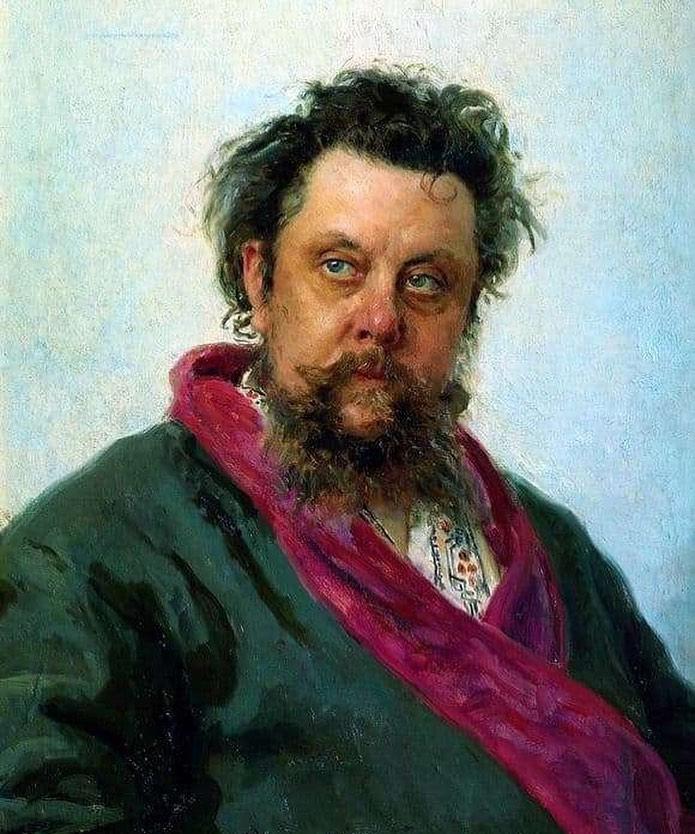
Modest Mussorgsky

Classical
Orchestral
 Viberate Rank: 43815
 Viberate Rank: 43815
 Monthly ListenersFollowers
 Subscribers
 Followers
 Followers
 FansTop Spotify Songs
| Track | 7-Day Streams | |
|---|---|---|
1 | 54.39K | |
2 | 26.39K | |
3 | 17.54K | |
4 | 8.03K | |
5 | 7.50K |
Top YouTube VideosMonthly ListenersFeatured in Playlists| Playlist | Followers | |
|---|---|---|
1 |  Calming Classical Spotify | 1.35M |
2 |  Classical Moments in Movies Spotify | 445.76K |
3 |  dark academia ☕️📜 studying and reading instrumentals poets and coffee | 351.71K |
4 |  Jazz Meets Classical Spotify | 321.57K |
5 |  Classical Study Music for Focus 🎻🎶 Prime Feelings | 191.75K |
Audience| City | Monthly Listeners | |
|---|---|---|
1 |  | 8.14K |
2 |  | 5.32K |
3 |  | 5.29K |
4 |  | 4.75K |
5 | | 4.55K |
See full performance history, audience data, playlist activity, rankings, comparisons, and more in Viberate music analytics. Start with a free trial, then continue with a paid plan.
Modest Mussorgsky’s Spotify BioHis musical education was erratic, he toiled as a civil servant and wrote music only part-time, influenced few if any of his contemporaries, died early from alcoholism, and left a small body of work. Yet Modest Mussorgsky was a towering figure in nineteenth century Russian music. His works exhibit a daring, raw individuality, a unique sound that well-meaning associates tried to conventionalize and smooth over. He is best known for Night on Bald Mountain (bowdlerized by Rimsky-Korsakov), Pictures at an Exhibition (a difficult piano suite orchestrated by Ravel), and the dark, declamatory opera Boris Godunov (polished by Rimsky-Korsakov) -- bastardized works all, yet each one full of arresting harmonies, disturbing colors, and grim celebrations of Russian nationalism.
Mussorgsky died in poverty, but he was born to a wealthy landowning family. Under his mother's tutelage, he developed a facility at the piano, but entered a cadet school in preparation for a military career. He joined a choir… and discovered Russian church music, which would profoundly influence his later work.
Upon graduation in 1856, Mussorgsky entered the Russian Imperial Guard. That year he started to socialize with the composers Dargomizhsky and Cui, and through them Balakirev, with whom he began composition lessons. During this period he wrote small piano pieces and songs, and after an emotional crisis in 1858 resigned his commission with the intention of composing full-time. He began to go his own way as a composer in 1861, but was preoccupied helping to manage his family's estate. The decline in his family's fortunes led him to accept low-level civil service positions. He joined a commune with other intellectuals and became a proponent of musical Realism, applying the style to his songs. He had difficulty finishing works in larger formats, but his music circulated widely enough that by the late 1860s he was cast with Balakirev, Cui, Rimsky-Korsakov, and Borodin as part of Russia's "Mighty Handful."
Mussorgsky toiled many years at his masterpiece, Boris Godunov, which reflected in music the inflections of Russian speech and met with great success in 1874. That year he also produced his innovative piano suite Pictures at an Exhibition. Yet his heavy drinking led to his dismissal from government service in 1880. Friends offered some financial help and Mussorgsky occasionally accompanied singers at the piano, but his finances and mental state quickly deteriorated. He died in 1881, leaving it to posterity to sort through and complete his unfinished works of unruly genius.
Viberate is a music analytics platform built for A&Rs, artist managers, labels, booking agents, marketers, and artists.
It helps music professionals track artist growth, analyze audience data, monitor playlist activity, compare artists, follow song performance, and identify opportunities across the music market.
Public artist pages provide a free preview of selected artist data. Paid plans provide access to deeper analytics, historical data, charts, comparisons, playlist tools, exports, alerts, reports, and additional professional features.
Yes. Public Viberate artist pages provide selected artist analytics and music data for free.
Viberate also offers a 7-day free trial of the full platform. A credit card is required to start the trial. The trial includes access to the complete product so users can test deeper artist analytics, historical views, playlist insights, comparisons, charts, exports, alerts, and reporting features before choosing a paid plan.
Viberate provides artist analytics across streaming, playlists, social media, video, radio airplay, songs, and audience markets.
Users can analyze Spotify performance, Spotify and Apple Music playlists, YouTube activity, TikTok and Instagram growth, radio spins, song performance, audience locations, demographics, rankings, and overall artist momentum.
Artist profiles also connect to music charts, similar artists, and comparison tools, helping users benchmark performance and evaluate artists in context.
Viberate updates key artist and track data daily.
For followed artists and tracks, selected data is refreshed multiple times per day. This helps teams monitor playlist changes, streaming movement, audience growth, releases, and campaign performance with more current data.
Update frequency can vary depending on the metric and data source.
Yes. Viberate lets users compare up to five artists side by side across streaming, social media, audience, and engagement metrics.
Users can compare fanbase growth, audience demographics, locations, Spotify performance, social metrics, and other artist data over selected time periods.
Artist comparison can be used for A&R scouting, benchmarking, booking decisions, campaign planning, and evaluating artists with similar audiences or market positions.