Darrell Banks

R&B
Funk
Soul
 Viberate Rank: 188977
 Viberate Rank: 188977
 Monthly ListenersFollowers
 Subscribers
 Followers
 Followers
 FansTop Spotify Songs
| Track | 7-Day Streams | |
|---|---|---|
1 | 9.26K | |
2 | 2.23K | |
3 | 2.06K | |
4 | 1.56K | |
5 | 1.56K |
Top YouTube VideosMonthly ListenersFeatured in Playlists| Playlist | Followers | |
|---|---|---|
1 |  Northern Soul Classics Spotify | 152.99K |
2 |  I Love My 60s Funk Spotify | 111.08K |
3 |  Northern Soul Classics Numero Group Dance | 38.55K |
4 |  Indications' Inspirations Durand Jones & The Indications | 35.68K |
5 | Motown & Soul Classics amikhail4 | 25.28K |
Audience| City | Monthly Listeners | |
|---|---|---|
1 |  | 1.70K |
2 | | 1.19K |
3 | | 557 |
4 | | 347 |
5 | | 250 |
See full performance history, audience data, playlist activity, rankings, comparisons, and more in Viberate music analytics. Start with a free trial, then continue with a paid plan.
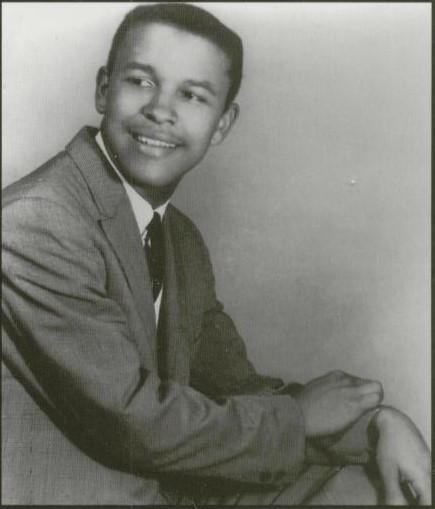
Darrell Banks’ Spotify BioBorn Darrell Eubanks in Mansfield, OH, (1937), the gospel-voiced soul singer stepped out as Darrell Banks from the east side of Buffalo, NY, where he lived since a toddler. He sang in church before going secular and wailing at local watering holes. He befriended Doc Murphy, a dentist whose nightclub the Revilot lounge was one of those "holes." A scorching song written by fellow Buffalo resident Donnie Elbert got Banks off and running, not in Buffalo, but further west in Detroit, MI.
Banks hooked up with Lebron Taylor and Solid Hitbound Productions via some type of license agreement with Doc Murphy; Lebron used the name of Murphy's Buffalo nightspot (Revilot) for the label which debuted in 1966 with "Open the Door to Your Heart" (whose legal name is "Baby Walk Right In"), the tune Donnie Elbert wrote for his Buffalo buddy. The recording took place when Elbert was on the road. No problem there. But when it came out, only Banks was credited as songwriter. A shocked Elbert checked with… Broadcast Music Incorporated (B.M.I.) thinking Revilot's secretary inadvertently omitted his name, something that happens all the time; it's what's on the contract that counts, a record label is not a legal document. Elbert found the song clearance form submitted by Banks listed him as the sole writer allotting him 100 percent of the writers' share of "Open the Door to Your Heart" performance income. Elbert eventually got the mess straight, while copies of the 45 rpm list only Banks' name, newly issued CDs credits both Banks and Elbert. Still a sore point for Elbert, according to him, all Banks did was speed the tempo up a bit, for this he attempted to take full credit and ended up with 50 percent of a soul classic. The irony of this scenario is that Banks wasn't a songwriter, "Open the Door to Your Heart" is the only song he ever wrote, which he really didn't. Elbert, however, has more than 125 songwriting credits logged with B.M.I. While the legal battle ensued, the song scored an impressive number two R&B and number 27 pop showing in 1966, Banks' biggest ever.
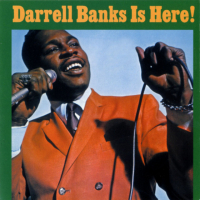
Banks followed with Marc Gordon and Frank Wilson's "Somebody Somewhere Needs You" (a Motown song that wasn't originally or ever recorded by a Motown artist). Ike & Tina Turner first did the catchy romp on Loma Records (really just Tina, Ike's nowhere on the record). Banks' rendition charted at number 34 R&B and number 55 pop and provided chitlin' and the grits & gravy circuit work for the singer; it was his last chart record. The Revilot deal somehow switched to Atlantic Records' Atco division for two nonstarters: "Here Come the Tears" b/w "I've Got That Feelin'" and "Angel Baby (Don't Ever Leave Me)" b/w "Look into the Eyes of a Fool," both in 1967. Banks never issued an album on Revilot to commensurate the success of the hit single, but both Revilot singles were compiled on his 1967 Atco album Darrell Banks Is Here, as well as, both sides of the Atco singles and nuggets like "I'm Gonna Hang My Head and Cry" from the writing team of Rose Marie McCoy, Donald Bell, Cleveland Horne (the Fantastic Four), and Gene Redd who worked with Kool & the Gang on Delight Records. Atco switched him in-house to Cotillion Records for a final release "I Wanna Go Home" written by Fred Briggs (aka Coldwater Stone) and Don Davis, b/w "The Love of My Woman" in 1968. Revilot continued issuing singles on artists like the Parliarment, Rose Batiste, J. J. Barnes, and others without Doc Murphy's involvement. Changing cooks again, Banks signed with Stax Records' Volt division for two singles and an album issued in 1969. "I'm the One Who Loves" followed by the two-sided gem "Beautiful Feeling" and "No One Is Blinder (Than a Man in Love)" sold well but didn't create any overtime at Stax's pressing plants. The Dramatics later cut an equally stirring rendition of "Beautiful..." for their Dramatically Yours album.
Banks, an exciting entertainer, was often less than pleasant away from the footlights. He was moody, quick tempered and kept a "don't tread on me" Sonny Liston scowl on his face. Not the type of guy you approached with "wass up." Stax Records rattled his nerves when they compiled a song recorded by Steve Mancha on the Rare Stamps LP and credited it to him, which Banks considered an insult; both Mancha and Banks recorded the song, somebody just mixed them up, easy to do, since both singers, as well as J. J. Barnes sounded similar (especially since all were produced by Don Davis at the time). The original album featured just J. J. Barnes and Steve Mancha but a CD reissue added Banks' and his entire Stax LP Darrell Is Here to Stay, which included Banks' Johnnie Taylor sound alike "Don't Know What to Do," "Forgive Me," and the Mancha composition "I Could Never Hate Her."
Tragedy aborted Banks' recording output at seven singles and two albums. The man considered by many as soul's finest voice was shot dead March 1970 in Detroit by Aaron Bullock, an off duty policeman who was seeing Banks' woman (Marjorie Bozeman). He was waiting when Bullock dropped Bozeman off after work; when Banks grabbed her, Bullock intervened, Banks pulled a gun, and the officer reacted with deadly force ending Banks' four turbulent years as a recording artist/entertainer. Bozeman, a barmaid, allegedly was trying to leave Banks, who was divorced and the father of two kids.
Diehards will want to cop J. J. Barnes' The Groovesville Masters for the duet featuring Barnes and Banks entitled "Harder You Love." Goldmine Records released a compilation of Banks' two albums and three unreleased tracks: "I Will Fear No Evil," "I'm Knocking at Your Door," and "The Harder You Love," in 1997 entitled The Lost Soul which includes some unreleased tracks -- check it out. ~ Andrew Hamilton, Rovi
Viberate is a music analytics platform built for A&Rs, artist managers, labels, booking agents, marketers, and artists.
It helps music professionals track artist growth, analyze audience data, monitor playlist activity, compare artists, follow song performance, and identify opportunities across the music market.
Public artist pages provide a free preview of selected artist data. Paid plans provide access to deeper analytics, historical data, charts, comparisons, playlist tools, exports, alerts, reports, and additional professional features.
Yes. Public Viberate artist pages provide selected artist analytics and music data for free.
Viberate also offers a 7-day free trial of the full platform. A credit card is required to start the trial. The trial includes access to the complete product so users can test deeper artist analytics, historical views, playlist insights, comparisons, charts, exports, alerts, and reporting features before choosing a paid plan.
Viberate provides artist analytics across streaming, playlists, social media, video, radio airplay, songs, and audience markets.
Users can analyze Spotify performance, Spotify and Apple Music playlists, YouTube activity, TikTok and Instagram growth, radio spins, song performance, audience locations, demographics, rankings, and overall artist momentum.
Artist profiles also connect to music charts, similar artists, and comparison tools, helping users benchmark performance and evaluate artists in context.
Viberate updates key artist and track data daily.
For followed artists and tracks, selected data is refreshed multiple times per day. This helps teams monitor playlist changes, streaming movement, audience growth, releases, and campaign performance with more current data.
Update frequency can vary depending on the metric and data source.
Yes. Viberate lets users compare up to five artists side by side across streaming, social media, audience, and engagement metrics.
Users can compare fanbase growth, audience demographics, locations, Spotify performance, social metrics, and other artist data over selected time periods.
Artist comparison can be used for A&R scouting, benchmarking, booking decisions, campaign planning, and evaluating artists with similar audiences or market positions.