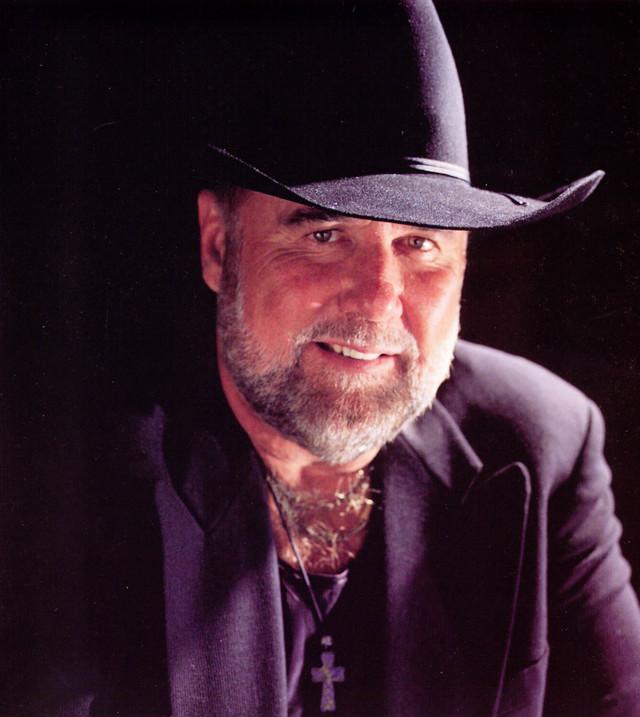
Freddy Fender

Country
Contemporary Country
Other Latin Music
 Viberate Rank: 30413
 Viberate Rank: 30413
 Monthly ListenersFollowers
 Subscribers
 Followers
 Followers
 FansTop Spotify Songs
| Track | 7-Day Streams | |
|---|---|---|
1 | 73.95K | |
2 | 49.68K | |
3 | 23.90K | |
4 | 12.54K | |
5 | 9.79K |
Top YouTube VideosMonthly ListenersFeatured in Playlists| Playlist | Followers | |
|---|---|---|
1 |  70s Country Spotify | 320.75K |
2 |  Lucifer Original Soundtrack (All Seasons: 1, 2, 3, 4, 5/5B, 6) KULTPOP! | 291.52K |
3 |  The Bear Soundtrack Brendan Noone | 200.65K |
4 | Jackyflanagan. | 153.62K |
5 | Māori Shed Party 🤙🏽 Tyra Dunn | 98.86K |
Audience| City | Monthly Listeners | |
|---|---|---|
1 | | 12.96K |
2 | | 12.48K |
3 |  | 12.46K |
4 | | 11.79K |
5 | | 10.45K |
See full performance history, audience data, playlist activity, rankings, comparisons, and more in Viberate music analytics. Start with a free trial, then continue with a paid plan.
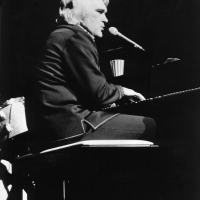
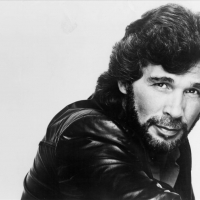
Freddy Fender’s Spotify BioSinger, songwriter, and guitarist Freddy Fender was a Grammy-winning, chart-topping country artist whose merger of country, blues, and rockabilly was distinguished by its strong Latin sensibility. After rising to stardom as a soloist in the mid-1970s behind hits like "Before the Next Teardrop Falls," "Wasted Days and Wasted Nights," and "Secret Love," he was known as a member of the celebrated '90s supergroups Texas Tornados and Los Super Seven.
Born Baldemar Huerta to a family of migrant laborers in San Benito, Texas, on June 4, 1937, Fender began playing guitar early in his childhood. After dropping out of school at the age of 16 to join the Marine Corps, he released his first Spanish-language recordings under his given name in 1958.
While his initial sides were successful with listeners in Texas and Mexico, in 1959 he decided to adopt his stage name, along with a stronger rockabilly feel. The following year, he released the self-penned "Wasted Days and Wasted Nights," his most… successful single yet. But in May of 1960, Fender was convicted of marijuana possession and sentenced to five years in Louisiana's Angola State Prison (the same correctional facility which once held blues legend Leadbelly). After serving three years, he was paroled thanks to the efforts of Louisiana governor Jimmie Davis. After his parole ended, Fender tried to re-ignite his career, but with the exception of a few scattered nightclub gigs in the New Orleans area, he found little success and ultimately returned to San Benito.
In Texas, he spent several years working as an auto mechanic, and even returned to school to pursue a degree in sociology. In 1974, he met Huey P. Meaux, the owner of the Houston-based Crazy Cajun label. After agreeing on a recording deal, it was Meaux who convinced Fender to steer in the direction of country & western while maintaining his music's Hispanic roots. After Fender's first Meaux-produced single, "Before the Next Teardrop Falls," failed to attract the attention of a major label, it was released on Crazy Cajun; in the first weeks of 1975, the song hit the top of both the country and pop charts, and Fender became an overnight star. For the follow-up, he re-recorded his early single, "Wasted Days and Wasted Nights," and notched his second straight number one country hit. Before the year ended, he had released yet another chart-topper in "Secret Love," and also issued two LPs, Since I Met You Baby and a self-titled effort.
Throughout the remainder of the '70s, Fender's success continued, most notably with the number two single "Living It Down" in 1976. That same year, he released two more albums, Your Cheatin' Heart and Rock 'N' Country. In 1977, he also issued a holiday record, Merry Christmas/Feliz Navidad. As the 1980s dawned, however, his popularity began slipping; after his final chart hit, 1983's "Chokin' Kind," he focused on an acting career highlighted by an appearance in the 1988 Robert Redford film The Milagro Beanfield War. He remained largely silent as a musician until 1990, when he formed the Tex-Mex supergroup Texas Tornados with Doug Sahm, Flaco Jimenez, and Augie Meyers. After three albums that included a Grammy Award for Best Mexican/Mexican-American Performance (for 1990's "Soy de San Luis"), the group disbanded. Fender formed another supergroup, Los Super Seven, with with country singer Rick Trevino, David Hidalgo and César Rosas of Los Lobos, Flaco Jiménez, Ruben Ramos, and Joe Ely later in the decade. That project resulted in another Grammy for Fender in the same category (for 1998's Los Super Seven).
Fender won his third Grammy in 2002, this time as a soloist in the cateogry of Best Latin Pop Album. The album, 2002's La Música de Baldemar Huerta, found him covering boleros from his youth. It would prove to be his final recording; Fender died of lung cancer at his home in Corpus Christi, Texas on October 14, 2006. ~ Jason Ankeny, Rovi
Viberate is a music analytics platform built for A&Rs, artist managers, labels, booking agents, marketers, and artists.
It helps music professionals track artist growth, analyze audience data, monitor playlist activity, compare artists, follow song performance, and identify opportunities across the music market.
Public artist pages provide a free preview of selected artist data. Paid plans provide access to deeper analytics, historical data, charts, comparisons, playlist tools, exports, alerts, reports, and additional professional features.
Yes. Public Viberate artist pages provide selected artist analytics and music data for free.
Viberate also offers a 7-day free trial of the full platform. A credit card is required to start the trial. The trial includes access to the complete product so users can test deeper artist analytics, historical views, playlist insights, comparisons, charts, exports, alerts, and reporting features before choosing a paid plan.
Viberate provides artist analytics across streaming, playlists, social media, video, radio airplay, songs, and audience markets.
Users can analyze Spotify performance, Spotify and Apple Music playlists, YouTube activity, TikTok and Instagram growth, radio spins, song performance, audience locations, demographics, rankings, and overall artist momentum.
Artist profiles also connect to music charts, similar artists, and comparison tools, helping users benchmark performance and evaluate artists in context.
Viberate updates key artist and track data daily.
For followed artists and tracks, selected data is refreshed multiple times per day. This helps teams monitor playlist changes, streaming movement, audience growth, releases, and campaign performance with more current data.
Update frequency can vary depending on the metric and data source.
Yes. Viberate lets users compare up to five artists side by side across streaming, social media, audience, and engagement metrics.
Users can compare fanbase growth, audience demographics, locations, Spotify performance, social metrics, and other artist data over selected time periods.
Artist comparison can be used for A&R scouting, benchmarking, booking decisions, campaign planning, and evaluating artists with similar audiences or market positions.