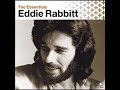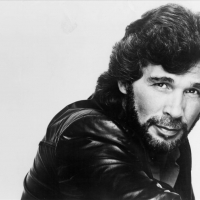
Eddie Rabbitt

Country
Contemporary Country
 Viberate Rank: 13426
 Viberate Rank: 13426
 Monthly ListenersFollowers
 Subscribers
 Followers
 Followers
 FansTop Spotify Songs
| Track | 7-Day Streams | |
|---|---|---|
1 | 558.62K | |
2 | 522.90K | |
3 | 99.70K | |
4 | 80.50K | |
5 | 75.51K |
Top YouTube VideosMonthly ListenersFeatured in Playlists| Playlist | Followers | |
|---|---|---|
1 |  Country's Greatest Hits Spotify | 814.66K |
2 |  Grand Theft Auto Radio Spotify | 762.64K |
3 |  80s Country Spotify | 755.91K |
4 |  Classic Country Spotify | 659.42K |
5 |  Old Songs Everyone Knows Ben Lillie | 566.23K |
Audience| City | Monthly Listeners | |
|---|---|---|
1 |  | 47.69K |
2 | | 46.30K |
3 | | 39.62K |
4 | | 38.44K |
5 |  | 31.46K |
See full performance history, audience data, playlist activity, rankings, comparisons, and more in Viberate music analytics. Start with a free trial, then continue with a paid plan.
Eddie Rabbitt’s Spotify BioA pivotal figure in country music in the 1970s and '80s, Eddie Rabbitt eased country into softer, smoother territory, incorporating elements of soul and soft rock on a series of crossover hits that created the template for the urban cowboy era. Rabbitt pioneered this synthesis as a songwriter, getting his first break when Elvis Presley had a hit with his "Kentucky Rain" in 1969, but it was "Pure Love," a buoyant bopper Ronnie Milsap took to number one in 1974, that established the template for Rabbitt's career: R&B-inflected country performed as if it was pop, underpinned by affection for old-time rock & roll. "Drivin' My Life Away," "I Love a Rainy Night," and "Someone Could Lose a Heart Tonight," a clutch of number one country hits from the early '80s, all pulsated to a light rockabilly beat, a signature of Rabbitt's that was sometimes overshadowed by his facility for easy listening. "Suspicions," his satiny country chart-topper from 1979, crossed over into the pop charts and the… adult contemporary charts, and he stayed there through 1983 thanks to such hits as "Step by Step" and "You and I," a duet with Crystal Gayle. Rabbitt continued to place in the country Top Ten into 1990. The hits slowed down in the '90s but he kept working until his death from lung cancer in 1998.
Born in Brooklyn, New York on November 27, 1941 and raised in East Orange, New Jersey, Eddie Rabbitt became enamored of music as a child, a love fostered by his scoutmaster and neighbor Tony Schwickrath, who performed under the name Texas Bob Randall. Schwickrath taught Rabbitt guitar and introduced him to country music. After the divorce of his parents, Rabbitt dropped out of high school, supporting himself with a variety of jobs as he followed his dreams of a musical career. In 1964, 20th Century Fox Records released "Six Nights and Seven Days"/"Next to the Note," which didn't get much attention. Rabbitt's first success as a songwriter arrived when Roy Drusky cut Rabbitt's "Working My Way Up from the Bottom" for his 1966 LP In a New Dimension, but he continued to struggle as a performer. "The Bed," a single he released on Date in 1968, didn't make waves but the song caught the attention of Lee Hazlewood, who released his own version in 1969.
"The Bed" was the beginning of Rabbitt's transition to a professional songwriter. He moved to Nashville in 1968, signing a contract with the publishing house Hill & Range. Late in 1969, Elvis Presley recorded "Kentucky Rain," a song Rabbitt co-wrote with Dick Heard. "Kentucky Rain" reached 16 on the Hot 100. Presley cut two additional Rabbitt tunes in 1970: "Inherit the Wind" appeared on Back in Memphis while "Patch It Up" appeared on That's the Way It Is. Rabbitt's next success arrived in the spring of 1974, when Ronnie Milsap brought the ebullient "Pure Love" to the top of the Country charts.
Elektra signed Rabbitt in the wake of Milsap's success, releasing the "You Get to Me" single in August of 1974. A self-titled debut arrived in 1975, with its singles "Forgive and Forget" and "I Should Have Married You" falling just short of Billboard's Country Top Ten. "Drinkin' My Baby (Off My Mind)," the single that became his first number one country hit in 1976, had a honky tonk shuffle and a pop sensibility, a blend that suited contemporary country radio. It was the lead single off 1976's Rocky Mountain Music, which also generated the Top Ten Country hits "Rocky Mountain Music" and "Two Dollars in the Jukebox." Arriving in 1977, Rabbitt maintained momentum with its Top Ten singles "I Can't Help Myself" and "We Can't Go On Living Like This," hits big enough to earn him the award of Top New Male Vocalist from the Academy of Country Music in 1978.
Variations brought Rabbitt further into pop territory thanks to the smooth "You Don't Love Me Anymore," a number one country hit that also reached 18 on Billboard's Adult Contemporary chart. "I Just Want to Love You" also reached number one Country, but its soft disco pulse gave him another minor adult contemporary hit, helping setting the stage for "Every Which Way But Loose," the theme song to the Clint Eastwood comedy of the same name, to become his first Top 40 pop hit in 1979. Rabbitt bettered that performance with "Suspicions," a sultry slow-burner that topped the Country charts, reached the Adult Contemporary Top Ten, and nearly made it into the pop Top Ten. "Suspicions" was one of three big country hits from Loveline, the 1979 album that also featured "Pour Me Another Tequila" and "Gone Too Far."
Horizon became Rabbitt's biggest album in 1980 thanks to a pair of massive crossover singles, both thrumming to a streamlined rockabilly beat. "Drivin' My Life Away" reached number one on the Country charts, making it to five pop, while "I Love a Rainy Night" topped the Country, Pop, and Adult Contemporary charts. "Step by Step" and "Someone Could Lose a Heart Tonight," both pulled from 1981's Step by Step, maintained this streak, as did 1982's Radio Romance with its number one country hit "You and I," a duet with Crystal Gayle that reached seven on the pop charts, two on adult contemporary.
The pop hits dried up after "You and I," a slowing that coincided with Rabbitt's move to Warner Bros for 1984's The Best Year of My Life; by 1986, he had signed with RCA Records. Rabbitt continued to reach the Billboard Country Top Ten throughout the '80s, landing number ones with "The Best Year of My Life," the Juice Newton duet "Both to Each Other (Friends and Lovers)," "I Wanna Dance with You," "The Wanderer," and "On Second Thought." "American Boy," a single from 1989's Jersey Boy -- his first and only album for Capitol -- became his last Country Top 40 hit in 1990; it would later be the theme song for Bob Dole's 1996 presidential campaign. Rabbitt's increasing conservatism could be heard on Ten Rounds, a 1991 album for Liberty that featured a song called "C-Rap (Country Rap)."
After a few quiet years, Rabbitt released Beatin' the Odds on Intersound in September 1997, its title a reference to the singer's recent diagnosis with lung cancer. A children's album called Songs from Rabbittland arrived in April 1998. Weeks later, he died in Nashville on May 7, 1998 at the age of 56. ~ Stephen Thomas Erlewine, Rovi
Viberate is a music analytics platform built for A&Rs, artist managers, labels, booking agents, marketers, and artists.
It helps music professionals track artist growth, analyze audience data, monitor playlist activity, compare artists, follow song performance, and identify opportunities across the music market.
Public artist pages provide a free preview of selected artist data. Paid plans provide access to deeper analytics, historical data, charts, comparisons, playlist tools, exports, alerts, reports, and additional professional features.
Yes. Public Viberate artist pages provide selected artist analytics and music data for free.
Viberate also offers a 7-day free trial of the full platform. A credit card is required to start the trial. The trial includes access to the complete product so users can test deeper artist analytics, historical views, playlist insights, comparisons, charts, exports, alerts, and reporting features before choosing a paid plan.
Viberate provides artist analytics across streaming, playlists, social media, video, radio airplay, songs, and audience markets.
Users can analyze Spotify performance, Spotify and Apple Music playlists, YouTube activity, TikTok and Instagram growth, radio spins, song performance, audience locations, demographics, rankings, and overall artist momentum.
Artist profiles also connect to music charts, similar artists, and comparison tools, helping users benchmark performance and evaluate artists in context.
Viberate updates key artist and track data daily.
For followed artists and tracks, selected data is refreshed multiple times per day. This helps teams monitor playlist changes, streaming movement, audience growth, releases, and campaign performance with more current data.
Update frequency can vary depending on the metric and data source.
Yes. Viberate lets users compare up to five artists side by side across streaming, social media, audience, and engagement metrics.
Users can compare fanbase growth, audience demographics, locations, Spotify performance, social metrics, and other artist data over selected time periods.
Artist comparison can be used for A&R scouting, benchmarking, booking decisions, campaign planning, and evaluating artists with similar audiences or market positions.