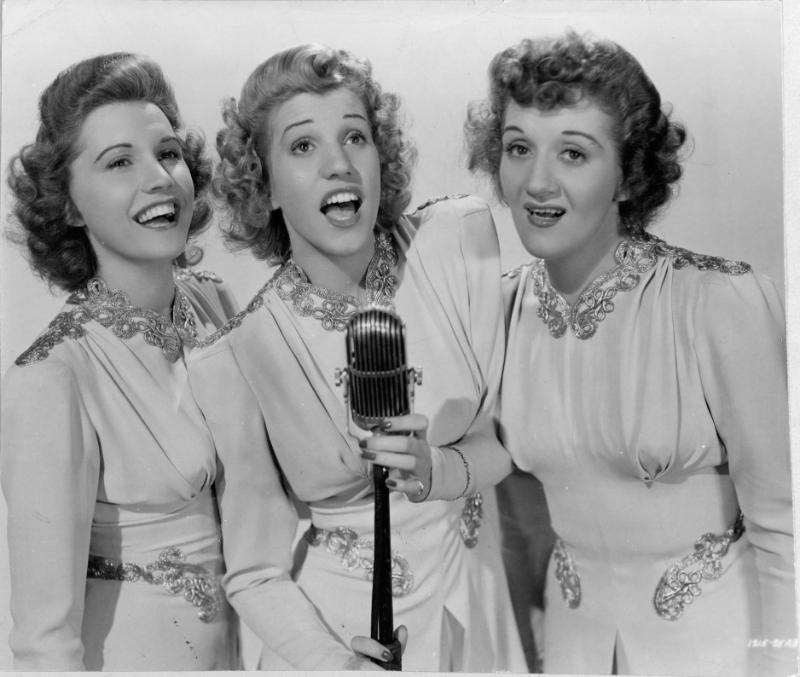
Danny Kaye

Pop
Mainstream Pop
Vocal jazz
 Viberate Rank: 74145
 Viberate Rank: 74145
 Monthly ListenersFollowers
 Subscribers
 Followers
 Followers
 FansTop Spotify Songs
| Track | 7-Day Streams | |
|---|---|---|
1 | 145.98K | |
2 | 60.71K | |
3 | 27.24K | |
4 | 17.18K | |
5 | 10.56K |
Top YouTube Videos| Video | 7-Day Views | |
|---|---|---|
1 | 1.53K | |
2 | 1.39K | |
3 | 1.26K | |
4 | 1.21K | |
5 | 339 |
Monthly ListenersFeatured in Playlists| Playlist | Followers | |
|---|---|---|
1 |  NOW 100 Hits Christmas NOW That’s What I Call Music! | 181.79K |
2 |  Jazzy Christmas Dinner Spotify | 142.62K |
3 | JAZZ/BLUES Bowerbird & Friends | 81.78K |
4 |  CHRISTMAS BANGERS 2026 🎅🏻🎄🎁 rylandee | 79.42K |
5 |  Radio New Vegas tamoreton | 74.21K |
Audience| City | Monthly Listeners | |
|---|---|---|
1 | | 4.91K |
2 |  | 4.19K |
3 | | 3.68K |
4 | | 3.43K |
5 | | 3.27K |
See full performance history, audience data, playlist activity, rankings, comparisons, and more in Viberate music analytics. Start with a free trial, then continue with a paid plan.
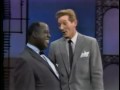
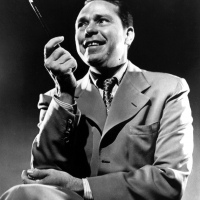
Danny Kaye’s Spotify BioA gifted mimic and peerless physical comedian, Danny Kaye ranked among America's most popular entertainers in the years during and following World War II. Rubber-faced and manic, he rose to stardom in film and in television, on record and on Broadway, easily adapting from outrageous novelty songs to tender ballads; for all of his success as a performer, however, his greatest legacy remains his tireless humanitarian work -- so close were his ties to the United Nations International Children's Emergency Fund (UNICEF) that when the organization received the Nobel Peace Prize, Kaye was tapped to accept it.
Born David Daniel Kominsky on January 18, 1913, in Brooklyn, NY, he dropped out of high school at the age of 14 to hitchhike with his friend Louis Elison to Florida, where the duo sang for money. Upon returning to New York they teamed in an act dubbed Red and Blackie, later working as "toomlers" (i.e., creators of tumult, or all-around entertainers) on the borscht-belt circuit in the… Catskills. In 1933 he joined the Three Terpsichoreans' vaudeville act, performing for the first time as "Danny Kaye"; after touring the country in the stage revue La Vie Paree, the troupe sailed to the Orient in 1934. In Japan and China, Kaye developed his pantomime and face-making techniques; he also began singing in gibberish, allowing only the occasional word to be rendered intelligible.
After returning stateside in 1936, Kaye worked with comedian Nick Long, Jr., and toured with Abe Lyman's Band before journeying to London to play the city's cabaret circuit. The trip proved unsuccessful, and soon Kaye was back in New York; there he met pianist and songwriter Sylvia Fine, who became not only his performing partner but also his wife. Fine wrote many of Kaye's best-known songs, including "Stanislavsky," "Pavlova," and "Anatole of Paris"; much of the material he then performed on Broadway in The Straw Hat Revue, which opened in 1939. Kaye subsequently appeared in Moss Hart's The Lady in the Dark in what became a star-making performance; he then moved on to Cole Porter's Let's Face It! before touring in support of the war effort, where he sold about one million dollars in bonds over a period of just six months.
Kaye made his feature film debut in 1944's Up in Arms. The following year he began hosting his own CBS radio program, launching a number of hit songs including "Dinah," "Tubby the Tuba," "Minnie the Moocher," "Ballin' the Jack," "Bloop Bleep," and "Civilization"; "I've Got a Lovely Bunch of Coconuts," his lone U.S. chart hit, was released in 1950. In 1947 he starred in The Secret Life of Walter Mitty, arguably his definitive screen role; following an appearance in 1948's A Song Is Born, he made a triumphant return to London, appearing in a series of record-breaking performances at the Palladium as well as several Royal Command performances. Kaye then went to Canada in 1950, becoming the first solo performer to star at the Canadian National Exhibition, before returning to Britain in 1952 for a tour of the nation's provincial music halls.
Amid this flurry of activity Kaye continued his film career, and after completing 1951's On the Riviera he began work on Hans Christian Andersen, one of the most successful motion pictures in the history of MGM Studios; two of its Frank Loesser-penned songs, "The Ugly Duckling" and "Wonderful Copenhagen," reached the Top Five on the U.K. pop charts. In 1954, Kaye appeared in both Knock on Wood and White Christmas; after 1956's The Court Jester, he starred as 1920s cornet player Red Nichols in 1958's The Five Pennies, appearing with Louis Armstrong. From 1963 to 1967, he hosted his own television variety program, The Danny Kaye Show, before returning to Broadway in 1969 in The Madwoman of Challiot. A year later, he starred in the Richard Rodgers and Martin Charnin musical Two by Two.
In the 1970s and 1980s, Kaye regularly conducted classical orchestras; he also appeared frequently on television, winning an Emmy for 1975's Danny Kaye's Look-In and the Metropolitan Opera, produced for CBS' Festival of Lively Arts for Young People series. He also starred in small-screen productions of Pinocchio and Peter Pan. From the early '50s on, however, much of Kaye's time was spent in support of UNICEF, and he served as the charitable organization's ambassador-at-large for 34 years. Awarded a Special Oscar in 1954, he also received the Academy of Motion Picture Arts and Science's Jean Hersholt Humanitarian Award in 1982. After suffering a heart attack, Kaye died on March 3, 1987; he was 74 years old. ~ Jason Ankeny, Rovi
Viberate is a music analytics platform built for A&Rs, artist managers, labels, booking agents, marketers, and artists.
It helps music professionals track artist growth, analyze audience data, monitor playlist activity, compare artists, follow song performance, and identify opportunities across the music market.
Public artist pages provide a free preview of selected artist data. Paid plans provide access to deeper analytics, historical data, charts, comparisons, playlist tools, exports, alerts, reports, and additional professional features.
Yes. Public Viberate artist pages provide selected artist analytics and music data for free.
Viberate also offers a 7-day free trial of the full platform. A credit card is required to start the trial. The trial includes access to the complete product so users can test deeper artist analytics, historical views, playlist insights, comparisons, charts, exports, alerts, and reporting features before choosing a paid plan.
Viberate provides artist analytics across streaming, playlists, social media, video, radio airplay, songs, and audience markets.
Users can analyze Spotify performance, Spotify and Apple Music playlists, YouTube activity, TikTok and Instagram growth, radio spins, song performance, audience locations, demographics, rankings, and overall artist momentum.
Artist profiles also connect to music charts, similar artists, and comparison tools, helping users benchmark performance and evaluate artists in context.
Viberate updates key artist and track data daily.
For followed artists and tracks, selected data is refreshed multiple times per day. This helps teams monitor playlist changes, streaming movement, audience growth, releases, and campaign performance with more current data.
Update frequency can vary depending on the metric and data source.
Yes. Viberate lets users compare up to five artists side by side across streaming, social media, audience, and engagement metrics.
Users can compare fanbase growth, audience demographics, locations, Spotify performance, social metrics, and other artist data over selected time periods.
Artist comparison can be used for A&R scouting, benchmarking, booking decisions, campaign planning, and evaluating artists with similar audiences or market positions.