Tex Beneke

Jazz
Big band Jazz
Swing
 Viberate Rank: 144639
 Viberate Rank: 144639
 Monthly ListenersFollowers
 Subscribers
 Followers
 Followers
 FansTop Spotify Songs
| Track | 7-Day Streams | |
|---|---|---|
1 | 40.06K | |
2 | 9.76K | |
3 | 6.01K | |
4 | 3.81K | |
5 | 2.62K |
Top YouTube VideosMonthly ListenersFeatured in Playlists| Playlist | Followers | |
|---|---|---|
1 |  Fallout Radio Spotify | 297.39K |
2 |  Fallout 4 Radio Soundtrack César Muela | 266.76K |
3 |  Best of Fallout (Fallout 3, 4 & New Vegas) Harry Lewin | 198.78K |
4 |  Fallout Radio Jon | 170.84K |
5 |  Fallout Radio (All Games) morgan | 112.87K |
Audience| City | Monthly Listeners | |
|---|---|---|
1 |  | 1.55K |
2 | | 1.35K |
3 | | 1.15K |
4 | | 958 |
5 |  | 939 |
See full performance history, audience data, playlist activity, rankings, comparisons, and more in Viberate music analytics. Start with a free trial, then continue with a paid plan.
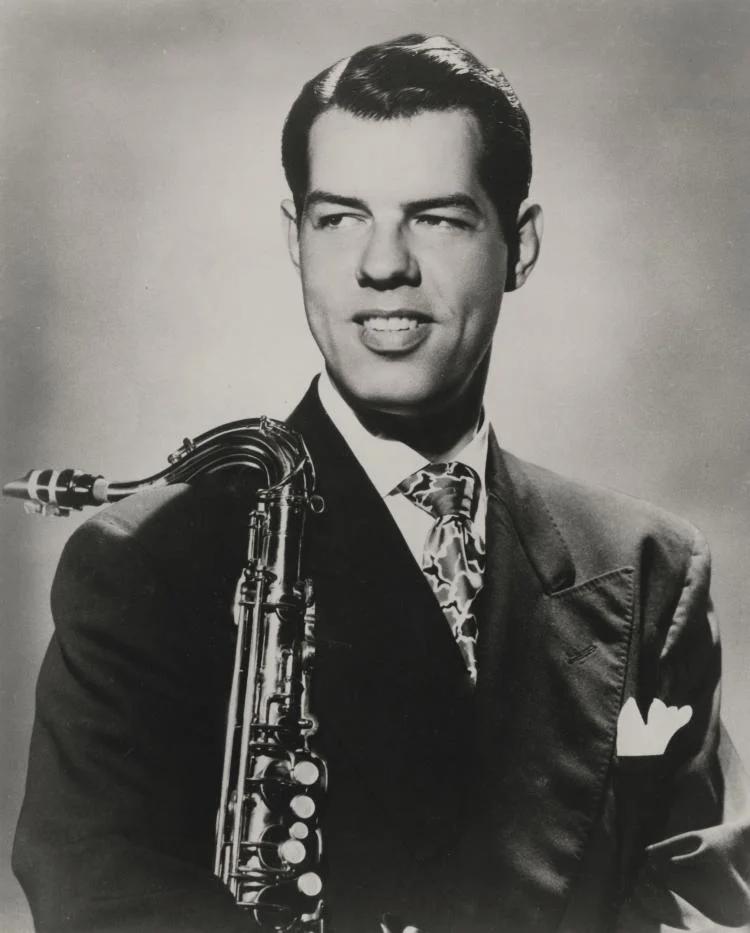
Tex Beneke’s Spotify BioThe name Tex Beneke is inevitably linked to that of Glenn Miller, despite the fact that Beneke outlived Miller by over a half-century. As the most popular member of Miller's pre-World War II orchestra, featured on songs such as "Chattanooga Choo Choo" and "Don't Sit Under the Apple Tree," Beneke became a major fixture in the popular culture of the period, and following Miller's death in December of 1944, and the re-formation of the Glenn Miller Orchestra after World War II, he accepted the offer to lead the new band.
Beneke, however, had a lot to offer the music world beyond his vocals on some fondly remembered hit songs. He began playing the saxophone at age nine, first the alto and then the tenor, and played in local and regional bands in Oklahoma and Texas during the early and mid-'30s. A gig playing with a band led by Ben Young brought him to Detroit, where he was spotted by Sam Donahue, then a saxman in Gene Krupa's band -- Krupa was unable to hire Beneke but informed a friend of… his in New York of this promising new player. The friend was Glenn Miller, who'd recently begun forming a band of his own, and Beneke was hired, joining the orchestra in the spring of 1938 -- it was with Miller's band that Beneke picked up the nickname "Tex."
The Miller orchestra struggled until the summer of 1939, when an engagement at the Glen Island Casino and a series of radio broadcasts made it a national sensation. Beneke played and sang with the orchestra, and became a star in his own right. He stayed until 1942, when Miller broke up the band to join the U.S. Army Air Force as a bandleader. Beneke was drafted into the navy and led a military dance outfit at a base in Oklahoma.
After the end of the war, when a new Glenn Miller Orchestra was formed, Beneke took on the leadership, debuting in January of 1946 at the Capitol Theater in New York City. The orchestra, formed under the auspices of Miller's widow and his estate, was intended to emulate the sounds of the pre-war Miller band and his Army Air Force band -- this included the presence of 13 string players in the 31 piece outfit, making it, along with Harry James' orchestra, one of the few big bands to include strings.
They were an immediate success, compiling an enviable array of hits for five years. One gig in particular stood out -- in December of 1947, a year after the near-collapse of the big-band business, at the Hollywood Palladium, Tex Beneke and the Glenn Miller Orchestra played to a record-breaking crowd of 6,750 dancers. Despite this extraordinary popularity, however, Beneke wasn't entirely happy with the restrictions placed by the estate on the band's music -- they were required to stick entirely to the familiar reed-centered sound that Glenn Miller had practically trademarked. Although a reed player himself, Beneke saw other possibilities, but was never allowed to experiment, despite his protests that Miller himself had always been open to the idea of experimentation, and had expressed his intention to move away from his familiar reed sound after the war, having gone as far with it as he felt he could.
Finally, at the end of 1950, Beneke left the band and also parted company with Miller's estate. He later organized his own band which, like similar reconstituted big bands led by '40s music icons such as Harry James, managed to thrive amid the rock & roll, folk-rock, psychedelia, disco, and punk eras, right to the present day. More than 60 years after he became a professional musician, he continued to lead big bands, doing the music that he helped popularized two generations ago. Beneke died May 30, 2000 from respiratory failure at the age of 86. ~ Bruce Eder, Rovi
Viberate is a music analytics platform built for A&Rs, artist managers, labels, booking agents, marketers, and artists.
It helps music professionals track artist growth, analyze audience data, monitor playlist activity, compare artists, follow song performance, and identify opportunities across the music market.
Public artist pages provide a free preview of selected artist data. Paid plans provide access to deeper analytics, historical data, charts, comparisons, playlist tools, exports, alerts, reports, and additional professional features.
Yes. Public Viberate artist pages provide selected artist analytics and music data for free.
Viberate also offers a 7-day free trial of the full platform. A credit card is required to start the trial. The trial includes access to the complete product so users can test deeper artist analytics, historical views, playlist insights, comparisons, charts, exports, alerts, and reporting features before choosing a paid plan.
Viberate provides artist analytics across streaming, playlists, social media, video, radio airplay, songs, and audience markets.
Users can analyze Spotify performance, Spotify and Apple Music playlists, YouTube activity, TikTok and Instagram growth, radio spins, song performance, audience locations, demographics, rankings, and overall artist momentum.
Artist profiles also connect to music charts, similar artists, and comparison tools, helping users benchmark performance and evaluate artists in context.
Viberate updates key artist and track data daily.
For followed artists and tracks, selected data is refreshed multiple times per day. This helps teams monitor playlist changes, streaming movement, audience growth, releases, and campaign performance with more current data.
Update frequency can vary depending on the metric and data source.
Yes. Viberate lets users compare up to five artists side by side across streaming, social media, audience, and engagement metrics.
Users can compare fanbase growth, audience demographics, locations, Spotify performance, social metrics, and other artist data over selected time periods.
Artist comparison can be used for A&R scouting, benchmarking, booking decisions, campaign planning, and evaluating artists with similar audiences or market positions.