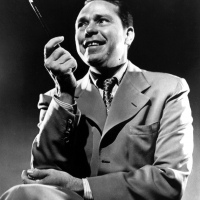
Johnny Mercer

Jazz
Vocal jazz
Swing
 Viberate Rank: 62345
 Viberate Rank: 62345
 Monthly ListenersFollowers
 Subscribers
 Followers
 Followers
 FansTop Spotify Songs
| Track | 7-Day Streams | |
|---|---|---|
1 | 130.06K | |
2 | 63.58K | |
3 | 44.01K | |
4 | 35.70K | |
5 | 22.50K |
Top YouTube VideosMonthly ListenersFeatured in Playlists| Playlist | Followers | |
|---|---|---|
1 |  Fallout Radio Spotify | 297.39K |
2 |  Fallout 4 Radio Soundtrack César Muela | 266.76K |
3 |  Best of Fallout (Fallout 3, 4 & New Vegas) Harry Lewin | 198.78K |
4 |  Just Jazz Spotify | 173.61K |
5 |  Smooth Jazz Piano funkyjlo | 155.09K |
Audience| City | Monthly Listeners | |
|---|---|---|
1 | | 2.80K |
2 | | 2.79K |
3 | | 2.28K |
4 |  | 2.01K |
5 | | 1.79K |
See full performance history, audience data, playlist activity, rankings, comparisons, and more in Viberate music analytics. Start with a free trial, then continue with a paid plan.
Johnny Mercer’s Spotify BioJohnny Mercer's main claim to immortality is his incredible songwriting output, penning the lyrics or music and lyrics to roughly 1,500 songs. Marked by a sophisticated, occasionally whimsical mastery of language and rhymes, many of Mercer's songs have become standards regularly covered by jazz artists. Yet he was also a successful singer, with a relaxed, Southern-accented, jazzy, rhythmically agile delivery that resulted in several major hits in the 1940s. At first, he was torn between acting and songwriting, but having failed to land a part in Garrick Gaities in 1930, he ended up writing his first hit, "Out of Breath, Scared to Death of You," for the show. His first charted songwriting hit was Ted Lewis' 1933 recording of "Lazybones." By 1938, he was recording duets with Bing Crosby for Decca and the following year, he was on Benny Goodman's Camel Cavalcade radio program as a featured singer. In 1942, he, Glenn Wallichs, and Buddy DeSylva founded Capitol Records, which would… eventually become an industry behemoth, and Mercer reeled off a string of hits for his label, including "Atchison, Topeka and Santa Fe," "Ac-Cent-Tchu-Ate the Positive," "Candy," and "Personality." "Atchison" is an especially good example of his flip, catchy, vocal style. While running Capitol, Mercer the talent scout attracted the likes of Nat King Cole, Stan Kenton, Jo Stafford, Peggy Lee, and Margaret Whiting to the label, where they had their greatest successes. Among Mercer's most durable lyrics -- a highly abbreviated list -- are those for "One for My Baby (And One More for the Road)," "Blues in the Night," "Come Rain or Come Shine," "My Shining Hour," and "Early Autumn," and his many collaborators have included Harold Arlen, Hoagy Carmichael, Duke Ellington, Jerome Kern, Gordon Jenkins, and Harry Warren. He also contributed to the scores of seven Broadway musicals and films. Following an album with Bobby Darin and collaborations with Henry Mancini in the early '60s, Mercer's career slowed down under the onslaught of rock & roll, but time has since reconfirmed his status as an American popular music giant. ~ Richard S. Ginell, Rovi
Viberate is a music analytics platform built for A&Rs, artist managers, labels, booking agents, marketers, and artists.
It helps music professionals track artist growth, analyze audience data, monitor playlist activity, compare artists, follow song performance, and identify opportunities across the music market.
Public artist pages provide a free preview of selected artist data. Paid plans provide access to deeper analytics, historical data, charts, comparisons, playlist tools, exports, alerts, reports, and additional professional features.
Yes. Public Viberate artist pages provide selected artist analytics and music data for free.
Viberate also offers a 7-day free trial of the full platform. A credit card is required to start the trial. The trial includes access to the complete product so users can test deeper artist analytics, historical views, playlist insights, comparisons, charts, exports, alerts, and reporting features before choosing a paid plan.
Viberate provides artist analytics across streaming, playlists, social media, video, radio airplay, songs, and audience markets.
Users can analyze Spotify performance, Spotify and Apple Music playlists, YouTube activity, TikTok and Instagram growth, radio spins, song performance, audience locations, demographics, rankings, and overall artist momentum.
Artist profiles also connect to music charts, similar artists, and comparison tools, helping users benchmark performance and evaluate artists in context.
Viberate updates key artist and track data daily.
For followed artists and tracks, selected data is refreshed multiple times per day. This helps teams monitor playlist changes, streaming movement, audience growth, releases, and campaign performance with more current data.
Update frequency can vary depending on the metric and data source.
Yes. Viberate lets users compare up to five artists side by side across streaming, social media, audience, and engagement metrics.
Users can compare fanbase growth, audience demographics, locations, Spotify performance, social metrics, and other artist data over selected time periods.
Artist comparison can be used for A&R scouting, benchmarking, booking decisions, campaign planning, and evaluating artists with similar audiences or market positions.