Betty Hutton

Jazz
Smooth Jazz
Mainstream Pop
 Viberate Rank: 86791
 Viberate Rank: 86791
 Monthly ListenersFollowers
 Subscribers
 Followers
 Followers
 FansTop Spotify Songs
| Track | 7-Day Streams | |
|---|---|---|
1 | 33.26K | |
2 | 31.06K | |
3 | 16.86K | |
4 | 7.10K | |
5 | 7.10K |
Top YouTube VideosMonthly ListenersFeatured in Playlists| Playlist | Followers | |
|---|---|---|
1 |  Fallout Radio Spotify | 297.39K |
2 |  Fallout 4 Radio Soundtrack César Muela | 266.76K |
3 |  Best of Fallout (Fallout 3, 4 & New Vegas) Harry Lewin | 198.78K |
4 |  Fallout Radio Jon | 170.84K |
5 |  Fallout Radio (All Games) morgan | 112.87K |
Audience| City | Monthly Listeners | |
|---|---|---|
1 |  | 1.69K |
2 | | 1.65K |
3 | | 1.52K |
4 | | 1.30K |
5 |  | 1.28K |
See full performance history, audience data, playlist activity, rankings, comparisons, and more in Viberate music analytics. Start with a free trial, then continue with a paid plan.
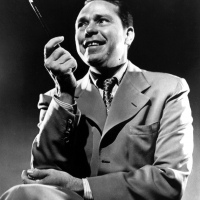
Betty Hutton’s Spotify BioKnown as one of the most versatile and energetic entertainers of all time, Betty Hutton has been a band singer, performed on and off Broadway, in motion pictures, on-stage, and in nightclubs. Her acting range has proven her capable of both comedic and dramatic roles, in addition to the expected musical ones.
Hutton was born Betty June in Battle Creek, MI, to a railroad worker and a homemaker. Her sister, Marion Hutton, also flourished in the entertainment industry as a singer with the Modernaires and the Glenn Miller Orchestra. In 1923, Hutton's father left the family and her mother moved to Detroit, seeking a better life for her children. At the age of nine, Hutton began her singing career in a school performance. With her mother's encouragement, she sang in beer gardens and for local and resort bands. In 1936 she traveled to Broadway, but returned to Detroit after being told she would never make it.
Determined to succeed, Hutton continued to sing and dance in clubs in Detroit. At the… Continental Club in Detroit, she got a break when Vincent Lopez signed her to sing with his orchestra under the name Betty Darling. In 1939, she performed in several short musical movies: One for the Book with Hal Sherman, Three Kings and a Queen, and Public Jitterbug #1 with Chaz Chase, Hal LeRoy, and Emerson's Sextette. With determination and effort, Hutton finally made it to Broadway in 1940. She made her Broadway debut in Two for the Show with then newcomers Eve Arden, Alfred Drake, Richard Haydn, Tommy Wonder, and Keenan Wynn.
She was well on her way to a successful musical career when she met producer B.G. DeSylva. He gave her a role in his Broadway musical Panama Hattie. She sang "Fresh as a Daisy," "They Ain't Doin' Right by Our Nell," and "All I Gotta Get Is My Man." The chorus included such singing greats as Lucille Bremer, Janis Carter, and Vera Ellen. When DeSylva took over Paramount in 1941, Hutton's career only flourished more. She performed in 14 films in 11 years, including Happy Go Lucky, Annie Get Your Gun with Howard Keel, Let's Dance with Fred Astaire, and The Miracle of Morgan's Creek. In 1952, after a dispute with Paramount, Hutton left Hollywood and films to perform on Broadway, in concerts and nightclubs, and to record her works.
Without looking back on her film disappointment, Hutton performed in London for three weeks at the Palladium Theater. In 1953, she returned to New York to perform in the Palace Theater with the Skylarks and comedian Dick Shawn. She performed many motion picture hits and received rave reviews. The next 12 years saw Hutton making television appearances on such programs as Gunsmoke and Burke's Law. In 1967, Hutton's life turned to despair as her mother passed away and she declared bankruptcy.
Getting her life back in order, Hutton decided to pursue an education in 1974. She attended Salve Regina University and earned a bachelor's degree. Shortly after she earned her master's degree and was awarded and honorary Ph.D. With her newfound zest for life, she began teaching acting and singing classes at the university. In 1985 she received an Award of Achievement from the Musical Theater Society of Emerson College in Boston for her contributions to musical theater.
Despite many setbacks, Hutton is recognized for her versatile singing and dancing techniques. She passed away in Palm Springs, CA, on March 12, 2007, at the age of 86. ~ Kim Summers, Rovi
Viberate is a music analytics platform built for A&Rs, artist managers, labels, booking agents, marketers, and artists.
It helps music professionals track artist growth, analyze audience data, monitor playlist activity, compare artists, follow song performance, and identify opportunities across the music market.
Public artist pages provide a free preview of selected artist data. Paid plans provide access to deeper analytics, historical data, charts, comparisons, playlist tools, exports, alerts, reports, and additional professional features.
Yes. Public Viberate artist pages provide selected artist analytics and music data for free.
Viberate also offers a 7-day free trial of the full platform. A credit card is required to start the trial. The trial includes access to the complete product so users can test deeper artist analytics, historical views, playlist insights, comparisons, charts, exports, alerts, and reporting features before choosing a paid plan.
Viberate provides artist analytics across streaming, playlists, social media, video, radio airplay, songs, and audience markets.
Users can analyze Spotify performance, Spotify and Apple Music playlists, YouTube activity, TikTok and Instagram growth, radio spins, song performance, audience locations, demographics, rankings, and overall artist momentum.
Artist profiles also connect to music charts, similar artists, and comparison tools, helping users benchmark performance and evaluate artists in context.
Viberate updates key artist and track data daily.
For followed artists and tracks, selected data is refreshed multiple times per day. This helps teams monitor playlist changes, streaming movement, audience growth, releases, and campaign performance with more current data.
Update frequency can vary depending on the metric and data source.
Yes. Viberate lets users compare up to five artists side by side across streaming, social media, audience, and engagement metrics.
Users can compare fanbase growth, audience demographics, locations, Spotify performance, social metrics, and other artist data over selected time periods.
Artist comparison can be used for A&R scouting, benchmarking, booking decisions, campaign planning, and evaluating artists with similar audiences or market positions.