Curtis Fuller

Jazz
Bebop
 Viberate Rank: 95305
 Viberate Rank: 95305
 Monthly ListenersFollowers
 Subscribers
 Followers
 Followers
 FansTop Spotify Songs
| Track | 7-Day Streams | |
|---|---|---|
1 | 19.07K | |
2 | 11.96K | |
3 | 3.15K | |
4 | 3.05K | |
5 | 2.78K |
Top YouTube VideosMonthly ListenersFeatured in Playlists| Playlist | Followers | |
|---|---|---|
1 |  Jazz Noir Spotify | 349.57K |
2 |  Just Jazz Spotify | 173.61K |
3 |  Meshell Ndegeocello Digs Jazz Spotify | 164.30K |
4 |  In the Mood for Jazz Spotify | 144.33K |
5 |  1930's-1950's Swing & Jazz michaeldil | 126.75K |
Audience| City | Monthly Listeners | |
|---|---|---|
1 | | 558 |
2 |  | 526 |
3 |  | 480 |
4 |  | 422 |
5 | | 401 |
See full performance history, audience data, playlist activity, rankings, comparisons, and more in Viberate music analytics. Start with a free trial, then continue with a paid plan.
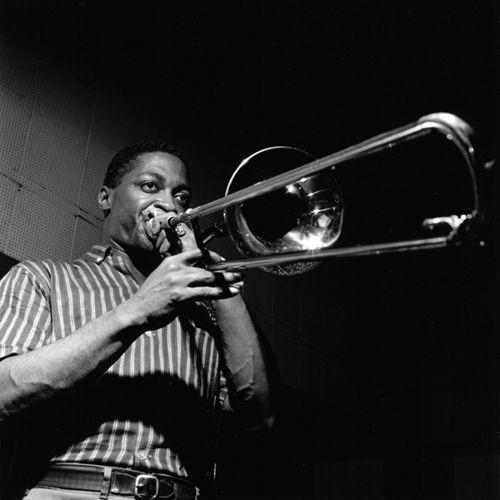
Curtis Fuller’s Spotify BioCurtis Fuller belonged in the select circle with J.J. Johnson, Kai Winding, and a few others who make the trombone sound fluid and inviting rather than awkward. His ability to make wide-octave leaps and play whiplash phrases in a relaxed, casual manner was a testament to his skill. Fuller's solos and phrases were often ambitious and creative, and he worked in several fine bands and participated in numerous great sessions.
Fuller studied music in high school, then began developing his skills in an Army band, where he played with Cannonball Adderley. He worked in Detroit with Kenny Burrell and Yusef Lateef, then moved to New York. Fuller made his recording debut as a leader on Transition in 1955, and recorded in the late '50s for Blue Note, Prestige, United Artists, and Savoy. He was a charter member of the Jazztet with Benny Golson and Art Farmer in 1959, then played in Art Blakey's Jazz Messengers from 1961 to 1965. There were additional recording dates for Warwick, Smash/Trip, Epic,… and Impulse! in the '60s. Fuller toured Europe with Dizzy Gillespie's big band in 1968, then did several sessions in New York.
During the '70s, he experimented for a time playing hard bop arrangements in a band featuring electronic instruments, heading a group with guitarist Bill Washer and Stanley Clarke. He concluded that phase with the 1973 album Crankin'. Fuller toured with the Count Basie band from 1975 to 1977, and did dates for Mainstream, Timeless, and Bee Hive. He co-led the quintet Giant Bones with Winding in 1979 and 1980, and played with Art Blakey, Cedar Walton, and Benny Golson in the late '70s and early '80s. During the '80s, Fuller toured Europe regularly with the Timeless All-Stars, and performed and recorded with the revamped Jazztet in addition to leading a fine session for Savoy in 1993.
Fuller continued playing dates and working in the decades that followed, recording albums for labels like Delmark, Capri, and Savant. He retired from playing in the early 2010s; his final studio album was 2012's Down Home. The legendary trombonist died on May 8, 2021, at the age of 88. ~ Ron Wynn, Rovi
Viberate is a music analytics platform built for A&Rs, artist managers, labels, booking agents, marketers, and artists.
It helps music professionals track artist growth, analyze audience data, monitor playlist activity, compare artists, follow song performance, and identify opportunities across the music market.
Public artist pages provide a free preview of selected artist data. Paid plans provide access to deeper analytics, historical data, charts, comparisons, playlist tools, exports, alerts, reports, and additional professional features.
Yes. Public Viberate artist pages provide selected artist analytics and music data for free.
Viberate also offers a 7-day free trial of the full platform. A credit card is required to start the trial. The trial includes access to the complete product so users can test deeper artist analytics, historical views, playlist insights, comparisons, charts, exports, alerts, and reporting features before choosing a paid plan.
Viberate provides artist analytics across streaming, playlists, social media, video, radio airplay, songs, and audience markets.
Users can analyze Spotify performance, Spotify and Apple Music playlists, YouTube activity, TikTok and Instagram growth, radio spins, song performance, audience locations, demographics, rankings, and overall artist momentum.
Artist profiles also connect to music charts, similar artists, and comparison tools, helping users benchmark performance and evaluate artists in context.
Viberate updates key artist and track data daily.
For followed artists and tracks, selected data is refreshed multiple times per day. This helps teams monitor playlist changes, streaming movement, audience growth, releases, and campaign performance with more current data.
Update frequency can vary depending on the metric and data source.
Yes. Viberate lets users compare up to five artists side by side across streaming, social media, audience, and engagement metrics.
Users can compare fanbase growth, audience demographics, locations, Spotify performance, social metrics, and other artist data over selected time periods.
Artist comparison can be used for A&R scouting, benchmarking, booking decisions, campaign planning, and evaluating artists with similar audiences or market positions.