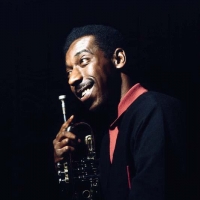
Thad Jones

Jazz
Big band Jazz
Bebop
 Viberate Rank: 96694
 Viberate Rank: 96694
 Monthly ListenersFollowers
 Subscribers
 Followers
 Followers
 FansTop Spotify Songs
| Track | 7-Day Streams | |
|---|---|---|
1 | 51.35K | |
2 | 14.76K | |
3 | 6.66K | |
4 | 6.59K | |
5 | 6.48K |
Top YouTube VideosMonthly ListenersFeatured in Playlists| Playlist | Followers | |
|---|---|---|
1 |  Jazz Classics Spotify | 5.08M |
2 |  Jazz Classics Blue Note Edition Spotify | 549.30K |
3 |  Instrumental Jazz Standards Spotify | 184.09K |
4 |  Just Jazz Spotify | 173.61K |
5 |  Saxophone Classics Spotify | 142.16K |
Audience| City | Monthly Listeners | |
|---|---|---|
1 | | 3.10K |
2 | | 2.44K |
3 | | 2.30K |
4 |  | 2.29K |
5 | | 1.94K |
See full performance history, audience data, playlist activity, rankings, comparisons, and more in Viberate music analytics. Start with a free trial, then continue with a paid plan.
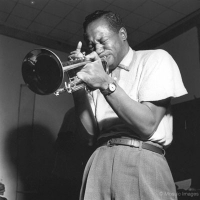
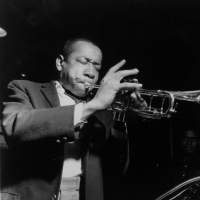
Thad Jones’ Spotify BioA harmonically advanced trumpeter/cornetist with a distinctive sound, as well as a talented arranger/composer, Thad Jones (the younger brother of Hank and older brother of Elvin) had a very productive career. Self-taught on trumpet, he started playing professionally with Hank Jones and Sonny Stitt when he was 16. After serving in the military (1943-1946), Jones worked in territory bands in the Midwest. During 1950-1953 he performed regularly with Billy Mitchell's quintet in Detroit and he made a few recordings with Charles Mingus (1954-1955). Jones became well-known during his long period (1954-1963) with Count Basie's Orchestra, taking a "Pop Goes the Weasel" chorus on "April in Paris," and sharing solo duties with Joe Newman. While with Basie, Jones had the opportunity to write some arrangements and he became a busy freelance writer after 1963. He joined the staff of CBS, co-led a quintet with Pepper Adams, and near the end of 1965, organized a big band with drummer Mel Lewis that… from February 1966 on, played Monday nights at the Village Vanguard. During the next decade the orchestra (although always a part-time affair) became famous and gave Jones an outlet for his writing. He composed one standard ("A Child Is Born") along with many fine pieces including "Fingers," "Little Pixie," and "Tiptoe." Among the sidemen in the Thad Jones-Mel Lewis Orchestra (which started out as an all-star group and later on featured younger players) were trumpeters Bill Berry, Danny Stiles, Richard Williams, Marvin Stamm, Snooky Young, and Jon Faddis, trombonists Bob Brookmeyer, Jimmy Knepper, and Quentin Jackson, the reeds of Jerome Richardson, Jerry Dodgion, Eddie Daniels, Joe Farrell, Pepper Adams, and Billy Harper, pianists Hank Jones and Roland Hanna, and bassists Richard Davis and George Mraz. In 1978, Jones surprised Lewis by suddenly leaving the band and moving to Denmark, an action he never explained. He wrote for a radio orchestra and led his own group called Eclipse. In late 1984 Jones took over the leadership of the Count Basie Orchestra but within a year bad health forced him to retire. Thad Jones recorded as a leader for Debut (1954-1955), Blue Note, Period, United Artists, Roulette, Milestone, Solid State, Artists House, A&M, Metronome, and many of the Thad Jones-Mel Lewis Orchestra's best recordings have been reissued on a five-CD Mosaic box set. ~ Scott Yanow, Rovi
Viberate is a music analytics platform built for A&Rs, artist managers, labels, booking agents, marketers, and artists.
It helps music professionals track artist growth, analyze audience data, monitor playlist activity, compare artists, follow song performance, and identify opportunities across the music market.
Public artist pages provide a free preview of selected artist data. Paid plans provide access to deeper analytics, historical data, charts, comparisons, playlist tools, exports, alerts, reports, and additional professional features.
Yes. Public Viberate artist pages provide selected artist analytics and music data for free.
Viberate also offers a 7-day free trial of the full platform. A credit card is required to start the trial. The trial includes access to the complete product so users can test deeper artist analytics, historical views, playlist insights, comparisons, charts, exports, alerts, and reporting features before choosing a paid plan.
Viberate provides artist analytics across streaming, playlists, social media, video, radio airplay, songs, and audience markets.
Users can analyze Spotify performance, Spotify and Apple Music playlists, YouTube activity, TikTok and Instagram growth, radio spins, song performance, audience locations, demographics, rankings, and overall artist momentum.
Artist profiles also connect to music charts, similar artists, and comparison tools, helping users benchmark performance and evaluate artists in context.
Viberate updates key artist and track data daily.
For followed artists and tracks, selected data is refreshed multiple times per day. This helps teams monitor playlist changes, streaming movement, audience growth, releases, and campaign performance with more current data.
Update frequency can vary depending on the metric and data source.
Yes. Viberate lets users compare up to five artists side by side across streaming, social media, audience, and engagement metrics.
Users can compare fanbase growth, audience demographics, locations, Spotify performance, social metrics, and other artist data over selected time periods.
Artist comparison can be used for A&R scouting, benchmarking, booking decisions, campaign planning, and evaluating artists with similar audiences or market positions.