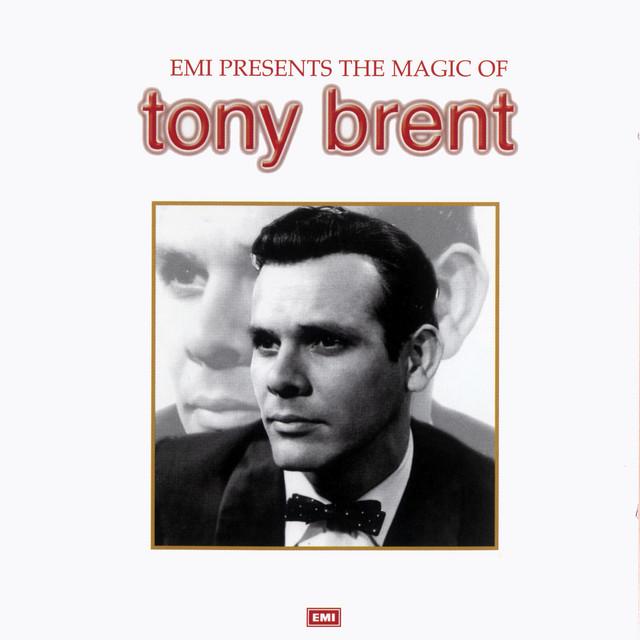
Tony Brent

Pop
Mainstream Pop
Smooth Jazz
 Viberate Rank: 296252
 Viberate Rank: 296252
 Monthly ListenersFollowers
 Subscribers
 Followers
 Followers
 FansTop Spotify Songs
| Track | 7-Day Streams | |
|---|---|---|
1 | 18.41K | |
2 | 7.51K | |
3 | 5.33K | |
4 | 4.57K | |
5 | 3.61K |
Top YouTube Videos| Video | 7-Day Views | |
|---|---|---|
1 | 427 | |
2 | 200 | |
3 | 195 | |
4 | 103 | |
5 | 97 |
Monthly ListenersFeatured in Playlists| Playlist | Followers | |
|---|---|---|
1 |  Easy 50s Spotify | 179.43K |
2 |  Essential Classics Essential Classics | 31.39K |
3 |  Vintage Halloween (20s-50s) 🎃 Squirrel Potatoes | 7.74K |
4 | Swing Bruno Pinasco | 5.87K |
5 |  Old Time Radio - 20's, 30's, 40's, & 50's era radio content. Jeff Snider | 4.01K |
Audience| City | Monthly Listeners | |
|---|---|---|
1 |  | 312 |
2 |  | 71 |
3 | | 60 |
4 | | 56 |
5 |  | 52 |
See full performance history, audience data, playlist activity, rankings, comparisons, and more in Viberate music analytics. Start with a free trial, then continue with a paid plan.
Tony Brent’s Spotify Biob. Reginald Bretagne, 13 August 1926, Bombay, India, d. 19 June 1993, Sydney, Australia. Brent was a popular singer in the UK during the 50s, having moved there on Boxing Day 1947. Two years later he won a talent contest at the Kingston Regal Theatre singing ‘Some Enchanted Evening’, which led to work with Ambrose and Cyril Stapleton’s BBC Showband. Contrary to disinformation spread at the time by his agent, and subsequently repeated by his record company, he had not arrived in England from the USA, nor had he sang with former Glenn Miller accompanist Tex Beneke and his band. In 1952 he made his chart debut with a cover version of one of Sammy Kaye’s last hits, ‘Walkin’ To Missouri’, and began to tour the variety circuit and appear on television. His other chart entries through until 1959 included ‘Make It Soon’, ‘Got You On My Mind’, ‘Cindy, Oh Cindy’, ‘Dark Moon’, ‘The Clouds Will Soon Roll By’, ‘Girl Of My Dreams’ and ‘Why Should I Be Lonely?’. He additionally duetted with Billie… Anthony on a recording of the similarly titled ‘I Get So Lonely’. Brent also released two sets of standards, Off Stage and Tony Takes Five. His EPs included Time For Tony and Tony Calls The Tune. He was subsequently overwhelmed by the 60s beat group scene and retreated to the clubs. Eventually, he resumed his travels, and left the UK for Australia, where he died of a heart attack in 1993.
Viberate is a music analytics platform built for A&Rs, artist managers, labels, booking agents, marketers, and artists.
It helps music professionals track artist growth, analyze audience data, monitor playlist activity, compare artists, follow song performance, and identify opportunities across the music market.
Public artist pages provide a free preview of selected artist data. Paid plans provide access to deeper analytics, historical data, charts, comparisons, playlist tools, exports, alerts, reports, and additional professional features.
Yes. Public Viberate artist pages provide selected artist analytics and music data for free.
Viberate also offers a 7-day free trial of the full platform. A credit card is required to start the trial. The trial includes access to the complete product so users can test deeper artist analytics, historical views, playlist insights, comparisons, charts, exports, alerts, and reporting features before choosing a paid plan.
Viberate provides artist analytics across streaming, playlists, social media, video, radio airplay, songs, and audience markets.
Users can analyze Spotify performance, Spotify and Apple Music playlists, YouTube activity, TikTok and Instagram growth, radio spins, song performance, audience locations, demographics, rankings, and overall artist momentum.
Artist profiles also connect to music charts, similar artists, and comparison tools, helping users benchmark performance and evaluate artists in context.
Viberate updates key artist and track data daily.
For followed artists and tracks, selected data is refreshed multiple times per day. This helps teams monitor playlist changes, streaming movement, audience growth, releases, and campaign performance with more current data.
Update frequency can vary depending on the metric and data source.
Yes. Viberate lets users compare up to five artists side by side across streaming, social media, audience, and engagement metrics.
Users can compare fanbase growth, audience demographics, locations, Spotify performance, social metrics, and other artist data over selected time periods.
Artist comparison can be used for A&R scouting, benchmarking, booking decisions, campaign planning, and evaluating artists with similar audiences or market positions.