Thomas Bloch

Classical
Classical Crossover
Tango
 Viberate Rank: 586952
 Viberate Rank: 586952
 Monthly ListenersFollowers
 Subscribers
 Followers
 Followers
 FansTop Spotify Songs
| Track | 7-Day Streams | |
|---|---|---|
1 | 92 | |
2 | 92 | |
3 | 92 | |
4 | 74 | |
5 | 68 |
Top YouTube VideosMonthly ListenersFeatured in Playlists| Playlist | Followers | |
|---|---|---|
1 |  MUSIC FOR LEAVING EARTH Myka | 14.06K |
2 |  DRONE jenniferruth | 8.19K |
3 |  Adam Curtis Playlist lollygagger | 6.69K |
4 |  Share the Joy Bahram | 5.98K |
5 |  Instrumental Indie your own kind of music | 5.46K |
Audience| City | Monthly Listeners | |
|---|---|---|
1 |  | 88 |
2 |  | 34 |
3 |  | 25 |
4 |  | 19 |
5 |  | 19 |
See full performance history, audience data, playlist activity, rankings, comparisons, and more in Viberate music analytics. Start with a free trial, then continue with a paid plan.
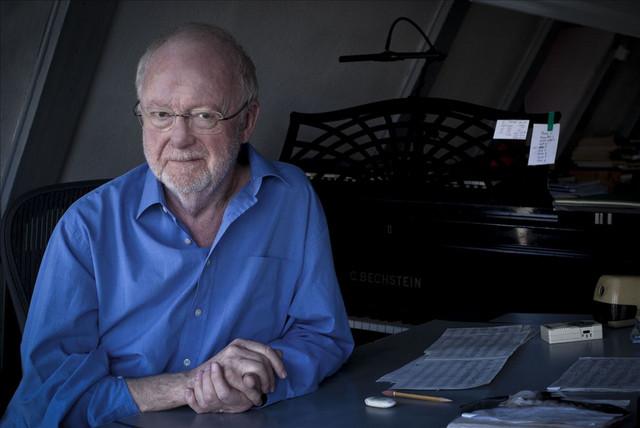
Thomas Bloch’s Spotify BioKeyboard artist Thomas Bloch is best known as a specialist in the ondes Martenot, an early electronic instrument, and other instruments rare in the classical concert hall, including the Hammond organ, the Cristal Baschet, and the glass harmonica invented by Benjamin Franklin. Also a noted composer, Bloch has performed more than 2,500 concerts and has collaborated with artists in the fields of classical music, jazz, rock, film, and theater music.
Bloch was born in Colmar, in eastern France, in 1962. He attended the Paris Conservatory, studying the ondes Martenot with Jeanne Loriod, one of the instrument's most important early players, graduating with a first prize. Bloch returned to his home region for a master's degree in musicology at the University of Strasbourg, studying with Marc Honegger. In addition to the ondes Martenot, Bloch became interested in other unusual instruments and was soon noted as an expert player of the glass harmonica, whose development at the hands of glassblower… Gerhard Finkenbeiner he keenly followed. Bloch also often played the Hammond organ, and the Cristal Baschet (or crystal organ), a set of tuned metal and glass rods rubbed with the fingers. Beginning in the 1980s, Bloch has been in heavy demand as a collaborator, performing with artists as varied as rock band Radiohead, classical experimentalist John Cage, and rock singer-songwriter Tom Waits. In 1984, he played Erik Satie's 24-hour-long piano work Vexations at a single sitting. He plays all of the roughly 100 classical pieces written for the ondes Martenot. Bloch is a member of a number of ensembles, including Le Quatour d'Ondes Martenot de Paris, the Bloch-Wilson Piano Duo, and the Brussels Virtuosi. He has composed various works, using as many as six pseudonyms, including the score for the film The Tango Lesson.
Bloch has appeared on more than 80 albums in various genres. He has released several solo albums, including Music for Glass Harmonica (2001) and Ondes Martenot (2004) on the Naxos label. In 2020, he was heard on the Nationaltheater-Orchester Mannheim's recording of Messiaen's Turangalîla-Symphonie. He is a professor of ondes Martenot at the Strasbourg Conservatory.
Viberate is a music analytics platform built for A&Rs, artist managers, labels, booking agents, marketers, and artists.
It helps music professionals track artist growth, analyze audience data, monitor playlist activity, compare artists, follow song performance, and identify opportunities across the music market.
Public artist pages provide a free preview of selected artist data. Paid plans provide access to deeper analytics, historical data, charts, comparisons, playlist tools, exports, alerts, reports, and additional professional features.
Yes. Public Viberate artist pages provide selected artist analytics and music data for free.
Viberate also offers a 7-day free trial of the full platform. A credit card is required to start the trial. The trial includes access to the complete product so users can test deeper artist analytics, historical views, playlist insights, comparisons, charts, exports, alerts, and reporting features before choosing a paid plan.
Viberate provides artist analytics across streaming, playlists, social media, video, radio airplay, songs, and audience markets.
Users can analyze Spotify performance, Spotify and Apple Music playlists, YouTube activity, TikTok and Instagram growth, radio spins, song performance, audience locations, demographics, rankings, and overall artist momentum.
Artist profiles also connect to music charts, similar artists, and comparison tools, helping users benchmark performance and evaluate artists in context.
Viberate updates key artist and track data daily.
For followed artists and tracks, selected data is refreshed multiple times per day. This helps teams monitor playlist changes, streaming movement, audience growth, releases, and campaign performance with more current data.
Update frequency can vary depending on the metric and data source.
Yes. Viberate lets users compare up to five artists side by side across streaming, social media, audience, and engagement metrics.
Users can compare fanbase growth, audience demographics, locations, Spotify performance, social metrics, and other artist data over selected time periods.
Artist comparison can be used for A&R scouting, benchmarking, booking decisions, campaign planning, and evaluating artists with similar audiences or market positions.