Street Dogs

Punk
Punk Rock
Hard Rock
Alternative Rock
 Viberate Rank: 84099
 Viberate Rank: 84099
 Monthly ListenersFollowers
 Subscribers
 Followers
 Followers
 FansTop Spotify Songs
| Track | 7-Day Streams | |
|---|---|---|
1 | 16.39K | |
2 | 11.19K | |
3 | 11.01K | |
4 | 10.54K | |
5 | 6.34K |
Top YouTube VideosMonthly ListenersFeatured in Playlists| Playlist | Followers | |
|---|---|---|
1 |  Skatepark Punks Spotify | 1.12M |
2 |  Punk Rock - by 23punk 23punk | 87.77K |
3 | blink-182, Sum 41 and More... Sum dude | 21.20K |
4 | Oi! & Punk 1500 songs Ollebolle | 15.31K |
5 | Irish punk rock jlewisjr1822 | 13.10K |
Audience| City | Monthly Listeners | |
|---|---|---|
1 |  | 1.43K |
2 |  | 1.30K |
3 | | 1.28K |
4 | | 1.13K |
5 | | 1.13K |
See full performance history, audience data, playlist activity, rankings, comparisons, and more in Viberate music analytics. Start with a free trial, then continue with a paid plan.
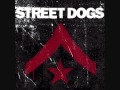
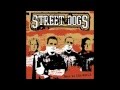
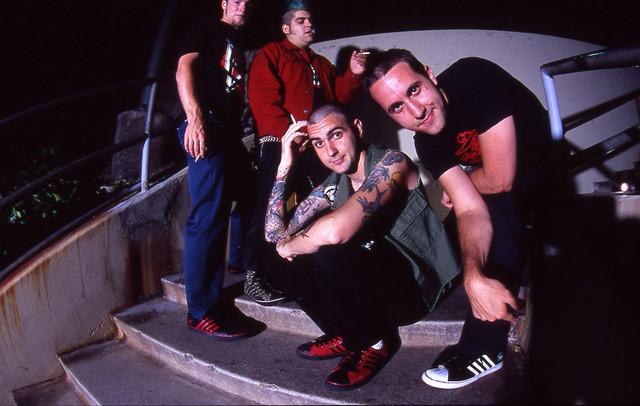
Street Dogs’ Spotify BioA hard-hitting and melodic punk rock outfit based out of Boston, Massachusetts, Street Dogs specialize in bruising but heartfelt beer- and blood-fueled blue-collar punk that's as hopeful and inclusive as it is combustive. Founded in 2002 by Mike McColgan, a Gulf War veteran, fireman, and the original frontman for Celtic punk legends Dropkick Murphys, the band debuted in 2003 with the fiery Savin Hill, and continued to hone their proletarian punk sound well into the next decade via standout LPs like Fading American Dream (2006), State of Grace (2008), and Stand for Something or Die for Nothing (2018).
Boston, Massachusetts is a uniquely divided city, consisting not of amorphously defined neighborhoods like the ones that make up Manhattan, but small, semi-autonomous villages with names like Allston, Dorchester, Roxbury, and Jamaica Plain. Similarly, Boston's music scene has traditionally been equally insular, with little communication between the punk, indie rock, hip-hop, metal, folk,… and Celtic scenes. One of the first bands to overlap some of these fiefdoms was the ska-punk-metal hybrid the Mighty Mighty Bosstones, which included drummer Joe Sirois for most of their performing career. About a half-decade later, the Dropkick Murphys formed in predominantly Irish South Boston, fusing hardcore street punk with an ever-increasing amount of Celtic folk influences, like a harder-edged and more street version of the Pogues. The Dropkick Murphys' lead singer was the fierce, gravely Mike McColgan. Following that band's first album in 1998, Do or Die, McColgan (a veteran of the first Gulf War) left the Dropkick Murphys to join the Boston Fire Department. Ties between the Boston Irish community and the local fire department run deep, and being a fireman has long been one of the most prestigious jobs in South Boston, but by 2002, McColgan returned to music, forming the Street Dogs with guitarist Rob Guidotti, bassist Johnny Rioux (both formerly of local street punk band the Bruisers), and a fellow ex-Dropkick Murphys member, drummer Jeff Erna.
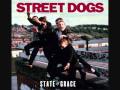
Released in 2003, the band's debut, Savin Hill, was a proudly Bostonian album named after a tough Dorchester neighborhood and filled with local references, plus a pair of tributes to McColgan's fellow firefighters (a massive, deadly blaze in Worcester in 1999, along with the tragedy of 9/11, had badly shaken the local firefighting community) and an odd choice of covers from Kris Kristofferson and Sham 69. Following the debut, the Street Dogs reorganized, replacing Guidotti with Marcus Hollar and Erna with ex-Bosstones drummer Joe Sirois; just as importantly, McColgan left his firefighting job in 2004. After a split-EP with Allston-based garage rockers the Dents (Street Dogs/Dents), which introduced their new lineup, the Street Dogs released Back to the World, featuring the proudly parochial "In Defense of Dorchester" and several songs showing an increasingly political lyrical stance. By this time, Street Dogs had also added second guitarist Tobe Bean (ex-Welt) to the lineup to round out their sound. After its original release on the punk indie Side One Dummy, the Street Dogs reissued Back to the World on their own label, Brass Tracks, in 2005. Fading American Dream followed in fall 2006 as the guys spent time on the road opening for the Bouncing Souls. The impressive and intelligent State of Grace appeared in 2008 from Hellcat Records. After extensive touring, Joe Sirois was replaced by drummer Paul Rucker and the band recorded their self-titled fifth album in the Blasting Room in Fort Collins, Colorado, which was released in August of 2010. In 2018, after an eight-year absence, Street Dogs returned with the politically charged Stand for Something, Or Die for Nothing, their first album for Century Media. It also marked the studio debuts of drummer Pete Sosa and guitarists Matt Pruitt and Lenny Lashley. ~ Stewart Mason, Rovi
Viberate is a music analytics platform built for A&Rs, artist managers, labels, booking agents, marketers, and artists.
It helps music professionals track artist growth, analyze audience data, monitor playlist activity, compare artists, follow song performance, and identify opportunities across the music market.
Public artist pages provide a free preview of selected artist data. Paid plans provide access to deeper analytics, historical data, charts, comparisons, playlist tools, exports, alerts, reports, and additional professional features.
Yes. Public Viberate artist pages provide selected artist analytics and music data for free.
Viberate also offers a 7-day free trial of the full platform. A credit card is required to start the trial. The trial includes access to the complete product so users can test deeper artist analytics, historical views, playlist insights, comparisons, charts, exports, alerts, and reporting features before choosing a paid plan.
Viberate provides artist analytics across streaming, playlists, social media, video, radio airplay, songs, and audience markets.
Users can analyze Spotify performance, Spotify and Apple Music playlists, YouTube activity, TikTok and Instagram growth, radio spins, song performance, audience locations, demographics, rankings, and overall artist momentum.
Artist profiles also connect to music charts, similar artists, and comparison tools, helping users benchmark performance and evaluate artists in context.
Viberate updates key artist and track data daily.
For followed artists and tracks, selected data is refreshed multiple times per day. This helps teams monitor playlist changes, streaming movement, audience growth, releases, and campaign performance with more current data.
Update frequency can vary depending on the metric and data source.
Yes. Viberate lets users compare up to five artists side by side across streaming, social media, audience, and engagement metrics.
Users can compare fanbase growth, audience demographics, locations, Spotify performance, social metrics, and other artist data over selected time periods.
Artist comparison can be used for A&R scouting, benchmarking, booking decisions, campaign planning, and evaluating artists with similar audiences or market positions.