Time Again

Punk
Punk Rock
 Viberate Rank: 203290
 Viberate Rank: 203290
 Monthly ListenersFollowers
 Subscribers
 Followers
 Followers
 FansTop Spotify Songs
| Track | 7-Day Streams | |
|---|---|---|
1 | 5.11K | |
2 | 1.70K | |
3 | 778 | |
4 | 749 | |
5 | 454 |
Top YouTube Videos| Video | 7-Day Views | |
|---|---|---|
1 | 66 | |
2 | 4 | |
3 | 1 |
Monthly ListenersFeatured in Playlists| Playlist | Followers | |
|---|---|---|
1 | Chuck vs. the Music - COMPLETE Kate Wilson | 12.57K |
2 | CHUCK Series Soundtrack 1216350601 | 10.69K |
3 |  PUNK ROCK sebastien.gautier | 8.46K |
4 |  Bones (Full Soundtrack) kurtabum | 6.19K |
5 | *📺 Chuck Soundtrack (All Seasons/Complete) ⟡dee⟡ | 4.29K |
Audience| City | Monthly Listeners | |
|---|---|---|
1 | | 278 |
2 |  | 255 |
3 | | 219 |
4 | | 195 |
5 | | 193 |
See full performance history, audience data, playlist activity, rankings, comparisons, and more in Viberate music analytics. Start with a free trial, then continue with a paid plan.
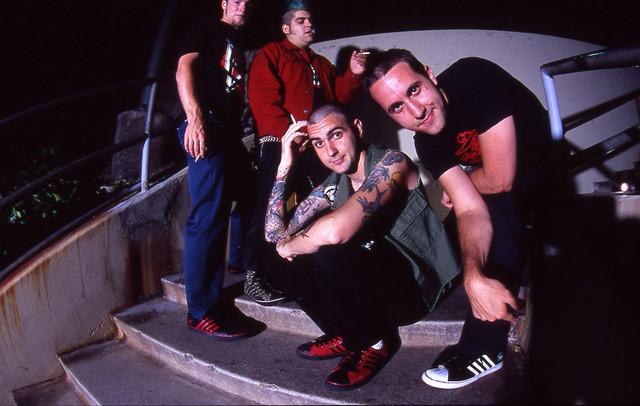
Time Again’s Spotify BioUnconcerned that they had no songs written or even a full band put together, Time Again vocalist Daniel Dart and guitarist Elijah Reyes booked themselves some shows in the summer of 2004 and began a heavy promotional campaign of stickers and flyers all around Los Angeles. It wasn't until a few days before their first gig that the entire group even came together. Time Again -- a punk revivalist band with old-school aesthetics and a sound akin to Rancid -- was officially born. The guys continued to play in and around their hometown, eventually issuing their self-titled EP on Rancid Records the next June. Expanding in 2005 to venues outside of California, the group found itself sharing stages with bands like Offspring, Dropkick Murphys, Social Distortion, the Circle Jerks, the Aquabats, and the Adolescents, to name a few. Their hard work quickly paid off, inking a deal with Hellcat Records (the Tim Armstrong-run Epitaph imprint) by January 2006. Their full-length debut, The Stories Are… True, surfaced that April, followed over the coming years by 3 more. Rumor has it, Daniel Dart is working on a new album, yet to be titled.
Viberate is a music analytics platform built for A&Rs, artist managers, labels, booking agents, marketers, and artists.
It helps music professionals track artist growth, analyze audience data, monitor playlist activity, compare artists, follow song performance, and identify opportunities across the music market.
Public artist pages provide a free preview of selected artist data. Paid plans provide access to deeper analytics, historical data, charts, comparisons, playlist tools, exports, alerts, reports, and additional professional features.
Yes. Public Viberate artist pages provide selected artist analytics and music data for free.
Viberate also offers a 7-day free trial of the full platform. A credit card is required to start the trial. The trial includes access to the complete product so users can test deeper artist analytics, historical views, playlist insights, comparisons, charts, exports, alerts, and reporting features before choosing a paid plan.
Viberate provides artist analytics across streaming, playlists, social media, video, radio airplay, songs, and audience markets.
Users can analyze Spotify performance, Spotify and Apple Music playlists, YouTube activity, TikTok and Instagram growth, radio spins, song performance, audience locations, demographics, rankings, and overall artist momentum.
Artist profiles also connect to music charts, similar artists, and comparison tools, helping users benchmark performance and evaluate artists in context.
Viberate updates key artist and track data daily.
For followed artists and tracks, selected data is refreshed multiple times per day. This helps teams monitor playlist changes, streaming movement, audience growth, releases, and campaign performance with more current data.
Update frequency can vary depending on the metric and data source.
Yes. Viberate lets users compare up to five artists side by side across streaming, social media, audience, and engagement metrics.
Users can compare fanbase growth, audience demographics, locations, Spotify performance, social metrics, and other artist data over selected time periods.
Artist comparison can be used for A&R scouting, benchmarking, booking decisions, campaign planning, and evaluating artists with similar audiences or market positions.