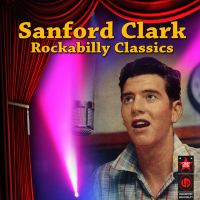
Sanford Clark

Pop
Mainstream Pop
Rockabilly
 Viberate Rank: 149706
 Viberate Rank: 149706
 Monthly ListenersFollowers
 Subscribers
 Followers
 Followers
 FansTop Spotify Songs
| Track | 7-Day Streams | |
|---|---|---|
1 | 3.21K | |
2 | 2.62K | |
3 | 2.30K | |
4 | 2.30K | |
5 | 2.30K |
Top YouTube VideosMonthly ListenersFeatured in Playlists| Playlist | Followers | |
|---|---|---|
1 |  Rockabilly Spotify | 133.32K |
2 | katesos75 | 29.17K |
3 | Unofficial Reverb Radio Jeff Ferruzzo | 21.82K |
4 |  Oldies... Annika Rydell | 16.76K |
5 |  Old, Vintage & Classic Halloween Songs Birgitta Bellman | 14.96K |
Audience| City | Monthly Listeners | |
|---|---|---|
1 | | 869 |
2 |  | 495 |
3 | | 471 |
4 |  | 441 |
5 | | 392 |
See full performance history, audience data, playlist activity, rankings, comparisons, and more in Viberate music analytics. Start with a free trial, then continue with a paid plan.
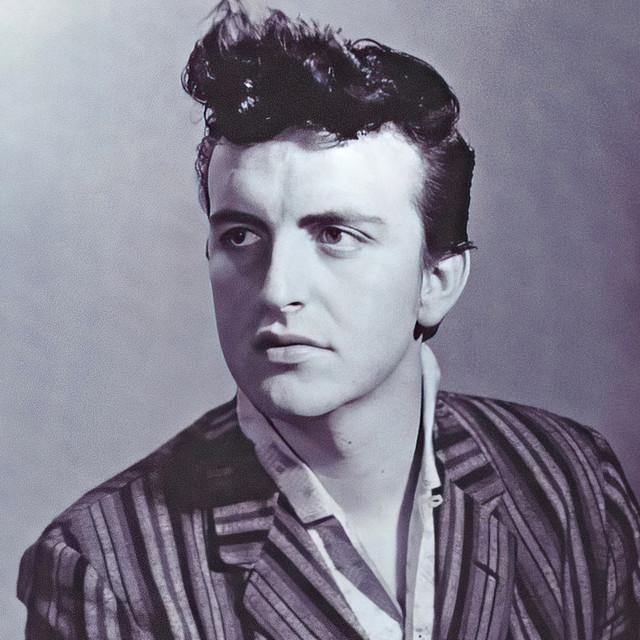
Sanford Clark’s Spotify BioSanford Clark found fleeting fame with his rendition of the Lee Hazlewood song "The Fool." With a vocal style that blended elements of Johnny Cash with Ricky Nelson, Clark released the song in 1956, and it eventually peaked in the Top Ten of the pop charts and in the Top 15 of the country charts -- his first and only hit.
Clark was born in Tulsa, Oklahoma, and raised in Phoenix, Arizona. A guitar player from childhood, he was influenced by both early rock & roll music and by country music. He got his start in the early '50s playing in Phoenix clubs. While stationed in the South Pacific during his stint in the Air Force, he formed a band and won a talent contest in Hawaii. Eventually, the Air Force stationed him back in Phoenix, where he met his old friend Al Casey, who introduced Clark to Hazlewood, who was still working as a local DJ and hadn't yet made his mark as a songwriter.
Soon afterward, Clark recorded "The Fool" at Floyd Ramsey's Phoenix studio with Casey on guitar. The song was… released on MCI and went nowhere until a Philadelphia DJ heard it and took the song to Dot Records' Randy Wood, who liked it and had Hazlewood license the song to his label. Afterward, Clark and Casey began a promotional tour opening for such stars as Ray Price and Roy Orbison. In 1957, Clark returned to the studio to record another Hazlewood song, "The Cheat." It became a minor hit. At this time, Clark was having trouble with Wood, who wanted him to become a virtual clone of Dot's most popular artist Pat Boone. The label sent Clark to Hollywood to continue recording, but many of the songs were not released until much later. Those that were did little or nothing on the charts.
In 1958, Clark signed to Jamie Records. Casey and Hazlewood joined him and began working with Duane Eddy. They also worked with Clark, who recorded "Still as the Night," featuring Eddy on guitar. Nothing happened on the charts and he began recording on other independent labels. He eventually landed in Hollywood, where he hooked up with songwriter/aspiring performer Roger Miller, who was playing the Palomino Club. Miller wanted him to record a few of his songs, but Clark wasn't interested. Sanford almost had a hit in 1964 when he recorded Hazlewood's "Houston" for Warner -- but Dean Martin also recorded it on Reprise and his version became the hit.
The following year, Clark returned to Ramsey's studio and created a new version of "The Fool" featuring Waylon Jennings on guitar. By this time Hazlewood had become a prominent producer and signed Clark to his LHI label. He made an album there, Return of the Fool, but it went nowhere, and by the early '70s Clark had finally had enough and joined the construction industry, where he found success at last. He continued recording occasionally on his Desert Sun label. Sanford Clark died in Joplin, Missouri on July 4, 2021; he was 85 years old. ~ Sandra Brennan, Rovi
Viberate is a music analytics platform built for A&Rs, artist managers, labels, booking agents, marketers, and artists.
It helps music professionals track artist growth, analyze audience data, monitor playlist activity, compare artists, follow song performance, and identify opportunities across the music market.
Public artist pages provide a free preview of selected artist data. Paid plans provide access to deeper analytics, historical data, charts, comparisons, playlist tools, exports, alerts, reports, and additional professional features.
Yes. Public Viberate artist pages provide selected artist analytics and music data for free.
Viberate also offers a 7-day free trial of the full platform. A credit card is required to start the trial. The trial includes access to the complete product so users can test deeper artist analytics, historical views, playlist insights, comparisons, charts, exports, alerts, and reporting features before choosing a paid plan.
Viberate provides artist analytics across streaming, playlists, social media, video, radio airplay, songs, and audience markets.
Users can analyze Spotify performance, Spotify and Apple Music playlists, YouTube activity, TikTok and Instagram growth, radio spins, song performance, audience locations, demographics, rankings, and overall artist momentum.
Artist profiles also connect to music charts, similar artists, and comparison tools, helping users benchmark performance and evaluate artists in context.
Viberate updates key artist and track data daily.
For followed artists and tracks, selected data is refreshed multiple times per day. This helps teams monitor playlist changes, streaming movement, audience growth, releases, and campaign performance with more current data.
Update frequency can vary depending on the metric and data source.
Yes. Viberate lets users compare up to five artists side by side across streaming, social media, audience, and engagement metrics.
Users can compare fanbase growth, audience demographics, locations, Spotify performance, social metrics, and other artist data over selected time periods.
Artist comparison can be used for A&R scouting, benchmarking, booking decisions, campaign planning, and evaluating artists with similar audiences or market positions.