Hayden Thompson

Country
Americana/Alt Country
Rockabilly
 Viberate Rank: 218763
 Viberate Rank: 218763
 Monthly ListenersFollowers
 Subscribers
 Followers
 Followers
 FansTop Spotify Songs
| Track | 7-Day Streams | |
|---|---|---|
1 | 8.09K | |
2 | 611 | |
3 | 611 | |
4 | 475 | |
5 | 465 |
Top YouTube VideosMonthly ListenersFeatured in Playlists| Playlist | Followers | |
|---|---|---|
1 | Rock'n'Roll ninasellgren | 26.24K |
2 |  sometimes i margeaux | 24.72K |
3 |  Fall (Numero Group) Numero Group Concierge | 15.36K |
4 |  Dream Life… Woodenship | 14.51K |
5 |  Rockabilly Peter Karlsson | 13.32K |
Audience| City | Monthly Listeners | |
|---|---|---|
1 | | 727 |
2 | | 495 |
3 | | 462 |
4 | | 446 |
5 | | 441 |
See full performance history, audience data, playlist activity, rankings, comparisons, and more in Viberate music analytics. Start with a free trial, then continue with a paid plan.
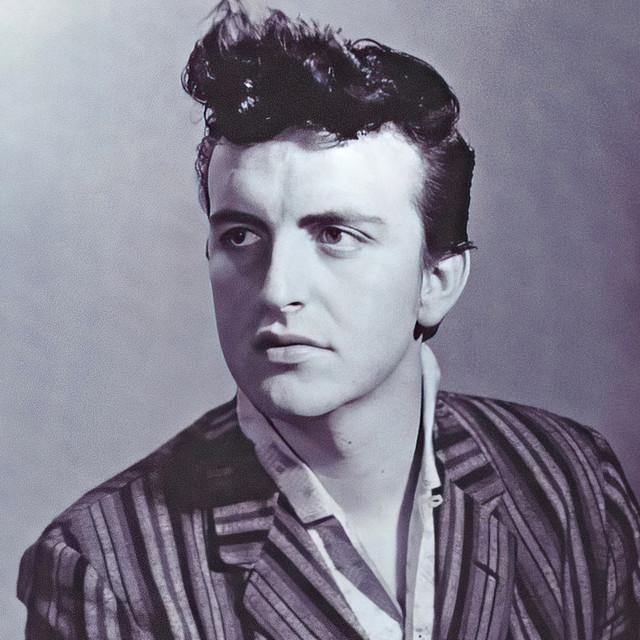
Hayden Thompson’s Spotify BioHayden Thompson was among the groundswell of rockabilly cats who recorded for Sam Phillips' legendary Sun Records in the wake of the label's breakthrough superstar, Elvis Presley. His lone Sun effort, "Love My Baby," remains a cult favorite among connoisseurs of early rock & roll at its most potent. Thompson was born in Booneville, Mississippi, on March 5, 1938. According to a profile on the Rockabilly Hall of Fame website, he was given his first guitar at age five, quickly teaching himself to play. A fixture of local talent contests, he made his local radio debut at nine, originally singing gospel but in time turning to country. Memphis-based rhythm & blues stations WDAI and KWEM profoundly shaped Thompson's musical development as well, and in high school he formed his first band, the Southern Melody Boys, playing energetic covers of current country & western hits. In late 1954, the group signed to the fledgling Von label to cut its debut single, "I Feel the Blues Coming On," inching… toward a rockabilly sound via the flip side, "Act Like You Love Me." Thompson continued to push the Southern Melody Boys in the direction of rock & roll, and even passed up an audition for the country music radio showcase Louisiana Hayride in an effort to sever ties with traditional roots music. Creative differences split the group, and Thompson soon landed with the Dixie Jazzlanders, who were hired to tour Southern movie theaters in conjunction with the just-released 1956 rock & roll musical Rock Around the Clock. The months passed, and when a record deal failed to materialize, the Dixie Jazzlanders dissolved. Thompson next surfaced in the Slim Rhodes Band, spending another year on the road with no contract in sight.
Thompson eventually settled in Memphis, and like Presley before him became a regular presence at Sun Studios. Finally, in late 1956 Phillips agreed to cut a single, recruiting guitarist Roland Janes, bassist Marvin Pepper, drummer Jimmy Van Eaton, and then-unknown pianist Jerry Lee Lewis to provide backing for a propulsive rendition of Junior Parker's "Love You Baby." A series of additional sessions followed throughout 1957, but only at year's end did Phillips finally issue "Love You Baby" as a single, releasing the disc via his fledgling Phillips International imprint. Thompson soon after joined a Sun package tour headlined by Sonny Burgess and Billy Lee Riley. He continued recording and touring for Sun but Phillips never released a follow-up effort, and in 1958 the singer relocated to Chicago, where he landed a headlining gig at the Tally Ho Club in Highwood. Backed by guitarist Travis Westmoreland and drummer Bob Travis, Thompson recorded the B.E.A.T. label release "Tom Thumb" in 1959. The disc sank without a trace, and two years later he returned with the Profile Records effort "Whatcha Gonna Do." Despite appearances on WGN's Barn Dance, Thompson's career continued to flounder until 1962, when he teamed with renowned Memphis producer Jack Clement to cut "Queen Bee" for the Arlen label. With no promotional push behind it, the single met a familiar fate and he returned to Chicago, accepting a regular gig in the house band at the Rivoli Ballroom. After a 1966 LP for Kapp, Here's Hayden Thompson, he entered semi-retirement, driving a cab and playing the occasional package showcase and suburban club date. "If It's Alright," a one-off for the tiny Brave label, came and went in 1968.
During the early '70s Thompson recorded a sporadic series of singles for the Nashville North label, among them a cover of Presley's "I'm Left, You're Right, She's Gone." In 1975, he released "I'll Kiss You Again" on his own H.T. imprint. When it too failed to garner notice at radio or retail, Thompson officially walked away from performing. But when vintage rockabilly enjoyed a commercial renaissance among collectors in Europe and Japan, Thompson's Sun recordings finally saw the light on several label overviews, and his fan following grew exponentially. Guitarist Roland Janes eventually convinced him to resume his music career, and in 1984 he mounted his first-ever European tour. A career retrospective soon followed on the esteemed Bear Family label, but upon returning to Chicago Thompson retained his full-time job as a limousine driver. He nevertheless headlined the occasional local gig, typically backed by rockabilly revival combo the Rebel Rousers. With another Windy City outfit, Bud Hudson & the Hornets, Thompson resumed his long-dormant studio career with the Sunjay label single "What'm I Gonna Do." Subsequent European tours followed, and in 2003 he traveled to Finland to cut "Diamonds and Cadillacs" with the Hal Peters Trio. The Finnish label Blue Light released Thompson's self-titled 2007 solo LP, his first new full-length effort in more than four decades. Thompson enjoyed a fertile relationship with Blue Light; in 2015, the label reissued his albums Booneville Mississippi Flash and The Time Is Now in a two-fer package, and also issued a pair of new long-players from the rockabilly veteran, 2010's Standing Tall and 2017's Learning the Game. ~ Jason Ankeny, Rovi
Viberate is a music analytics platform built for A&Rs, artist managers, labels, booking agents, marketers, and artists.
It helps music professionals track artist growth, analyze audience data, monitor playlist activity, compare artists, follow song performance, and identify opportunities across the music market.
Public artist pages provide a free preview of selected artist data. Paid plans provide access to deeper analytics, historical data, charts, comparisons, playlist tools, exports, alerts, reports, and additional professional features.
Yes. Public Viberate artist pages provide selected artist analytics and music data for free.
Viberate also offers a 7-day free trial of the full platform. A credit card is required to start the trial. The trial includes access to the complete product so users can test deeper artist analytics, historical views, playlist insights, comparisons, charts, exports, alerts, and reporting features before choosing a paid plan.
Viberate provides artist analytics across streaming, playlists, social media, video, radio airplay, songs, and audience markets.
Users can analyze Spotify performance, Spotify and Apple Music playlists, YouTube activity, TikTok and Instagram growth, radio spins, song performance, audience locations, demographics, rankings, and overall artist momentum.
Artist profiles also connect to music charts, similar artists, and comparison tools, helping users benchmark performance and evaluate artists in context.
Viberate updates key artist and track data daily.
For followed artists and tracks, selected data is refreshed multiple times per day. This helps teams monitor playlist changes, streaming movement, audience growth, releases, and campaign performance with more current data.
Update frequency can vary depending on the metric and data source.
Yes. Viberate lets users compare up to five artists side by side across streaming, social media, audience, and engagement metrics.
Users can compare fanbase growth, audience demographics, locations, Spotify performance, social metrics, and other artist data over selected time periods.
Artist comparison can be used for A&R scouting, benchmarking, booking decisions, campaign planning, and evaluating artists with similar audiences or market positions.