Samuel Ramey

Classical
Opera
 Viberate Rank: 159236
 Viberate Rank: 159236
 Monthly ListenersFollowers
 Subscribers
 Followers
 Followers
 FansTop Spotify Songs
| Track | 7-Day Streams | |
|---|---|---|
1 | 17.12K | |
2 | 8.05K | |
3 | 4.90K | |
4 | 4.88K | |
5 | 4.19K |
Top YouTube VideosMonthly ListenersFeatured in Playlists| Playlist | Followers | |
|---|---|---|
1 |  Choir songs that give me chills Alexa👹 | 102.29K |
2 |  Easy Listening Classical For Study, Work, Relaxing, Chillout, Anything But Serious Listening Ulysses' Classical | 99.24K |
3 |  This Is Verdi Spotify | 91.25K |
4 |  Gregorian Chants & Hymns for Sleep, Study & Solitude Joseph Santiago | 82.71K |
5 | Songs: Mad Men Kenneth Lorence | 30.53K |
Audience| City | Monthly Listeners | |
|---|---|---|
1 |  | 2.31K |
2 |  | 1.60K |
3 | | 1.15K |
4 |  | 1.03K |
5 |  | 970 |
See full performance history, audience data, playlist activity, rankings, comparisons, and more in Viberate music analytics. Start with a free trial, then continue with a paid plan.
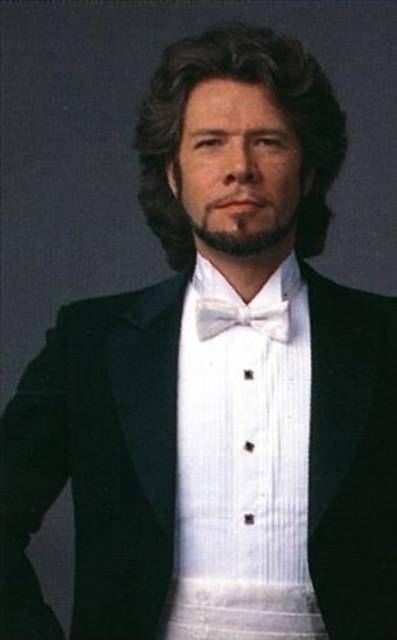
Samuel Ramey’s Spotify BioBasses are not typically the superstars of the operatic world, but Samuel Ramey is an exception to that rule. Though his voice does not have the sonority of a Nicolai Ghiaurov or a Boris Christoff, his instrument is remarkable for its easy flexibility -- dealing effortlessly with long runs, ornaments, and leaps -- and its brilliant intensity. His stage presence (particularly when portraying "devil" figures) is vivid and lively, aided by an attractive physique and a dancer-like grace. He and the various stage directors have tended to emphasize these aspects, giving rise to the comment that "Ramey's Mefistofele has everything one could desire, except possibly a shirt."
While he was attending Kansas State University, Ramey's interest in operatic music was awakened when a friend suggested that he audition for a summer program at Colorado's Central City Opera. He was accepted and got to sing in the chorus for two productions. Soon after, he began to study avidly, first at Wichita State… University and later in New York with Armen Boyajian; he made his professional debut in 1973 as Zuniga in Bizet's Carmen at the New York City Opera. His Glyndebourne debut was in 1976 as Figaro in Mozart's Le nozze di Figaro.
A 1980 performance of Rossini's Semiramide at Aix-en-Provence, opposite Monserrat Caballé and Marilyn Horne, made him an overnight sensation. For critics and audience alike, this new bass with the ideal power and agility was a welcome surprise. His La Scala debut came the next year as Mozart's Figaro, followed by his Covent Garden debut in 1982, in the same role. In 1984, he made his Metropolitan debut as Argante in Rinaldo. He has been a regular at the Pesaro Rossini Festival. Many Rossini bass roles had become "character parts" over the years -- performed more in parlando than actually sung (partly for comedy, partly because of the extreme difficulty of the roles) -- and Ramey determined to sing these as written. His instinctive gift for comedy without clownishness has served him well in these parts, as well as in his various diabolical roles, most of which contain a good deal of sardonic humor. He performs arias from his darker roles in his "Date with the Devil" concerts.
Later in his career, as his voice became darker and weightier, Ramey slowly began to drop the florid Rossini and Handel roles in favor of the heavier Verdi roles, such as King Philip in Don Carlo, Fiesco in Simon Boccanegra, and even Mussorgsky's Boris Godunov. He has also performed twentieth century repertoire widely, especially noted for his Reverend Olin Blitch in Floyd's Susannah and Nick Shadow in Stravinsky's The Rake's Progress.
Ramey is the most recorded bass in history, with dozens of recordings to his credit. These range from nearly all of his operatic roles to solo recordings of arias and song, and even some musical theater. He has appeared on the TV series Live from Lincoln Center and in TV and video recordings of many of his roles.
Viberate is a music analytics platform built for A&Rs, artist managers, labels, booking agents, marketers, and artists.
It helps music professionals track artist growth, analyze audience data, monitor playlist activity, compare artists, follow song performance, and identify opportunities across the music market.
Public artist pages provide a free preview of selected artist data. Paid plans provide access to deeper analytics, historical data, charts, comparisons, playlist tools, exports, alerts, reports, and additional professional features.
Yes. Public Viberate artist pages provide selected artist analytics and music data for free.
Viberate also offers a 7-day free trial of the full platform. A credit card is required to start the trial. The trial includes access to the complete product so users can test deeper artist analytics, historical views, playlist insights, comparisons, charts, exports, alerts, and reporting features before choosing a paid plan.
Viberate provides artist analytics across streaming, playlists, social media, video, radio airplay, songs, and audience markets.
Users can analyze Spotify performance, Spotify and Apple Music playlists, YouTube activity, TikTok and Instagram growth, radio spins, song performance, audience locations, demographics, rankings, and overall artist momentum.
Artist profiles also connect to music charts, similar artists, and comparison tools, helping users benchmark performance and evaluate artists in context.
Viberate updates key artist and track data daily.
For followed artists and tracks, selected data is refreshed multiple times per day. This helps teams monitor playlist changes, streaming movement, audience growth, releases, and campaign performance with more current data.
Update frequency can vary depending on the metric and data source.
Yes. Viberate lets users compare up to five artists side by side across streaming, social media, audience, and engagement metrics.
Users can compare fanbase growth, audience demographics, locations, Spotify performance, social metrics, and other artist data over selected time periods.
Artist comparison can be used for A&R scouting, benchmarking, booking decisions, campaign planning, and evaluating artists with similar audiences or market positions.